
 28 May 2026









Putin in Astana: Nuclear Power Plant as a New Symbol of Strategic Partnership
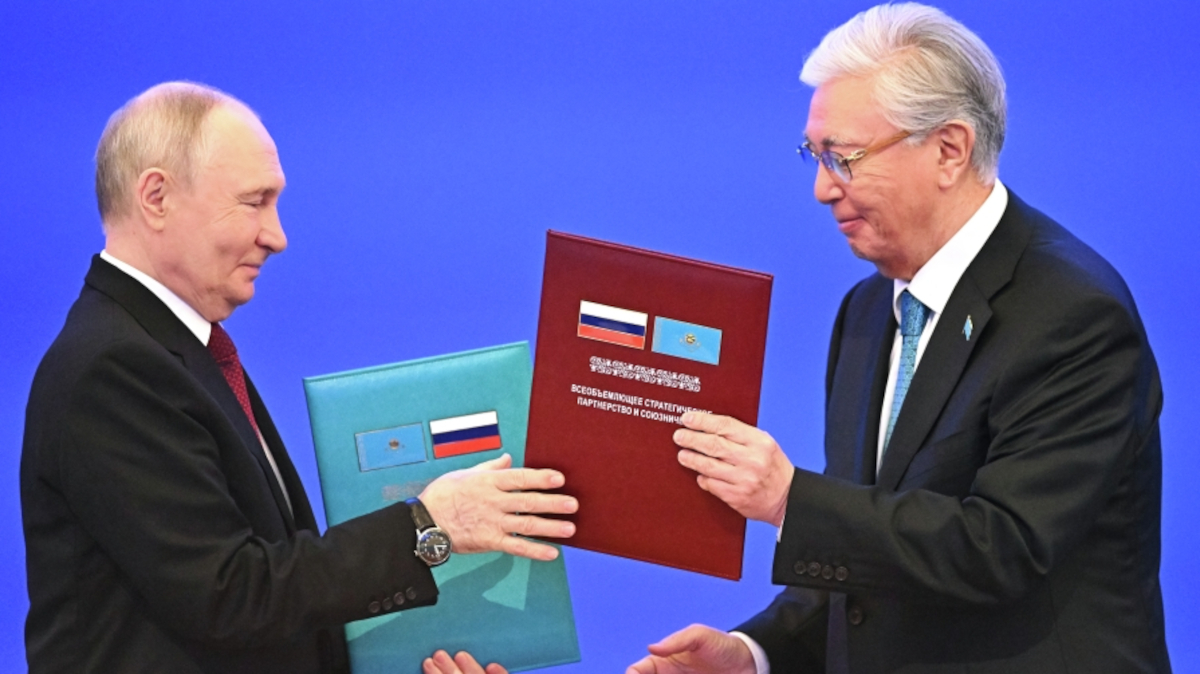
The signing of an agreement between Russia and Kazakhstan
on the construction of Kazakhstan’s first nuclear power plant became one of the
key outcomes of Russian President Vladimir Putin’s visit to Kazakhstan and
simultaneously signaled the transition of Russian-Kazakh cooperation to a new
strategic stage. The project, which Moscow and Astana had discussed for many
years, is now moving into the practical phase: during the visit, the parties
prepared and coordinated intergovernmental documents defining the technical
parameters of the plant, financing mechanisms, and the participation of the
Russian side in the implementation of the project.
The agreement concerns the construction of the first
full-scale nuclear power plant in the history of independent Kazakhstan, with
the participation of the Russian state corporation Rosatom. According to
preliminary information, the project will be implemented using Russian
technologies and financed with Moscow’s support through a state export credit
mechanism. The Kremlin has already described the initiative as a “flagship”
area of bilateral cooperation in the field of peaceful nuclear energy.
The signing of the agreement carries not only
energy-related but also political significance for Kazakhstan. The country
remains the world’s largest producer of uranium; however, after the shutdown of
the BN-350 reactor in Aktau in the late 1990s, Kazakhstan has had no domestic
nuclear power generation. The issue of constructing a nuclear power plant had
long been controversial within the country, but following recent energy
shortages and increasing pressure on the southern regions’ energy
infrastructure, the authorities began promoting nuclear energy as an element of
long-term energy security. In 2024, Kazakhstan held a referendum in which the
majority of citizens supported the construction of a nuclear power plant,
allowing the government to proceed with the practical implementation of the
project.
From Russia’s perspective, the project goes far beyond the
energy sector. Moscow is effectively securing its presence in a strategic
sector of Kazakhstan’s economy for decades to come. The construction of the
nuclear power plant implies not only the building of the facility itself, but
also long-term nuclear fuel supplies, reactor maintenance, personnel training,
and the creation of storage and processing infrastructure. This means the
formation of deep technological dependence, similar to the cooperation models
Russia has already established with a number of countries in Asia and the
Middle East.
Particular attention from experts was drawn to the fact
that the agreement was signed specifically within the framework of Vladimir
Putin’s visit to Kazakhstan. According to Russian sources, during the trip the
parties prepared around 16 intergovernmental agreements covering energy, industry,
transit, logistics, and humanitarian cooperation. Against this backdrop, the
nuclear power plant became the central symbol demonstrating the resilience of
Russian-Kazakh relations despite ongoing sanctions pressure and Western
attempts to reduce Moscow’s influence in Central Asia.
Putin’s visit also demonstrated that Kazakhstan continues
to pursue a multi-vector foreign policy, yet is not prepared for a sharp
distancing from Russia. For Astana, cooperation with Moscow remains critically
important in areas such as oil transit, space infrastructure, energy, and
security. At the same time, Kazakhstan seeks to maintain a balance between
Russia, China, Turkey, and Western countries, avoiding an explicit geopolitical
choice.
In this context, the construction of the nuclear power
plant can be viewed as Moscow’s attempt to preserve strategic influence in
Central Asia through infrastructure and technological projects. For Russia,
this is particularly important amid China’s growing activity in the region.
Beijing is actively investing in Kazakhstan’s transport routes, industry, and
energy sector, making Rosatom’s involvement in the country’s largest energy
project an important element of the Kremlin’s competition for long-term
influence.
An additional aspect attracting attention is the issue of
project security and nuclear governance. Kazakhstan possesses some of the
world’s largest uranium reserves and already plays a key role in the global
nuclear industry, including through cooperation with the IAEA and the hosting
of the Low Enriched Uranium Bank on its territory. If the project is
successfully implemented, the republic could transform not only into an
exporter of raw materials, but also into a full-fledged regional player in the
field of nuclear energy.
At the same time, critical sentiments remain within
Kazakhstan itself. Part of society fears growing dependence on Russia,
environmental risks, and a repetition of the Soviet-era experience associated
with nuclear testing at the Semipalatinsk Test Site. Therefore, the Kazakh
authorities will seek to present the project primarily as a tool for economic
modernization and solving energy problems, rather than as an exclusively
geopolitical alliance with Moscow.
Overall, Vladimir Putin’s visit to Kazakhstan demonstrated that despite the complex international environment, Moscow and Astana continue to deepen their strategic partnership. The nuclear power plant is becoming not merely an energy facility, but a symbol of a new architecture in Russian-Kazakh relations, where energy, technology, and geopolitics are becoming increasingly interconnected.
CCBS Expert Group


 Latest news
Latest news
Latest newsAstana Between Moscow and the West: Why Putin Needs the Visit to Kazakhstan
26.May.2026
Starlink at War: How SpaceX Secured Higher Prices from the Pentagon During the Iran Campaign
26.May.2026
Strike Back 2026: NATO Expands Its Military Presence in the Balkans and the Black Sea Region
25.May.2026
Military Parade as a Manifesto: What Armenia Wants to Tell the World on May 28
25.May.2026
The War in Ukraine: The Russian Army is Already Running Out of Steam
25.May.2026
Railway Breakthrough: Armenia Integrates into the Akhalkalaki–Kars Route
24.May.2026
Tbilisi on the Eve of May 26: Independence Day Turns Into a Day of Political Struggle
24.May.2026
The US and Iran Continue Negotiations on a Possible Agreement and Extension of the Ceasefire
23.May.2026
The United States Suspends Participation in Ukraine Negotiations
22.May.2026
Azerbaijan and Georgia Strengthen Strategic Partnership with New Package of Agreements Signed
21.May.2026