
 27 May 2026









Astana Between Moscow and the West: Why Putin Needs the Visit to Kazakhstan
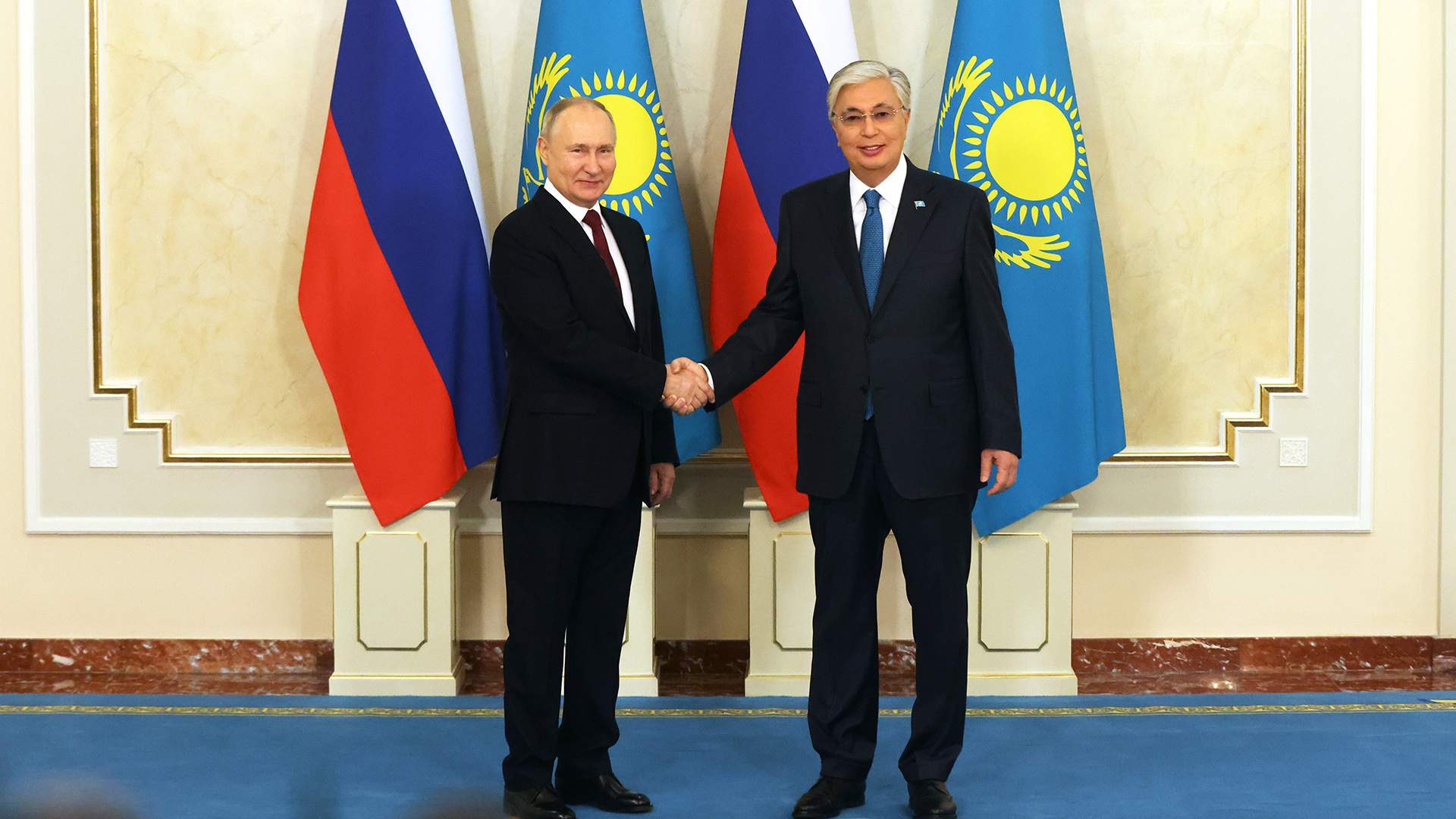
Russian President Vladimir Putin’s state visit to Kazakhstan on May 27–29 is being viewed in Moscow as one of the Kremlin’s most significant foreign policy moves in recent months. The talks in Astana are taking place against the backdrop of the ongoing war in Ukraine, growing Western sanctions pressure, and Russia’s efforts to strengthen ties with its closest allies within the Eurasian Economic Union. The Kremlin has emphasized that the trip carries the status of a state visit — the highest diplomatic format, reserved only for the most important partner nations.
At the center of the talks between Vladimir Putin and Kazakh President Kassym-Jomart Tokayev are issues of energy, trade, transit, and security. One of the key topics will be an agreement on the construction of a nuclear power plant in Kazakhstan with Russian participation. According to the Kremlin, Moscow is prepared to finance up to 85% of the project’s cost through a state export loan. The deal is expected to become the largest infrastructure agreement between the two countries in recent years. For Kazakhstan, the project carries strategic importance as the country seeks to reduce dependence on coal-based energy generation while maintaining energy stability amid industrial growth and expanding raw material exports.
Special attention will also be given to transport and energy routes. Moscow is interested in expanding the transit of Russian oil to China through Kazakhstan and increasing supplies along the Atasu–Alashankou pipeline route. These negotiations come as Russia continues redirecting its energy exports toward Asian markets following the deterioration of relations with Europe.
Politically, the visit is also being seen as a demonstration that Kazakhstan remains one of Russia’s most important partners in Central Asia despite Astana’s attempts to pursue a more independent foreign policy. Since the beginning of the war in Ukraine, Kazakhstan has repeatedly avoided openly supporting Moscow on several international issues, while simultaneously strengthening ties with China, Turkiye, and Western countries and attempting to distance itself from sanctions-related risks. Nevertheless, Tokayev continues to emphasize the strategic nature of relations with Russia. According to him, the upcoming visit should “give an additional impulse to allied relations” between the two countries.
Putin’s participation in the Eurasian Economic Union summit in Astana adds further political significance to the trip. The Kremlin hopes to demonstrate that the bloc continues functioning as an economic union despite sanctions pressure and growing internal contradictions. Russian authorities are also eager to keep Kazakhstan within Moscow’s infrastructure and logistics orbit, especially amid China’s expanding influence in the region.
Ahead of the visit, both Russian and Kazakh officials highlighted the “special character of relations” between the two countries. Moscow describes Kazakhstan as one of Russia’s key allies across Eurasia, while Astana continues trying to balance cooperation with the Kremlin and its broader multi-vector foreign policy. For that reason, the negotiations will be closely watched not only in Russia and Kazakhstan, but also in Beijing, Washington, and European capitals.
Experts note that for the Kremlin, the trip to Kazakhstan carries not only economic but also symbolic importance. Following Putin’s talks with Xi Jinping in Beijing, Moscow is seeking to show that it still maintains strong positions across the post-Soviet space. Under conditions of sanctions and diplomatic isolation, Russia is increasingly relying on Eurasian integration structures and bilateral relations with neighboring states.


 Latest news
Latest news
Latest newsMilitary Parade as a Manifesto: What Armenia Wants to Tell the World on May 28
25.May.2026
The War in Ukraine: The Russian Army is Already Running Out of Steam
25.May.2026
Railway Breakthrough: Armenia Integrates into the Akhalkalaki–Kars Route
24.May.2026
Tbilisi on the Eve of May 26: Independence Day Turns Into a Day of Political Struggle
24.May.2026
The US and Iran Continue Negotiations on a Possible Agreement and Extension of the Ceasefire
23.May.2026
The United States Suspends Participation in Ukraine Negotiations
22.May.2026
Azerbaijan and Georgia Strengthen Strategic Partnership with New Package of Agreements Signed
21.May.2026
Russia and China Strengthen Coordination on Key International Issues
20.May.2026
Beijing’s Hidden Role: Chinese Military Training for Russian Forces Revealed
19.May.2026
Pakistan Delivers Iran’s Revised Proposal to the US to End the War
18.May.2026