
 15 Sep 2026









Europe's energy safety depends on Ukrainian crisis resolution
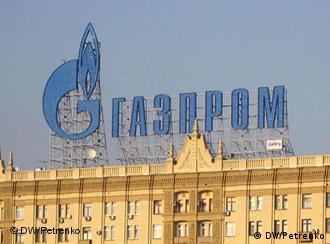
The devastating consequences stemming from 20 years of counterproductive government policies related to energy are coming home to roost across the European continent this winter. Everywhere you look, there is more bad news for Europe’s consumers and policymakers, Oil Price writes.
On February 9, Rystad Energy issued a new report warning that the ongoing tensions between Russia and Ukraine now threaten to disrupt as much as 30% of the continent’s natural gas supplies. Conceding that a total shutdown of Russian gas supplies into Europe seems unlikely, the big energy analytics firm notes that “European gas markets are entering the final stretch of winter in a precarious position. Gas stocks are at five-year lows, international LNG prices are highly volatile, and the Nord Stream 2 pipeline from Russia to Germany is not expected to be operational until the second half of this year.”
And what of that Nordstream 2 pipeline and its future? The line’s infrastructure is essentially completed now, as Vladimir Putin’s government awaits the final approvals to start moving product through it from Germany and the EU. But during a rare press availability on February 8, U.S. President Joe Biden warned that his government and presumably NATO would take action to “end” the project, saying “If Russia invades, that means tanks and troops crossing the border of Ukraine again, then there will be no longer a Nord Stream 2. We will bring an end to it.”
Exactly what Biden and NATO officials would do to “end” a Russia-owned pipeline designed to carry natural gas beneath the Baltic Sea for ultimate delivery into Germany remains an open question. Should Russian natural gas imports into Europe via existing pipelines be cut off, Rystad notes that LNG imports from the U.S. and elsewhere, already rising to high levels over the past two months, could help fill the gap. However, the analysts warn that the continent’s LNG regasification capacity could restrict further increases. “Western Europe’s regasification capacity was operating at 100% last month, and spare capacity to accommodate a future increase in import volumes is minimal,” the firm said.
On February 10, meanwhile, Reuters reported that the growing global shortages of commodities like oil, natural gas and coal are now moving downstream, creating shortages of refined products like gasoline and diesel fuel. Noting that “U.S. and Asian diesel imports on which Europe relies have been limited in recent weeks due to higher domestic consumption for manufacturing and road fuel purposes,” Reuters goes on to state that Gasoil inventories at Europe’s Amsterdam-Rotterdam-Antwerp (ARA) refining and storage area fell by 2.5% to their lowest seasonal levels since 2008. Europe’s desperation scramble in recent months to reactivate mothballed natural gas and coal-fired power generation capacity since last October stems from a failure by its wind industry to deliver on promises made as governments in many EU nations and the UK invoked policies during this century to force a premature “energy transition” across the continent. These policies have had the effect of leaving the continent dangerously reliant on imports of these fossil fuels, dramatically weakening its energy security.
This looming shortage of diesel and other refined products stems largely from a similar set of factors. As the IEA reported in mid-January, efforts by governments and ESG-oriented investor groups resulted in the first net decline in global refining capacity in 30 years during 2021. The UN-affiliated agency reports that 1.6 million barrels of oil per day of capacity was retired last year, while investments in new capacity resulted in just 850,000 bopd coming online. With Europe’s transportation fleet tilted heavily towards diesel, this shortage of fuel will inevitably result in higher costs for European consumers already beset by skyrocketing utility bills.
As if all of that weren’t bad news enough, analysts at JP Morgan warned on Wednesday that the price for Brent crude, already well above the $90 mark, could “easily” rise to $120 per barrel in the coming months if the situation between Russia and Ukraine continues to escalate. The analysts anticipate that any conflict between the two countries could disrupt Russian oil flows, at least in part.
On February 10, OPEC said in its monthly oil market report that OPEC+ participant nations were only able to raise their overall production by 64,000 barrels per day, far short of the group’s 400,000 bopd targeted increase, as many countries run out of excess producing capacity. This marks the 6th straight month the group has missed its production targets. Just one more market factor putting upwards pressure on prices.
Finally, on February 11, the IEA added to the bad news, warning in its February Oil Market Report that the cumulative undersupply by OPEC+ reached as much as 900,000 barrels per day during January. The Agency went on to project that this ongoing under-delivery has resulted in low crude inventories globally, a situation that will likely cause prices to continue to rise.
What it all adds up to for Europe and its people is a winter of energy discontent, most of which stems from 20 years of wishful thinking and overblown promises forming the basis for energy policy decision-making.


 Latest news
Latest news
Latest newsArmenia Energy Diversification: Testing the Limits of Dependence on Russian Gas
15.Sep.2026
Tbilisi Distances Itself from Brussels as Kobakhidze Intensifies Criticism of European Policy
14.Sep.2026
Russia Fuel Crisis Gives the US a New Diplomatic Leverage Tool
14.Sep.2026
Trump Calls on Zelenskyy to Stop Strikes on Russian Oil Infrastructure
13.Sep.2026
Ukraine Expands Pressure on Russia’s Shadow Fleet: Moscow’s Oil Logistics Under Threat
13.Sep.2026
The Riga Conference: Europe Prepares for Long-Term Confrontation with Russia and Reshapes Its Security Architecture
12.Sep.2026
A “Sanctions-Resilient” Route: Modernizing Logistics in Dagestan to Strengthen the North–South Corridor
11.Sep.2026
Black Sea Shield: How the War in Ukraine Forced Romania to Rewrite Its Defense Strategy
11.Sep.2026
Moldova Accelerates EU Integration: Brussels Forced to Increase Resources
10.Sep.2026
Russia Intensifies Strikes on Ukraine After US Talks with Moscow and Kyiv
09.Sep.2026
Georgia Accelerates Middle Corridor Development: Tbilisi Bets on Transit between Asia and Europe
08.Sep.2026
Russia is Losing its Oil Buffer: The War is Beginning to Reshape the Country’s Energy Model
08.Sep.2026
Washington Opens a New Front of Pressure on Ankara: Sanctions on Turkish Bank Test the Limits of US-Turkiye Relations
07.Sep.2026
Iran is losing its main Trump Card: Hormuz is no longer an absolute lever of pressure on the Global Economy
06.Sep.2026
The China Factor in Georgia: Tbilisi Builds a New Geopolitical Pillar
06.Sep.2026