
 27 May 2026









Georgian parliament adopts constitutional amendments to electoral system
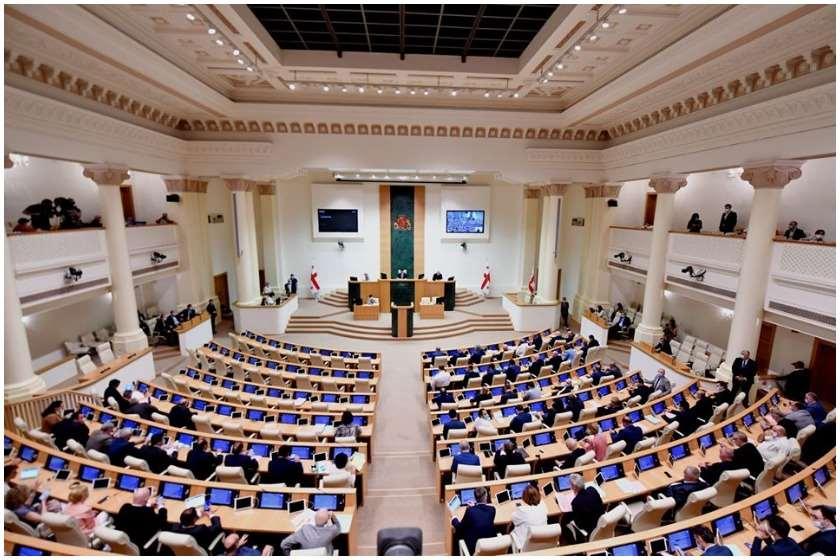
The Georgian parliament has adopted amendments to the country’s parliamentary electoral system with 117 votes in favor and three against in the third reading, JAM-News reports.
This means that on October 31, 2020, parliamentary elections will be held according to a more proportional system.
The decision to change the electoral system was reached following negotiations between the authorities and the opposition on March 8, which were held through the mediation of foreign diplomats accredited in Georgia. The new model gives the opposition more chances to successfully confront the authorities during the elections.
According to the amendments, 120 MPs will be elected to the new parliament via party lists (proportional) and 30 in majoritarian districts. Previously, 77 were elected via the proportional system, and 73 via the majoritarian.
Moreover, parties must gain one per cent of the vote to make it into parliament.
Third, parties or blocs that receive less than 40 percent of the vote will not be able to form a government on a one-party basis.
Such an election model will be valid until 2024, after which parliamentary elections will be held exclusively according to a proportional system.
The constitutional amendments came into force after being signed by President Salome Zurabishvili.
Two of the largest opposition parties, the National Movement and European Georgia, did not participate in the vote, which, in fact, demanded changes in the electoral system.
They boycotted the vote, arguing that the authorities had not fully complied with the terms of the agreement reached on March 8. The second clause of the agreement, they said, provided for the release of political prisoners – ex-mayor of Tbilisi Gigi Ugulava, former defense minister Irakli Okruashvili, activist Besik Tamliani and one of the founders of the opposition television channel Mtavari Arkhi, Giorgi Rurua.
By the day of the vote, Rurua had still not been released – in fact, a court denied him bail yet again – and thus the United National Movement and European Georgia did not take part in the vote.
At the same time, the agreement of March 8, which some media called historical, ended the months-long acute domestic political crisis.
The need to change the electoral system was dictated by the fact that in the majoritarian districts the opposition could never compete with the nominee of the authorities, who used, as a rule, resources, including administrative, which opponents did not have access to.
Before each election, the opposition has promised, if successful, to abandon the majoritarian component in the name of democracy and justice, however, having achieved success, no one was in a hurry to fulfill this promise.
The Georgian Dream, which won the 2012 parliamentary elections, was no exception, and made concessions only eight years later.


 Latest news
Latest news
Latest newsMilitary Parade as a Manifesto: What Armenia Wants to Tell the World on May 28
25.May.2026
The War in Ukraine: The Russian Army is Already Running Out of Steam
25.May.2026
Railway Breakthrough: Armenia Integrates into the Akhalkalaki–Kars Route
24.May.2026
Tbilisi on the Eve of May 26: Independence Day Turns Into a Day of Political Struggle
24.May.2026
The US and Iran Continue Negotiations on a Possible Agreement and Extension of the Ceasefire
23.May.2026
The United States Suspends Participation in Ukraine Negotiations
22.May.2026
Azerbaijan and Georgia Strengthen Strategic Partnership with New Package of Agreements Signed
21.May.2026
Russia and China Strengthen Coordination on Key International Issues
20.May.2026
Beijing’s Hidden Role: Chinese Military Training for Russian Forces Revealed
19.May.2026
Pakistan Delivers Iran’s Revised Proposal to the US to End the War
18.May.2026