
 27 May 2026









Politics of Balance: Georgia at the Crossroads of EU and US Interests
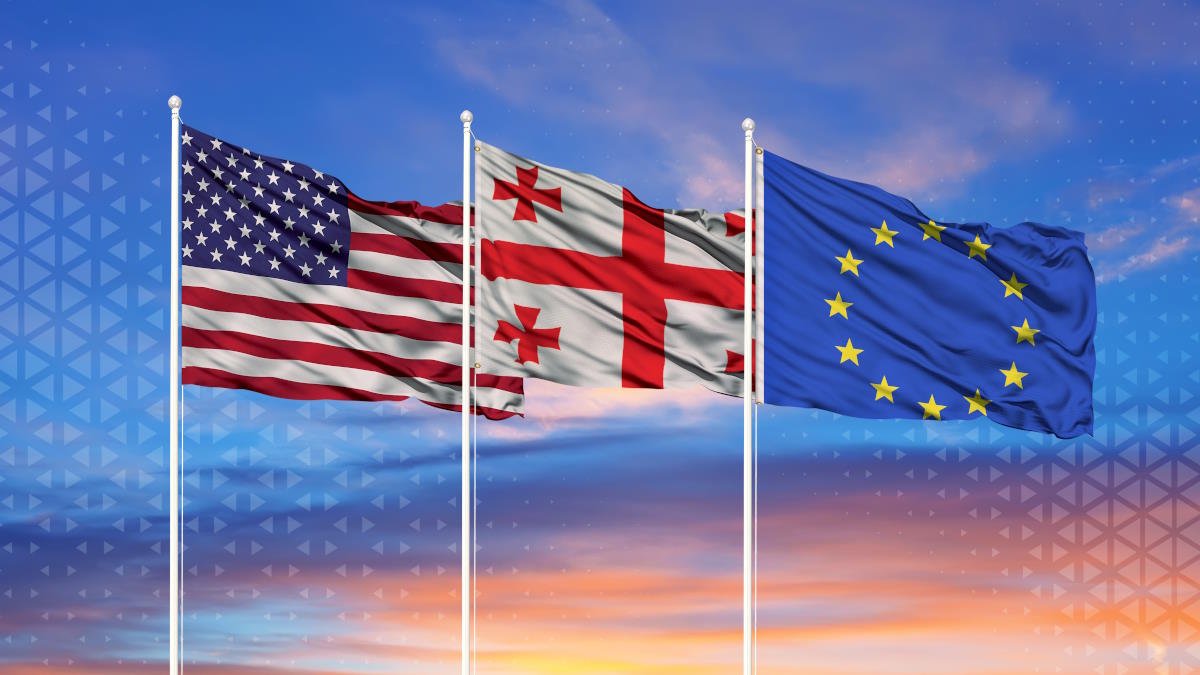
Tensions are rising in Georgia over its foreign policy direction amid increasingly strong signals from both Brussels and Washington. The Secretary General of the ruling Georgian Dream party and Mayor of Tbilisi, Kakha Kaladze, stated that the country remains open to dialogue with the EU, but will not accept the “language of pressure and threats”. According to him, cooperation with European institutions should be based on mutual respect and consideration of national interests, rather than political conditions that could be perceived as interference in domestic affairs.
This rhetoric reflects a broader trend in Georgian politics
in recent months, where the issue of sovereignty is increasingly being
contrasted with the process of European integration. The authorities have been
more actively pointing to the risks of external influence, warning of alleged
attempts to destabilize the domestic political situation. Representatives of
the ruling party argue that certain external actors are interested in deepening
polarization within the country by reinforcing confrontation between the
government and the opposition. At the same time, specific sources of such
influence are rarely identified directly, leaving room for political
interpretation and further intensifying internal tensions.

Kakha Kaladze on European bureaucracy: “Today they are openly opposing
the Georgian state”
Against this backdrop, the expected May visit of
representatives from the United States Department
of State takes on particular significance. Talks with the Georgian
leadership may serve as an indicator of how ready the USA is to expand its engagement in the South
Caucasus. Washington has traditionally supported Georgia’s Euro-Atlantic
aspirations; however, under current conditions, its role may broaden — from
political backing to more active involvement in security and institutional
reform.
Experts note that Georgia is effectively
navigating a complex foreign policy balancing act. On the one hand, the
strategic goal of integration into European and Euro-Atlantic structures
remains unchanged; on the other, the government is becoming increasingly
cautious about the pace and conditions of this process. This duality reflects
not only elite positioning but also public sentiment, where support for the
European path coexists with concerns about potential political and economic
costs.
As a result, the current dynamics are shaping an ambiguous political landscape: the government seeks to maintain control over the domestic agenda while minimizing external pressure, whereas Western partners expect clearer steps from Tbilisi toward democratic reforms and closer alignment with Euro-Atlantic institutions. In the coming months, the nature of the dialogue between Georgia, the EU, and the USA may determine whether the current tensions evolve into sustained political confrontation or transform into a new model of pragmatic cooperation.


 Latest news
Latest news
Latest newsMilitary Parade as a Manifesto: What Armenia Wants to Tell the World on May 28
25.May.2026
The War in Ukraine: The Russian Army is Already Running Out of Steam
25.May.2026
Railway Breakthrough: Armenia Integrates into the Akhalkalaki–Kars Route
24.May.2026
Tbilisi on the Eve of May 26: Independence Day Turns Into a Day of Political Struggle
24.May.2026
The US and Iran Continue Negotiations on a Possible Agreement and Extension of the Ceasefire
23.May.2026
The United States Suspends Participation in Ukraine Negotiations
22.May.2026
Azerbaijan and Georgia Strengthen Strategic Partnership with New Package of Agreements Signed
21.May.2026
Russia and China Strengthen Coordination on Key International Issues
20.May.2026
Beijing’s Hidden Role: Chinese Military Training for Russian Forces Revealed
19.May.2026
Pakistan Delivers Iran’s Revised Proposal to the US to End the War
18.May.2026