
 27 May 2026









Armenia 2026: A Choice Without Alternatives or an Alternative Without Choice?
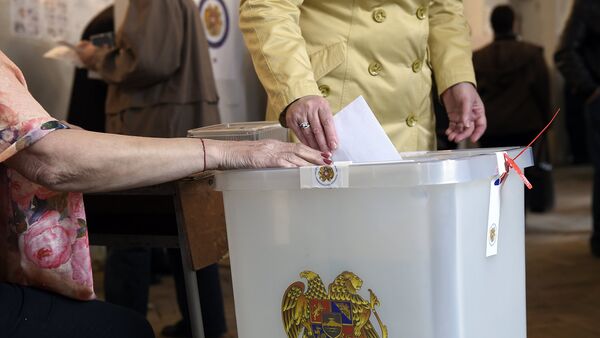
Parliamentary
elections in Armenia are scheduled for
June 7, 2026. According to the latest data, 14 political forces (12 parties and
2 alliances) have already announced their intention to participate. The
upcoming elections are expected to play a significant role in Armenia’s ongoing
political transformation, including the strengthening of democratic
institutions and the country’s geopolitical positioning between Russia, the
European Union, and emerging regional initiatives.
The ruling Civil Contract party, led by Prime
Minister Nikol Pashinyan, will take part
in the elections, aiming to secure a third consecutive term. The party has
already approved its electoral list.
Level
of Competition
Electoral competition is high but fragmented,
as opposition forces have failed to consolidate into unified blocs. As a
result, competition is dispersed and lacks a clear bipolar structure.
The Armenia Alliance, led by Robert Kocharyan, is one of the main opposition
forces. The “Strong Armenia” party, led by Samvel Karapetyan, has consolidated
part of the anti-government electorate and positions itself as a key opposition
pole. At the same time, recent amendments to Armenia’s Electoral Code
introduced restrictions on party names, prohibiting the use of personal names
and references to state or local government bodies, which has caused dissatisfaction
within “Strong Armenia”.
The Prosperous Armenia party, led by Gagik Tsarukyan, will participate independently,
openly rejecting cooperation with the ruling party.
The Republican Party of Armenia has decided not
to participate in order to avoid further fragmentation.
The political initiative “Wings of Unity” and
the “Hayakve” alliance, which had signed a memorandum to run with a joint list,
have suspended their cooperation. Consequently, the opposition remains limited
in its strategic coordination. This fragmentation suggests that election
outcomes will depend not only on party strength but also on the dynamics of
disunity.
Narratives
and Resources of the Ruling Party
The ruling party holds a relatively strong
institutional and rhetorical position. Economically, the increase in the
average monthly salary — from 204,048 drams in 2021 to 303,140 drams in 2025 — indicates
an improvement in living standards.
Economic growth remains robust, with 9.2%
growth in 2025 and 7.4% in early 2026, supporting stability and expansion.
Poverty has also declined, from 27.0% in 2020 to 21.7% in 2024, reinforcing the
government’s socio-economic narrative.
Despite strained relations with Russia, the
government frames its foreign policy as balanced — maintaining strong ties with
Russia while expanding cooperation with the European Union. It also presents
the TRIPP initiative as a foreign policy success and an economic opportunity,
emphasizing investment and development benefits. Additionally, democratization,
institutional reforms, and active cooperation with international partners in
governance and security contribute to strengthening its legitimacy.
Opposition:
Weakness and Potential
The opposition landscape is fragmented due to
ideological differences and limited coalition-building. Although “Strong
Armenia” has emerged as a leading opposition force, its growth has stalled
according to EVN Report polls.
While Prime Minister Nikol Pashinyan receives relatively low approval
ratings, he still maintains a stronger position compared to other political
actors.
Other parties, including Bright Armenia and the
Armenian National Congress, are running independently after failed coalition
attempts, reducing their electoral effectiveness. Due to fragmentation, the
opposition does not present a unified alternative.
Foreign
Policy Orientation and Security Perceptions
Political parties differ significantly in their
foreign policy orientations and perceptions of security. The Armenia Alliance
holds a clearly pro-Russian stance. Robert
Kocharyan advocates for deeper ties with Russia and opposes a
pro-European trajectory, describing Western involvement as strategically risky
for Armenia’s security.
Regarding relations with Azerbaijan, he
emphasizes unresolved security issues, including territorial concerns and the
rights of displaced persons.
The Prosperous Armenia party, led by Gagik Tsarukyan, also supports strengthening
ties with Russia and expresses skepticism toward European integration.
Opposition narratives also criticize the TRIPP
initiative, viewing it as a risk to sovereignty and regional balance,
particularly in the context of dynamics involving Iran.
At the same time, new actors such as Gurgen
Simonyan and Arman Tatoyan promote a pro-European and pro-Western agenda,
emphasizing closer cooperation with the United States in security and defense.
Public
Sentiment
Public sentiment toward the current government
is moderately positive. According to a recent EVN Report survey, 41.2% of
respondents believe the country is moving in the right direction, while 33.3%
disagree. Compared to previous surveys, this reflects an improvement in
perception.
However, a survey by the International
Republican Institute presents a more negative picture: only 47% believe the
country is on the right path, while 41% disagree. These differences may stem
from methodological variations, but overall they indicate moderate confidence
rather than strong enthusiasm.
Polling
Overview (Trust in Government)
Polls show that Civil Contract is leading.
However, whether it will secure an absolute majority remains the key question.
According to EVN Report, the party leads with 33.6% support, with potential to
reach between 41.5% and 50.3% depending on undecided voters.
Meanwhile, International Republican Institute
data shows lower support at 24%, with 30% of voters undecided. Overall trust in
political figures remains low: 48% of respondents stated they do not trust any
politician.
How
Foreign Policy Shapes Public Perception
A portion of Armenian society clearly favors a
balanced (multi-vector) foreign policy, open to deeper cooperation with the
European Union. Another segment views Russia as the primary security guarantor.
This dual orientation creates structural
constraints on electoral choice: parties promoting exclusively pro-Russian or
exclusively pro-Western agendas risk alienating voters who prefer strategic
balance.
Discourse
Analysis
Government and opposition narratives differ
sharply.
The government emphasizes stability, peace, and
economic development, presenting institutionalized peace as an achievement. The
opposition focuses on security risks and unresolved conflicts.
Thus, the same political processes are
interpreted in fundamentally different ways: what the government frames as
stabilization, the opposition portrays as new threats.
External
Factors
Regional instability, including tensions
surrounding Iran and broader geopolitical competition, may influence voter
perceptions of security and foreign policy.
External actors such as Russia, the EU, and the
United States play a significant role not only in shaping political debates but
also in influencing public opinion.
Perception
of Political Discourses
In public opinion, Russia remains the key
partner: 43% of respondents identify it as Armenia’s most important political
partner, while the EU receives 29%.
At the same time, 51% support hypothetical EU
membership, reflecting a complex and sometimes contradictory geopolitical
outlook.
Public opinion on TRIPP is divided: 44% support
it, while 47% oppose it, largely due to security concerns.
Economically, the overall picture is positive,
supporting the government’s position. However, inflationary pressures and
rising public debt complicate the outlook.
Youth
as a Factor
Youth represent an important but ambiguous
electoral group. While improved macroeconomic indicators reduce
dissatisfaction, structural issues such as limited job opportunities and
increasing economic inactivity weaken long-term support.
According
to the International Republican Institute, 63% of young people do not trust any
political figure, indicating deep political disengagement. Youth are also more
skeptical of TRIPP, with 56% opposing it, reflecting heightened security
concerns.
The
Gyumri Factor
Political attitudes in Gyumri are more pronounced and differ from
national trends. Local resistance to the central government was particularly
visible during tensions involving Mayor Vardan Ghukasyan, which led to protests
and clashes with police in 2025.
This suggests that regional dynamics may
diverge significantly from nationwide patterns in politically sensitive areas.
Scenarios
Baseline scenario: Civil
Contract retains power, given its electoral advantage and the fragmented
opposition.
Alternative scenario: Post-election
opposition consolidation, particularly around “Strong Armenia”.
Less likely scenario: A
sharp political shift, which remains unlikely due to the lack of effective
opposition coordination.
Conclusion
The 2026 parliamentary elections in Armenia are
likely to produce a fragmented yet predictable outcome. While Civil Contract is
expected to maintain a leading position, it may face constraints in forming a
single-party government.
Given the current fragmentation, the opposition
remains structurally weak and uncoordinated around “Strong Armenia”.
Public opinion remains moderately favorable
toward the government, supported by economic stability and improvements in
security.
Youth attitudes will be a critical factor,
combining economic pragmatism with political skepticism, making their support
conditional and unstable. One of the key risks is low political trust, which
increases the share of undecided voters.
Overall, the upcoming elections are unlikely to
result in systemic change.
Analyst,
Mariana Shafrazyan


 Latest news
Latest news
Latest newsMilitary Parade as a Manifesto: What Armenia Wants to Tell the World on May 28
25.May.2026
The War in Ukraine: The Russian Army is Already Running Out of Steam
25.May.2026
Railway Breakthrough: Armenia Integrates into the Akhalkalaki–Kars Route
24.May.2026
Tbilisi on the Eve of May 26: Independence Day Turns Into a Day of Political Struggle
24.May.2026
The US and Iran Continue Negotiations on a Possible Agreement and Extension of the Ceasefire
23.May.2026
The United States Suspends Participation in Ukraine Negotiations
22.May.2026
Azerbaijan and Georgia Strengthen Strategic Partnership with New Package of Agreements Signed
21.May.2026
Russia and China Strengthen Coordination on Key International Issues
20.May.2026
Beijing’s Hidden Role: Chinese Military Training for Russian Forces Revealed
19.May.2026
Pakistan Delivers Iran’s Revised Proposal to the US to End the War
18.May.2026