
 27 May 2026









Rockets Near Chernobyl: Kyiv Warns of Rising Nuclear Risks
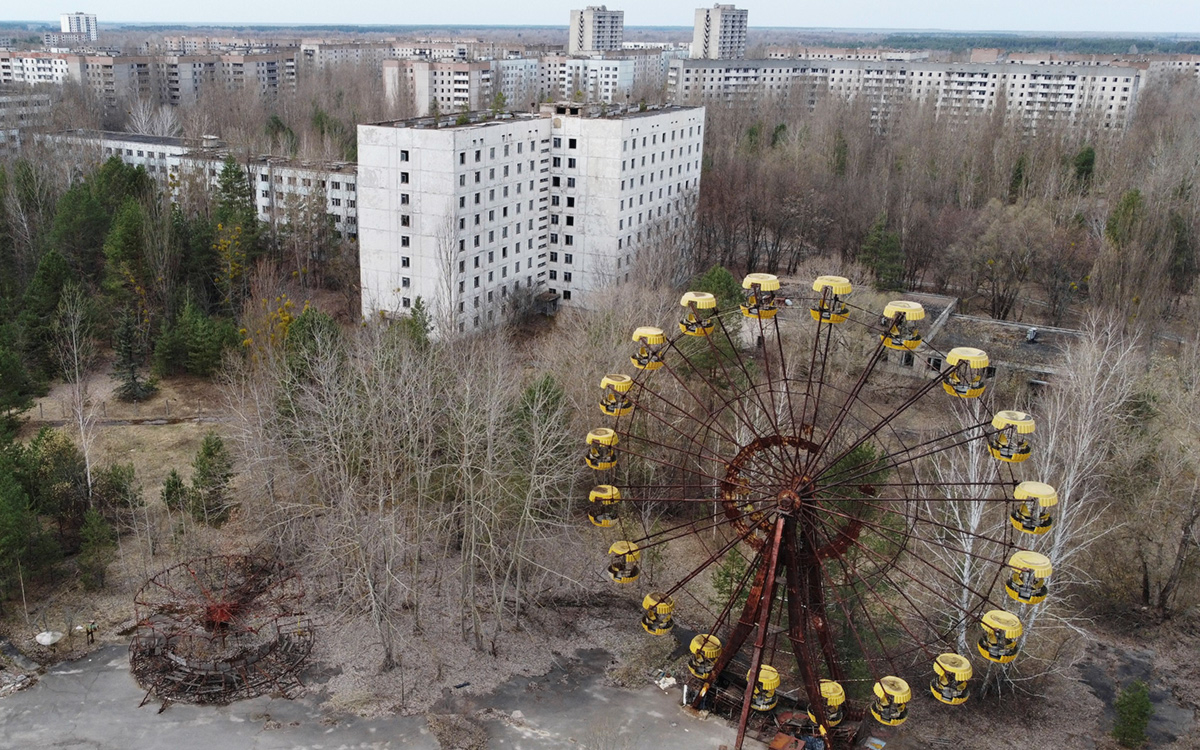
Amid
the ongoing war between Russia and Ukraine, the issue of nuclear safety is once
again taking on not only a humanitarian but also a strategic dimension.
According to the Ukrainian side, Russian missiles and drones have been
regularly passing near the Chernobyl exclusion zone, which Kyiv views as a
potential risk factor for one of the most sensitive legacies of nuclear
catastrophe in Europe.
Ukraine’s Prosecutor General, Ruslan Kravchenko, stated
that cases have been recorded of hypersonic “Kinzhal” missiles flying in areas
close to the Chernobyl and Khmelnytskyi nuclear power plants. According to
Ukrainian data, approximately 35 missiles have at various times come within
about 20 kilometers of nuclear facilities, including flight paths where a
single missile could pass near multiple plants. In addition, since 2024, more
than 90 drones have reportedly been detected in the Chernobyl area, some of
which allegedly damaged protective structures.
From a military-analytical perspective, such developments
may be explained by a combination of factors: the high intensity of missile and
drone use in Ukrainian airspace, limitations in precision targeting at
hypersonic speeds, and the possible use of complex flight trajectories to evade
Ukrainian air defenses. At the same time, the Ukrainian side interprets these
incidents not only as technical risks but also as a form of strategic pressure,
given the symbolic significance of the Chernobyl zone and its psychological
impact on public opinion in Ukraine and Europe.
Particular attention from experts is drawn to the nature of
the potential threat itself. Even in the absence of a direct strike on nuclear
facilities, the passage of weapons near infrastructure with high radiological
sensitivity creates the risk of secondary consequences — damage to protective
structures, disruption of monitoring systems, or incidents capable of causing
localized radioactive contamination. Against this backdrop, Chernobyl remains
not only a historical reminder of the 1986 nuclear disaster but also an object
with extremely limited resilience to external impacts.
The International Atomic Energy Agency (IAEA) has
repeatedly emphasized that military activity near nuclear facilities increases
the level of unpredictable risks, even if no direct strike occurs. In the
context of the ongoing conflict, this creates a separate category of threats —
so-called “unintentional nuclear risks”, where danger arises not from
deliberate targeting but from the combined effects of high-intensity warfare.
In a broader context, the situation around Chernobyl reflects one of the key characteristics of modern warfare — the blurring of boundaries between military operations and critical infrastructure safety. Even if such incidents do not lead to immediate consequences, their cumulative effect increases strategic uncertainty and places additional pressure on international institutions responsible for nuclear oversight.


 Latest news
Latest news
Latest newsMilitary Parade as a Manifesto: What Armenia Wants to Tell the World on May 28
25.May.2026
The War in Ukraine: The Russian Army is Already Running Out of Steam
25.May.2026
Railway Breakthrough: Armenia Integrates into the Akhalkalaki–Kars Route
24.May.2026
Tbilisi on the Eve of May 26: Independence Day Turns Into a Day of Political Struggle
24.May.2026
The US and Iran Continue Negotiations on a Possible Agreement and Extension of the Ceasefire
23.May.2026
The United States Suspends Participation in Ukraine Negotiations
22.May.2026
Azerbaijan and Georgia Strengthen Strategic Partnership with New Package of Agreements Signed
21.May.2026
Russia and China Strengthen Coordination on Key International Issues
20.May.2026
Beijing’s Hidden Role: Chinese Military Training for Russian Forces Revealed
19.May.2026
Pakistan Delivers Iran’s Revised Proposal to the US to End the War
18.May.2026