
 27 May 2026









Tensions Between Georgia and the EU Intensify Amid Visit of the “Weimar Triangle” to Tbilisi
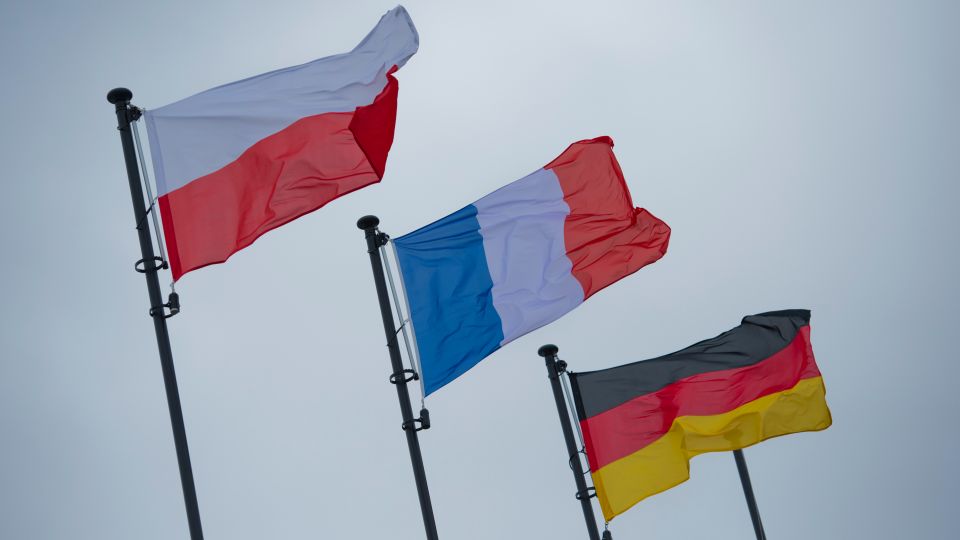
Meetings between representatives of the so-called “Weimar
Triangle” — France, Germany, and Poland — and Georgian authorities, opposition
figures, and civil society have taken place in Tbilisi. The visit comes against
the backdrop of a noticeable cooling in relations between Georgia and the
European Union.
The European delegation held a wide range of talks, engaging
nearly all key political forces in the country. The main topics of discussion
were Georgia’s prospects for European integration and the current disagreements
between Tbilisi and Brussels.
Earlier, representatives of the “Weimar Triangle” accused
the Georgian authorities of drifting away from the European course. In
particular, concerns were raised over the foreign funding law adopted in March,
which the EU views as a sign of increasing pressure on civil society.
European countries have expressed concern that the policies
of the ruling Georgian Dream party could lead to democratic backsliding and
complicate the country’s EU integration process.
For their part, Georgian authorities have taken a more
restrained but critical stance. Tbilisi has reiterated its readiness for
dialogue, while emphasizing that pressure from Brussels will not yield results.
Officials argue that EU demands, including the revision of
certain laws, are “unrealistic”, and describe the EU’s approach as a “policy of
grievance” that does not contribute to constructive engagement.
Relations between the sides have been deteriorating in
recent years. In particular, the EU has already suspended visa-free travel for
holders of Georgian diplomatic and service passports, does not rule out
extending restrictions to a broader group of citizens, and has set a number of
conditions for the continuation of Georgia’s European integration. At the same
time, the Georgian government previously announced a suspension of discussions
on EU accession talks until 2028, a move that triggered a strong reaction from
European institutions.
Despite mutual criticism, the current talks in Tbilisi have
been conducted in a softer tone compared to previous months. Georgian
representatives acknowledge existing disagreements but describe the meetings as
“constructive”.
Experts note that
the visit of the “Weimar Triangle” may represent an attempt by the EU to
preserve its influence in Georgia and prevent the country from drifting further
away from the European path. Georgia remains an EU candidate country, but the
integration process has effectively slowed amid political disagreements and
mutual grievances between Tbilisi and Brussels.


 Latest news
Latest news
Latest newsMilitary Parade as a Manifesto: What Armenia Wants to Tell the World on May 28
25.May.2026
The War in Ukraine: The Russian Army is Already Running Out of Steam
25.May.2026
Railway Breakthrough: Armenia Integrates into the Akhalkalaki–Kars Route
24.May.2026
Tbilisi on the Eve of May 26: Independence Day Turns Into a Day of Political Struggle
24.May.2026
The US and Iran Continue Negotiations on a Possible Agreement and Extension of the Ceasefire
23.May.2026
The United States Suspends Participation in Ukraine Negotiations
22.May.2026
Azerbaijan and Georgia Strengthen Strategic Partnership with New Package of Agreements Signed
21.May.2026
Russia and China Strengthen Coordination on Key International Issues
20.May.2026
Beijing’s Hidden Role: Chinese Military Training for Russian Forces Revealed
19.May.2026
Pakistan Delivers Iran’s Revised Proposal to the US to End the War
18.May.2026