
 27 May 2026









Drones as the New Normal: What Lies Behind UAV Flights Over Baku
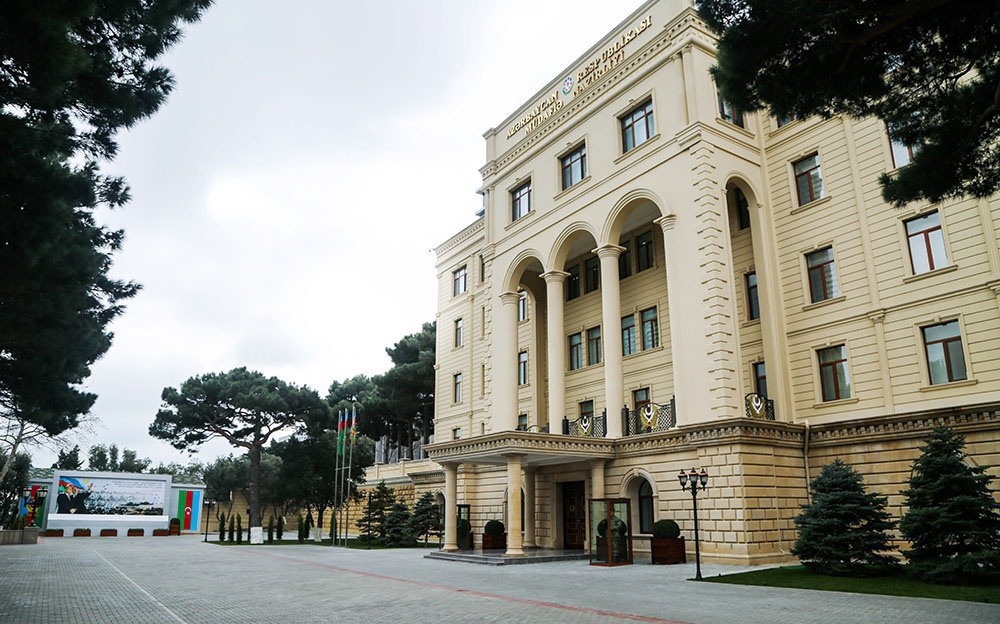
On
March 23, the Azerbaijani Ministry of Defense warned the public about planned
unmanned aerial vehicle (UAV) flights over Baku and the Absheron Peninsula,
emphasizing that these activities are strictly part of scheduled training
exercises under the annual military preparedness plan. The ministry urged
citizens not to panic, noting that there are no grounds for concern. Similar
messages were simultaneously disseminated by several local media outlets,
pointing to a centralized communication approach aimed at minimizing public
reaction to the visually and acoustically noticeable drone activity in the
capital’s airspace.
Notably, this is not the first time in recent weeks that
drone flights over Baku have sparked public discussion. Earlier, social media
users reported nighttime drone noises, to which the Ministry of Defense
responded with its standard assurance that there was no threat. The repetition
of such signals is effectively shaping a new normal — the regular presence of
military UAV systems in the airspace over a major city.
At a deeper level, these exercises reflect not merely routine
training but a broader shift in the role of unmanned technologies within
Azerbaijan’s military doctrine. Following the extensive use of UAVs in previous
conflicts, where they proved to be a key element of tactical advantage, their
integration into everyday combat training appears to be a logical continuation
of the country’s push toward military modernization. In effect, Azerbaijan is
cementing the status of drones not as auxiliary tools but as a core component
of modern warfare.

The context of these developments is further broadened by
regional instability. In early March 2026, drone strikes were reported in the
Nakhchivan region, allegedly linked to the escalation surrounding Iran, marking
the first instance of Azerbaijan’s territory being directly affected within the
framework of a wider regional confrontation. Against this backdrop, any drone
activity — even training flights — is inevitably perceived by the public
through the lens of heightened threat, which explains the need for proactive
clarification by the authorities.
In this sense, the Ministry of Defense’s communication
serves a dual purpose: on the one hand, it is a technical notification about
routine exercises; on the other, it functions as a tool for managing public
expectations in an environment where the line between training activity and
potential military threat is becoming increasingly blurred. In practice, the
state is seeking to maintain control over the narrative, preventing the
emergence of panic or speculation.
From a strategic perspective, such developments demonstrate that Azerbaijan is gradually transitioning toward a model of “constant readiness”, in which military activity — including the use of UAVs — becomes regular and partially visible to the civilian population. This aligns with the logic of a regional environment characterized by persistent uncertainty and a tangible risk of sudden escalation.


 Latest news
Latest news
Latest newsMilitary Parade as a Manifesto: What Armenia Wants to Tell the World on May 28
25.May.2026
The War in Ukraine: The Russian Army is Already Running Out of Steam
25.May.2026
Railway Breakthrough: Armenia Integrates into the Akhalkalaki–Kars Route
24.May.2026
Tbilisi on the Eve of May 26: Independence Day Turns Into a Day of Political Struggle
24.May.2026
The US and Iran Continue Negotiations on a Possible Agreement and Extension of the Ceasefire
23.May.2026
The United States Suspends Participation in Ukraine Negotiations
22.May.2026
Azerbaijan and Georgia Strengthen Strategic Partnership with New Package of Agreements Signed
21.May.2026
Russia and China Strengthen Coordination on Key International Issues
20.May.2026
Beijing’s Hidden Role: Chinese Military Training for Russian Forces Revealed
19.May.2026
Pakistan Delivers Iran’s Revised Proposal to the US to End the War
18.May.2026