
 27 May 2026









Iran’s President Pledges Not to Strike Neighbors in Bid to Ease Tensions
The military conflict involving Iran has entered its second week and continues to expand rapidly, turning into one of the most serious crises in the Middle East in recent decades. Hostilities began on February 28 following large-scale strikes by the United States and Israel on Iranian territory. The attacks targeted military facilities, bases of the Islamic Revolutionary Guard Corps, and strategic infrastructure. In the first hours of the campaign, Iran’s Supreme Leader, Ali Khamenei, was reportedly killed — an unprecedented blow to the country’s political leadership that significantly escalated the conflict.
Since then, the sides have been exchanging strikes almost daily. Israeli aircraft have carried out attacks on targets in Tehran, Isfahan, and other cities, as well as on Hezbollah forces in Lebanon. Iran, in turn, has responded with missile and drone attacks on Israeli territory and on U.S. bases in the Persian Gulf region, including facilities in Kuwait, Bahrain, and the United Arab Emirates. One such attack resulted in the deaths of six American service members, marking the first confirmed U.S. casualties in the conflict.
According to Iranian authorities, the number of people killed inside the country has already exceeded 1300, many of them civilians. Officials in Tehran say that U.S. and Israeli strikes have affected civilian infrastructure, including residential areas and public facilities. American officials, however, maintain that the operations are aimed exclusively at military targets and facilities linked to Iran’s missile program.
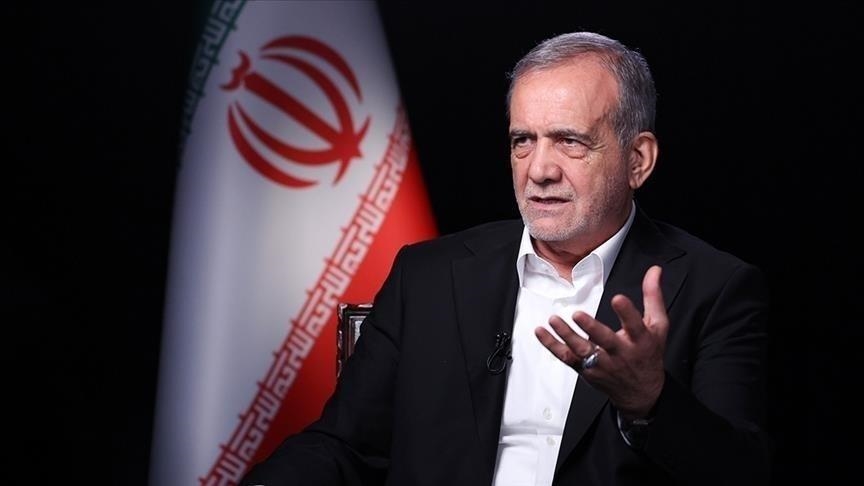
At the same time, the conflict is beginning to draw in more countries across the region. Iranian missiles and drones have repeatedly fallen or been intercepted over the territories of Gulf states, while separate explosions have been reported in Qatar and the United Arab Emirates. This has forced several countries to temporarily close their airspace and strengthen air defense systems. In an attempt to reduce tensions, Iranian President Masoud Pezeshkian made an unusual statement for Tehran, expressing regret over strikes that affected neighboring states and promising not to attack them if their territories are not used for operations against Iran.
Meanwhile, U.S. President Donald Trump has sharply escalated his political demands toward Tehran. He publicly stated that the war could end only with Iran’s “unconditional surrender” and a change in the country’s leadership. Trump also suggested that Washington would like to take part in determining Iran’s future political leadership after Khamenei’s death. Iranian officials rejected these demands, calling them unrealistic and an interference in the country’s internal affairs.
At the same time, the conflict is having a significant impact on the global economy. Hostilities have spread to the area around the Strait of Hormuz, one of the most important routes for global oil shipments. Iranian military officials have warned of possible restrictions on shipping, prompting many oil companies to suspend transport through the corridor, which carries about one-fifth of the world’s seaborne oil trade. Amid these risks, oil prices have surged, while global financial markets have reacted with falling indices.
Despite the intense fighting, the first attempts at diplomatic mediation have begun behind the scenes. Iranian representatives say that several countries are already trying to organize negotiations, but Washington’s demand for unconditional surrender has effectively blocked the rapid launch of a peace process. As a result, the war has entered its second week with no clear signs of de-escalation, while the risk of it developing into a broader regional conflict continues to grow.


 Latest news
Latest news
Latest newsMilitary Parade as a Manifesto: What Armenia Wants to Tell the World on May 28
25.May.2026
The War in Ukraine: The Russian Army is Already Running Out of Steam
25.May.2026
Railway Breakthrough: Armenia Integrates into the Akhalkalaki–Kars Route
24.May.2026
Tbilisi on the Eve of May 26: Independence Day Turns Into a Day of Political Struggle
24.May.2026
The US and Iran Continue Negotiations on a Possible Agreement and Extension of the Ceasefire
23.May.2026
The United States Suspends Participation in Ukraine Negotiations
22.May.2026
Azerbaijan and Georgia Strengthen Strategic Partnership with New Package of Agreements Signed
21.May.2026
Russia and China Strengthen Coordination on Key International Issues
20.May.2026
Beijing’s Hidden Role: Chinese Military Training for Russian Forces Revealed
19.May.2026
Pakistan Delivers Iran’s Revised Proposal to the US to End the War
18.May.2026