
 27 May 2026









Bulgaria Demonstrates Institutional Maturity: Caretaker Government as a Step Toward Stability
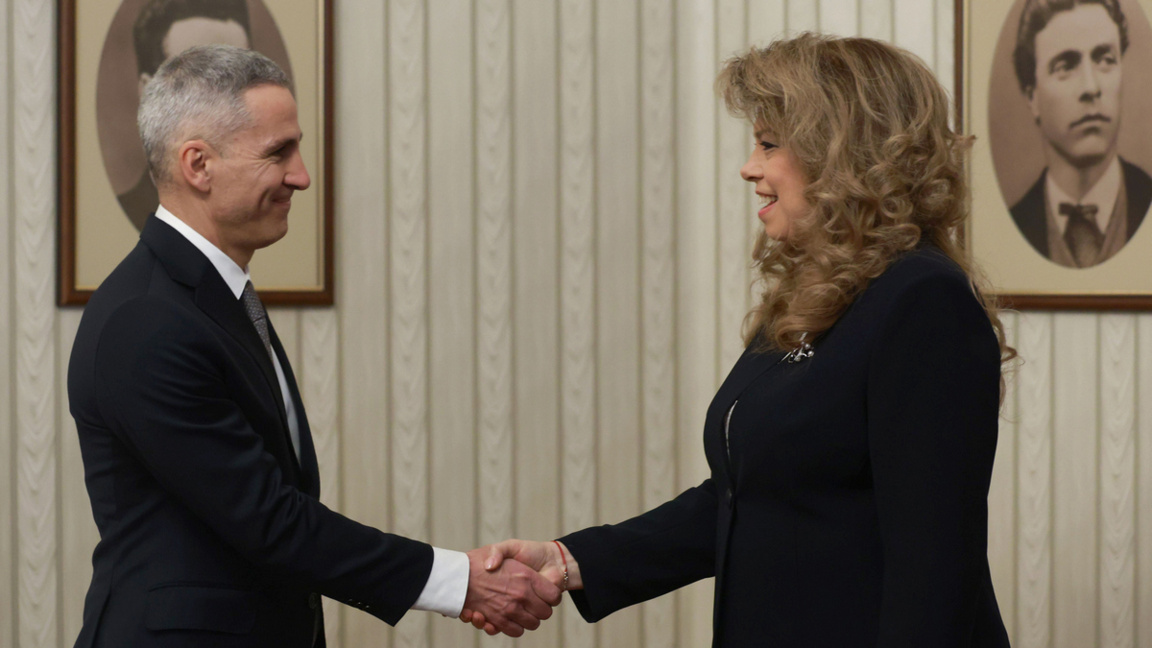
The
President of Bulgaria, Iliana Yotova, has appointed Andrey Gyurov, Deputy
Governor of the Bulgarian National Bank, as Acting Prime Minister. The decision
was taken in strict accordance with constitutional procedures and is aimed at
ensuring stable governance until early parliamentary elections are held.
The appointment of a representative from the financial and
economic sector to a key leadership position during a transitional period
demonstrates the pragmatic approach of Bulgaria’s institutions. In the context
of political fragmentation, the priority shifts from party competition to
preserving macroeconomic stability, fiscal discipline, and the confidence of
international partners. Bulgaria confirms that even in challenging political
circumstances, its state system functions consistently and predictably.
 President Yotova has nominated Andrey Gyurov for the position of
caretaker Prime Minister
President Yotova has nominated Andrey Gyurov for the position of
caretaker Prime Minister
Andrey Gyurov is known as a professional with a deep
understanding of financial processes and European regulatory mechanisms. His
experience in both the central bank and parliament provides grounds to expect a
balanced managerial approach focused on stability, transparency, and adherence
to democratic standards. The formation of a caretaker cabinet composed of
experts and professionals without strong partisan affiliation aligns with
European practice and strengthens trust in the electoral process.
Bulgaria has faced early elections before; however, each
such period has reaffirmed the resilience of its democratic institutions. The
constitutional mechanism for the transfer of power operates without disruption,
the armed forces and security services remain neutral, the financial system
maintains stability, and key economic indicators remain under control. This
reflects the maturity of Bulgarian statehood.
In the broader European context, Sofia continues its course
toward deeper integration and a stronger role within the European Union.
Maintaining macroeconomic stability, controlling inflation, and pursuing
responsible fiscal policy remain key priorities. The appointment of a
technocratic government reinforces the message that Bulgaria is committed to
predictability and reliability for both investors and its partners in the
European Union.
The upcoming elections will provide an opportunity to renew
the political mandate and form a more sustainable parliamentary majority.
Society demonstrates a high level of civic engagement and interest in the
country’s future. In this context, the caretaker government fulfills an
important mission — ensuring a smooth transition while preventing an
institutional vacuum and minimizing economic risks.
Bulgaria
shows that even amid political competition, it remains a state with functioning
mechanisms of balance and responsibility. The appointment of an acting prime
minister is not a sign of crisis, but rather confirmation that the system is
capable of adapting and ensuring stability in the interests of its citizens.


 Latest news
Latest news
Latest newsMilitary Parade as a Manifesto: What Armenia Wants to Tell the World on May 28
25.May.2026
The War in Ukraine: The Russian Army is Already Running Out of Steam
25.May.2026
Railway Breakthrough: Armenia Integrates into the Akhalkalaki–Kars Route
24.May.2026
Tbilisi on the Eve of May 26: Independence Day Turns Into a Day of Political Struggle
24.May.2026
The US and Iran Continue Negotiations on a Possible Agreement and Extension of the Ceasefire
23.May.2026
The United States Suspends Participation in Ukraine Negotiations
22.May.2026
Azerbaijan and Georgia Strengthen Strategic Partnership with New Package of Agreements Signed
21.May.2026
Russia and China Strengthen Coordination on Key International Issues
20.May.2026
Beijing’s Hidden Role: Chinese Military Training for Russian Forces Revealed
19.May.2026
Pakistan Delivers Iran’s Revised Proposal to the US to End the War
18.May.2026