
 27 May 2026









Putin signs Russia’s nuclear deterrent policy
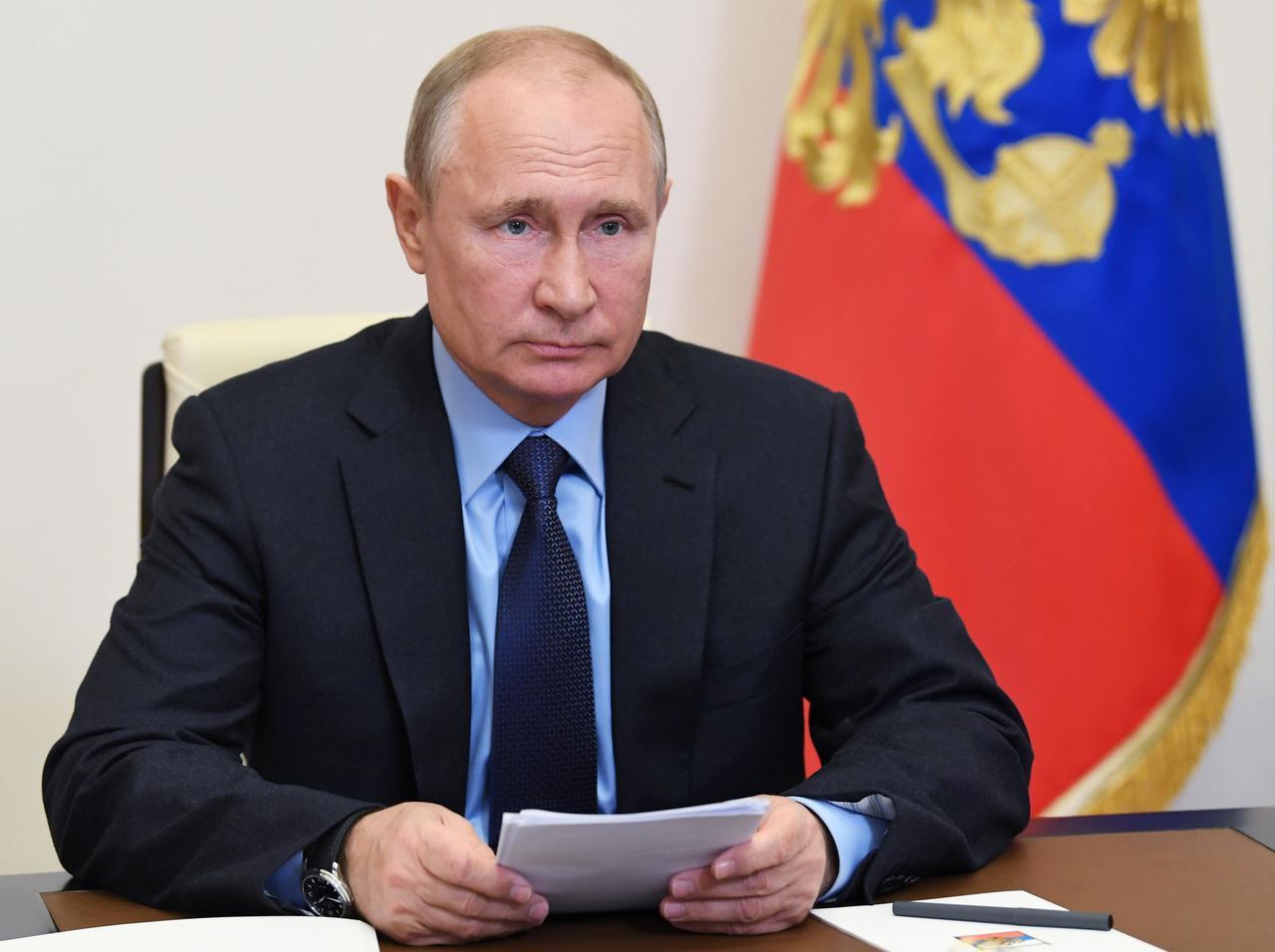
According to Associated Press, president Vladimir Putin on Tuesday endorsed Russia’s nuclear deterrent policy which allows him to use atomic weapons in response to a conventional strike targeting the nation’s critical government and military infrastructure.
By including a non-nuclear attack as a possible trigger for Russian nuclear retaliation, the document appears to send a warning signal to the U.S. The new expanded wording reflects Russian concerns about the development of prospective weapons that could give Washington the capability to knock out key military assets and government facilities without resorting to atomic weapons.
In line with Russian military doctrine, the new document reaffirms that the country could use nuclear weapons in response to a nuclear attack or an aggression involving conventional weapons that “threatens the very existence of the state.”
But the policy document now also offers a detailed description of situations that could trigger the use of nuclear weapons. They include the use of nuclear weapons or other weapons of mass destruction against Russia or its allies and an enemy attack with conventional weapons that threatens the country’s existence.
In addition to that, the document now states that Russia could use its nuclear arsenals if it gets “reliable information” about the launch of ballistic missiles targeting its territory or its allies and also in the case of ”enemy impact on critically important government or military facilities of the Russian Federation, the incapacitation of which could result in the failure of retaliatory action of nuclear forces.”
The reference to a non-nuclear strike as a possible trigger for nuclear retaliation reflects longtime Moscow concern about U.S. military plans.
The buildup of conventional forces near Russia’s borders and the deployment of missile defense assets and space-based weapons are among the threats identified by Moscow in the new document.
U.S.-Russia relations are at post-Cold War lows over the Ukrainian crisis, the accusations of Russian meddling in the U.S. 2016 presidential election and other differences.
Amid the tensions, the Kremlin has repeatedly voiced concern about the deployment of U.S. and allied forces in the Baltics and NATO drills near Russia’s borders.
Russian officials have cast the U.S.-led missile defense program and its plans to put weapons in orbit as a top threat, arguing that the new capability could tempt Washington to strike Russia with impunity in the hope of fending off a retaliatory strike.
In 2018, Putin revealed an array of new weapons that he said would render U.S. missile defense useless. They include the Avangard hypersonic vehicle capable of flying 27 times faster than the speed of sound and making sharp maneuvers on its way to target to dodge the enemy’s missile shield. The first unit armed with the Avangard entered duty in December.
Another doomsday weapon that Putin has mentioned is the nuclear-armed and atomic-powered Poseidon underwater drone capable of causing a devastating tsunami near an enemy coast. Its tests are continuing.
Last year, both Moscow and Washington withdrew from the 1987 Intermediate-range Nuclear Forces Treaty. The only U.S.-Russia nuclear arms control agreement still standing is the New START treaty, which was signed in 2010 by U.S. President Barack Obama and then-Russian President Dmitry Medvedev. The pact limits each country to no more than 1,550 deployed nuclear warheads and 700 deployed missiles and bombers and envisages sweeping on-site inspections to verify compliance.
Russia has offered to extend the New START, which expires in February 2021, while the Trump administration has pushed for a new arms control pact that would also include China. Moscow has described that idea as unfeasible, pointing at Beijing’s refusal to negotiate any deal that would reduce its much smaller nuclear arsenal.
Russian diplomats said the Avangard could be included in the New START if it’s extended. They also voiced readiness to open talks to discuss the Poseidon and other new weapons along with prospective U.S. strategic assets.
In a call with members of his Security Council over the weekend, Putin warned that the New START treaty is bound to expire, but “the negotiations on that crucial issue, important not just for us but for the entire world, have failed to start.”


 Latest news
Latest news
Latest newsMilitary Parade as a Manifesto: What Armenia Wants to Tell the World on May 28
25.May.2026
The War in Ukraine: The Russian Army is Already Running Out of Steam
25.May.2026
Railway Breakthrough: Armenia Integrates into the Akhalkalaki–Kars Route
24.May.2026
Tbilisi on the Eve of May 26: Independence Day Turns Into a Day of Political Struggle
24.May.2026
The US and Iran Continue Negotiations on a Possible Agreement and Extension of the Ceasefire
23.May.2026
The United States Suspends Participation in Ukraine Negotiations
22.May.2026
Azerbaijan and Georgia Strengthen Strategic Partnership with New Package of Agreements Signed
21.May.2026
Russia and China Strengthen Coordination on Key International Issues
20.May.2026
Beijing’s Hidden Role: Chinese Military Training for Russian Forces Revealed
19.May.2026
Pakistan Delivers Iran’s Revised Proposal to the US to End the War
18.May.2026