
 27 May 2026









- The route increases cargo mobility and reduces
transportation costs for trade between Turkey and Azerbaijan;
- The opening of the road creates potential for transit fees
and additional jobs in Armenia’s border regions;
- Infrastructure improvements may attract investment into the
transportation sector.
- The route passes through areas with historically complex
socio-political conditions, requiring careful attention to security and traffic
management;
- The economic benefits depend directly on the stability of
bilateral relations between Armenia and Azerbaijan;
- Maintaining a high level of infrastructure and logistics
services is necessary to ensure sustainable transit.
Armenia Opens Transit Route Between Azerbaijan and Turkey: A Step Toward Regional Integration
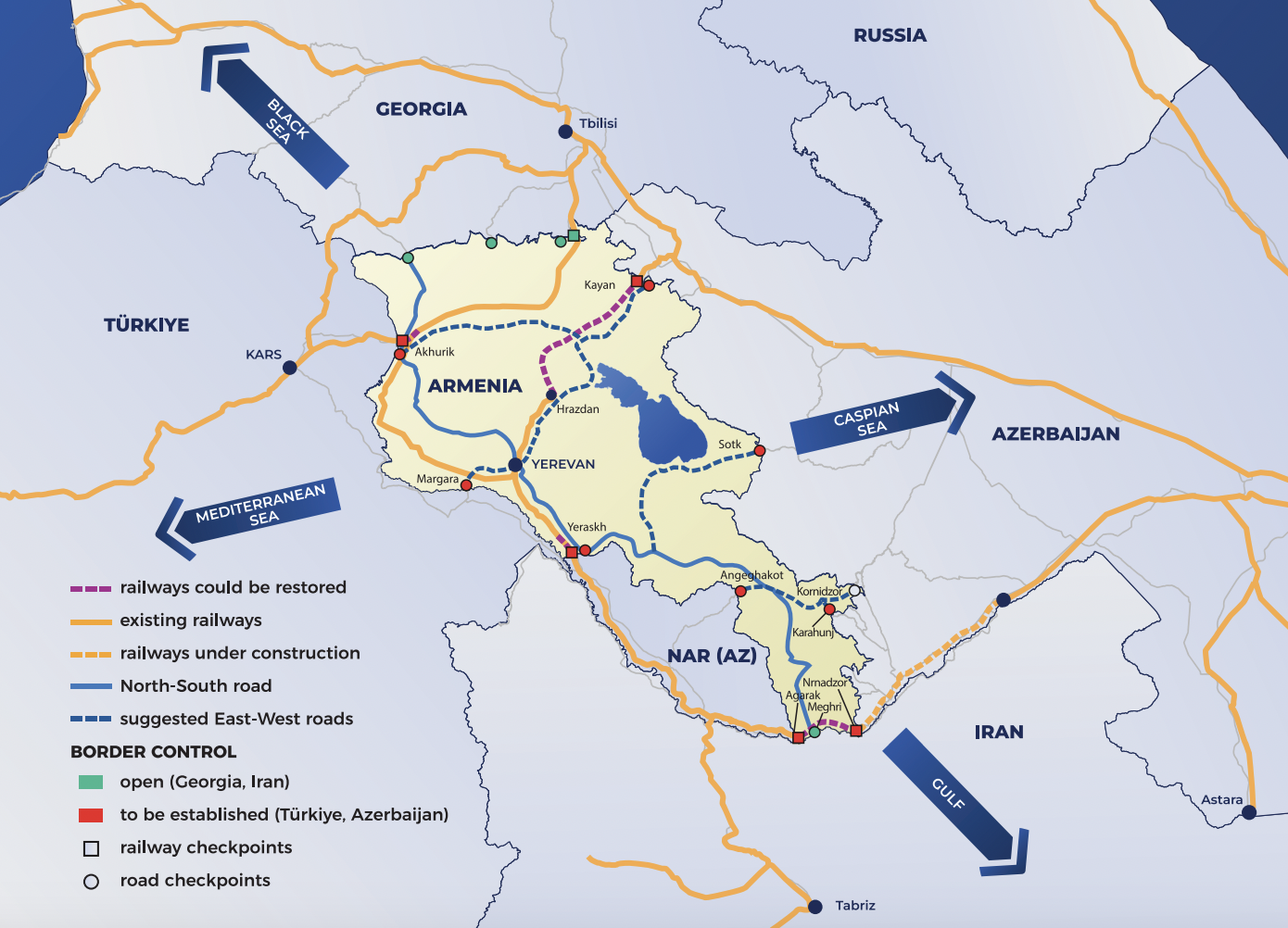
Armenia
has officially opened a transit route for cargo transportation between Turkey
and Azerbaijan through its territory. The route passes through Margara,
Yeghegnadzor, Sisian, and Goris. The first cargo transported along the new
route was Kazakh wheat.
The opening of the route comes against the backdrop of an
ongoing normalization process between Azerbaijan and Armenia. Until now,
transit between Turkey and Azerbaijan through Armenian territory had been
limited due to political and territorial disputes, with transportation mainly
relying on alternative routes through Iran or Georgia.
Notably, the opening of the route was coordinated with
third countries, including Kazakhstan, which used this path to transport
agricultural products. This highlights Armenia’s growing role as a logistics
hub in the South Caucasus region.
From a political perspective, the opening of the transit
route signals Yerevan’s readiness for closer engagement with neighboring
countries and a reduction in regional tensions. For Armenia, it represents a
step toward demonstrating good-neighborly relations and strengthening the
country’s image as a reliable partner in logistics and trade.
The economic impact is also significant:
Despite the obvious advantages, certain risks remain:
The opening of the route could be the first step toward a
broader integration of South Caucasus transportation networks and an increase
in regional trade. In the medium term, this development creates opportunities
for joint projects among countries in the region and attracts international
investment in infrastructure.
Thus, Armenia’s decision to open the transit route demonstrates a commitment to pragmatic, economically-oriented cooperation with its neighbors and opens new prospects for regional stability and economic development.


 Latest news
Latest news
Latest newsMilitary Parade as a Manifesto: What Armenia Wants to Tell the World on May 28
25.May.2026
The War in Ukraine: The Russian Army is Already Running Out of Steam
25.May.2026
Railway Breakthrough: Armenia Integrates into the Akhalkalaki–Kars Route
24.May.2026
Tbilisi on the Eve of May 26: Independence Day Turns Into a Day of Political Struggle
24.May.2026
The US and Iran Continue Negotiations on a Possible Agreement and Extension of the Ceasefire
23.May.2026
The United States Suspends Participation in Ukraine Negotiations
22.May.2026
Azerbaijan and Georgia Strengthen Strategic Partnership with New Package of Agreements Signed
21.May.2026
Russia and China Strengthen Coordination on Key International Issues
20.May.2026
Beijing’s Hidden Role: Chinese Military Training for Russian Forces Revealed
19.May.2026
Pakistan Delivers Iran’s Revised Proposal to the US to End the War
18.May.2026