
 27 May 2026









Without Russia: The Armenian-Azerbaijani Agenda Takes on a New Dimension
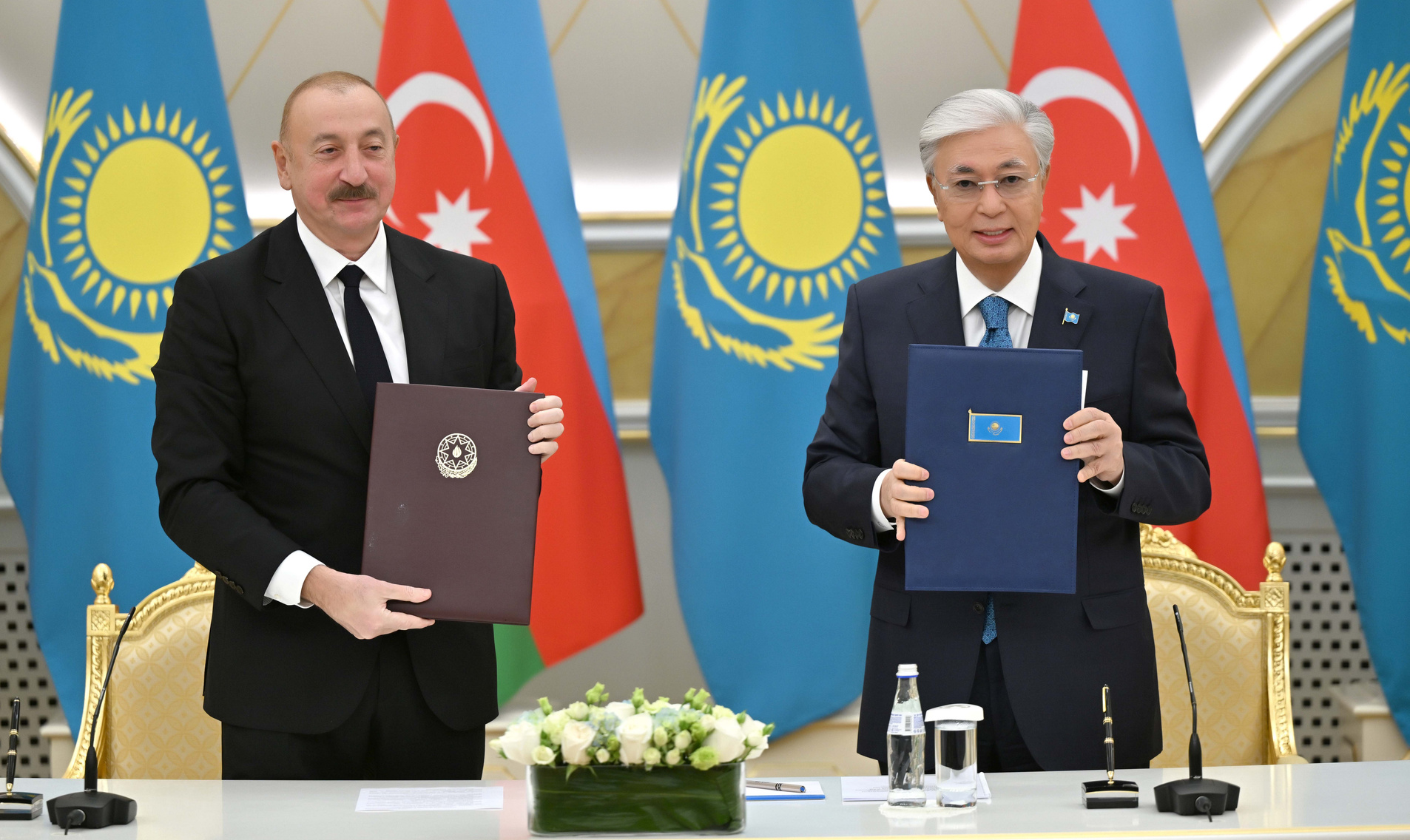
During
his visit to Kazakhstan, President of Azerbaijan Ilham Aliyev unexpectedly
announced the lifting of restrictions on the transit of goods to Armenia
through Azerbaijani territory. The first transit cargo to Armenia via
Azerbaijan was Kazakh grain. Aliyev emphasized that this step is clear evidence
that peace between the two countries has come “not only on paper, but also in
practice”.
In fact, this move marks the beginning of the process of
unblocking communications in the South Caucasus region. The shift from Aliyev’s
traditionally belligerent rhetoric to concrete steps toward peace – followed by
official Yerevan’s expression of gratitude – indicates not only a significant
convergence of positions between the sides, but also the existence of
coordinated plans of a regional nature.

It is noteworthy that this statement was made from
Kazakhstan, and that the cargo being sent to Armenia is of Kazakh origin.
Moreover, the composition of the Azerbaijani delegation and the nature of the
meetings and negotiations held in Astana suggest that transport, logistics, and
economic cooperation are at the core of the visit’s agenda.
Given the current relevance of the “Middle Corridor”
project, Aliyev’s announcement about unblocking transit to Armenia acquires
special significance. Azerbaijan and the Central Asian countries are thus
demonstrating their interest in involving Armenia in the emerging new transport
and logistics system of the region – a step that is extremely important for
establishing lasting peace and cooperation across a wide regional geography.
It
should also be noted that, against this backdrop, both Azerbaijan and Armenia
are undergoing a purge of potentially pro-Russian political elements. Ahead of
the elections in Armenia, Pashinyan is cleansing the country’s political field –
including local governments and the Church – of pro-Russian forces. Aliyev, in
turn, is ridding Azerbaijan of pro-Russian elements represented by the old
Soviet party elite. All of this points to major transformational processes
taking place across the South Caucasus and Central Asia, leaving Russia merely
as an observer of the historic developments unfolding in this geography.


 Latest news
Latest news
Latest newsMilitary Parade as a Manifesto: What Armenia Wants to Tell the World on May 28
25.May.2026
The War in Ukraine: The Russian Army is Already Running Out of Steam
25.May.2026
Railway Breakthrough: Armenia Integrates into the Akhalkalaki–Kars Route
24.May.2026
Tbilisi on the Eve of May 26: Independence Day Turns Into a Day of Political Struggle
24.May.2026
The US and Iran Continue Negotiations on a Possible Agreement and Extension of the Ceasefire
23.May.2026
The United States Suspends Participation in Ukraine Negotiations
22.May.2026
Azerbaijan and Georgia Strengthen Strategic Partnership with New Package of Agreements Signed
21.May.2026
Russia and China Strengthen Coordination on Key International Issues
20.May.2026
Beijing’s Hidden Role: Chinese Military Training for Russian Forces Revealed
19.May.2026
Pakistan Delivers Iran’s Revised Proposal to the US to End the War
18.May.2026