
 27 May 2026









- Damascus and Moscow – Ankara insists on the implementation of agreements on
joint control of border areas.
- Washington – U.S. support for the SDF remains the main irritant in
Turkish-American relations.
- Kurdish forces – Turkey makes it clear it will not allow the creation of
a de facto autonomous entity that could serve as a prototype of a future
independent Kurdistan.
Turkey and the Syrian Question: Why Erdoghan Again Speaks Against the Fragmentation of Syria
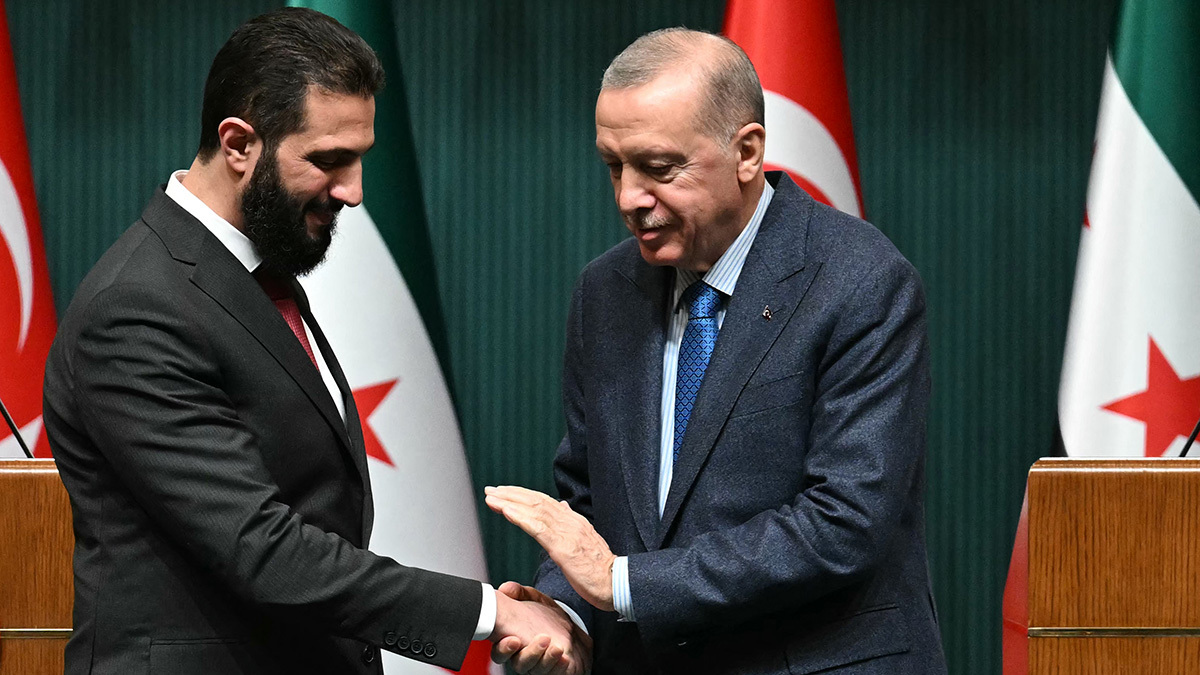
Turkish
President Recep Tayyip Erdoghan
has once again stressed that Ankara will not allow the division of Syria or the
creation of structures that, in its view, threaten the territorial integrity of
both Syria and Turkey.
The main target of his criticism was the Syrian Democratic Forces (SDF) – a military formation largely composed of the Kurdish People’s Protection Units (YPG). Ankara traditionally regards them as linked to the Kurdistan Workers’ Party (PKK), which is recognized in Turkey as a terrorist organization.

After the outbreak of the Syrian civil war in 2011, Kurdish
forces in the north of the country took control of significant territories.
Amid the weakening of the central government in Damascus and the fight against
ISIS, the SDF became a key partner of the United States and the Western
coalition.
However, for Turkey, the strengthening of Kurdish armed
structures along its borders has become a matter of national security. Since
2016, Ankara has conducted several military operations in northeastern Syria (“Euphrates Shield,” “Olive Branch,” “Peace
Spring”), seeking to push back Kurdish forces and create a “security zone”.
Erdoghan emphasized that if diplomatic efforts in Syria
fail, Turkey reserves the right to act independently. His words are essentially
a signal to several key players:
If Turkey increases military pressure, this could trigger a
new wave of instability, where the interests of Ankara, Damascus, Moscow, and
Washington collide.
U.S. support for the SDF remains one of the major stumbling
blocks. New Turkish threats may complicate negotiations on other issues: from
NATO enlargement to arms deals. Thus, Washington finds itself in a difficult
position, balancing between its alliance with the Kurds and the need to
maintain relations with Turkey, a key NATO member.
For Erdoghan, a tough stance on the Syrian issue is also a
message to the domestic audience. Turkish society is weary of hosting millions
of Syrian refugees, and statements about “defending the borders” are perceived
as a demonstration of decisiveness and strength.
Erdoghan’s remarks cannot be seen as mere rhetoric. They
reflect Turkey’s ongoing ambition to be a leading actor in the Syrian
settlement.
For Ankara, the Kurdish autonomy issue is not only a matter
of foreign policy but also a threat to internal stability, given the Kurdish
minority within Turkey itself. Turkish ambitions may both accelerate the
negotiation process (if Damascus and
Moscow agree to a compromise involving Turkey) and prolong the conflict.
In essence, Erdoghan once again confirms Turkey’s readiness
to play the “power card” if diplomacy fails. This is part of his strategic
line: maintaining room for maneuver while showing both allies and opponents
that Turkey is an independent player, not constrained by others’ plans.
In practice, Turkey will likely continue a flexible policy: negotiating with Russia and Iran within the Astana format, disputing with the U.S. over the Kurdish issue, yet avoiding a full-scale confrontation. The main goal is to prevent the creation of a “Kurdish corridor” along its border and preserve Turkey’s status as a key guarantor of stability in northeastern Syria.
Expert Group CCBS


 Latest news
Latest news
Latest newsMilitary Parade as a Manifesto: What Armenia Wants to Tell the World on May 28
25.May.2026
The War in Ukraine: The Russian Army is Already Running Out of Steam
25.May.2026
Railway Breakthrough: Armenia Integrates into the Akhalkalaki–Kars Route
24.May.2026
Tbilisi on the Eve of May 26: Independence Day Turns Into a Day of Political Struggle
24.May.2026
The US and Iran Continue Negotiations on a Possible Agreement and Extension of the Ceasefire
23.May.2026
The United States Suspends Participation in Ukraine Negotiations
22.May.2026
Azerbaijan and Georgia Strengthen Strategic Partnership with New Package of Agreements Signed
21.May.2026
Russia and China Strengthen Coordination on Key International Issues
20.May.2026
Beijing’s Hidden Role: Chinese Military Training for Russian Forces Revealed
19.May.2026
Pakistan Delivers Iran’s Revised Proposal to the US to End the War
18.May.2026