
 27 May 2026









The End of the Minsk Group: A New Diplomatic Map of the Caucasus
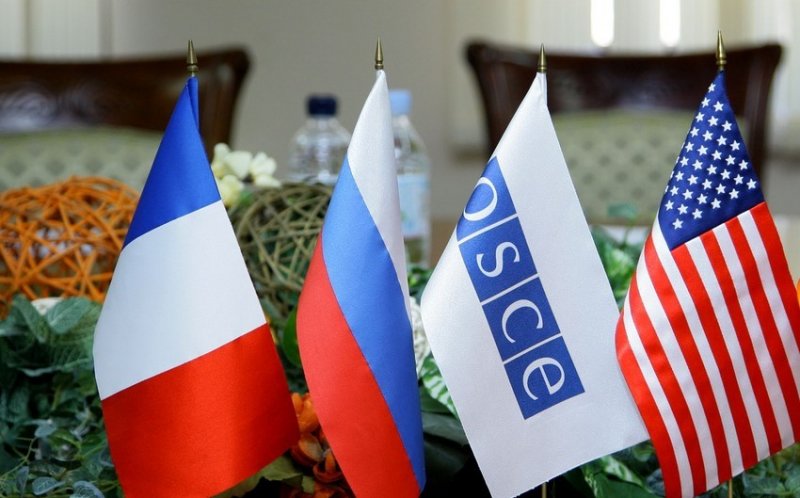
The OSCE Ministerial Council has officially decided to terminate the activities of the Minsk Group and related structures, which previously dealt with the settlement of the Nagorno-Karabakh conflict. This was announced on September 1 by the Ministry of Foreign Affairs of Azerbaijan.
The official representative of the Russian Ministry of Foreign Affairs, Maria Zakharova, stated that the dissolution of the Minsk Group is an “objective and justified step”. According to her, in recent years there have been “radical changes in regional realities”, making it impossible to continue the previous negotiation format.
Moscow emphasizes that the group’s main task – to facilitate the peaceful settlement of the Armenian-Azerbaijani conflict over Karabakh – lost relevance after the signing of the peace declaration in August 2025. The Azerbaijani MFA also welcomed the decision, noting that the Minsk process “no longer corresponded to modern realities and could no longer serve as a tool for settlement”.
The OSCE Minsk Group, established in 1992, remained for decades the main international negotiation format on Nagorno-Karabakh. Its co-chairs were Russia, the United States, and France. However, after the 2020 war and especially following the events of 2023-2025, its effectiveness was increasingly questioned.
The dissolution of the structure symbolizes the end of nearly 30 years of international mediation. Now, the focus shifts to bilateral and regional mechanisms. Armenia and Azerbaijan are building direct dialogue with the support of the EU, the US, and Turkey, while Russia and Iran insist on strengthening the “3+3” format (Azerbaijan, Armenia, Georgia + Russia, Turkey, Iran). At the same time, Western states are seeking to consolidate their presence in the region through new security and economic projects.
Analysts note that the liquidation of the Minsk Group paves the way for the emergence of new centers of influence in the South Caucasus. For Russia, this is an opportunity to emphasize that “frozen conflicts” are not eternal and can be resolved through force and political agreements, while for Azerbaijan it marks the final consolidation of its diplomatic victory and recognition of the new status quo.
Political expert Ruben Megrabyan observes:
“Armenia has lost an important channel of pressure on Azerbaijan. This forces Yerevan either to accelerate integration with the West or to seek new regional alliances to compensate for the diplomatic vacuum”.
For Armenia, the dissolution of the Minsk Group has become a painful signal. Yerevan traditionally viewed this platform as a way to draw the international community’s attention to the rights of Armenians from Nagorno-Karabakh. Now, according to experts, Armenia finds itself in a situation where its ability to rely on old diplomatic mechanisms has been reduced to a minimum.
Caucasus expert Thomas de Waal believes:
“The dissolution of the Minsk Group is a symbolic end of an old diplomatic era. Now the fate of the region will be decided not in Vienna or New York, but in Baku, Yerevan, Moscow, and Brussels”.
Thus, the dissolution of the Minsk Group has definitively marked the end of the old system of international mediation in the Caucasus, paving the way for the emergence of new regional and global formats of influence. In addition, the continuation of direct Armenia-Azerbaijan dialogue becomes inevitable.
Expert Group CCBS


 Latest news
Latest news
Latest newsMilitary Parade as a Manifesto: What Armenia Wants to Tell the World on May 28
25.May.2026
The War in Ukraine: The Russian Army is Already Running Out of Steam
25.May.2026
Railway Breakthrough: Armenia Integrates into the Akhalkalaki–Kars Route
24.May.2026
Tbilisi on the Eve of May 26: Independence Day Turns Into a Day of Political Struggle
24.May.2026
The US and Iran Continue Negotiations on a Possible Agreement and Extension of the Ceasefire
23.May.2026
The United States Suspends Participation in Ukraine Negotiations
22.May.2026
Azerbaijan and Georgia Strengthen Strategic Partnership with New Package of Agreements Signed
21.May.2026
Russia and China Strengthen Coordination on Key International Issues
20.May.2026
Beijing’s Hidden Role: Chinese Military Training for Russian Forces Revealed
19.May.2026
Pakistan Delivers Iran’s Revised Proposal to the US to End the War
18.May.2026