
 27 May 2026









European Parliament Urges Russia to Refrain from Pressuring Eastern Partnership Countries
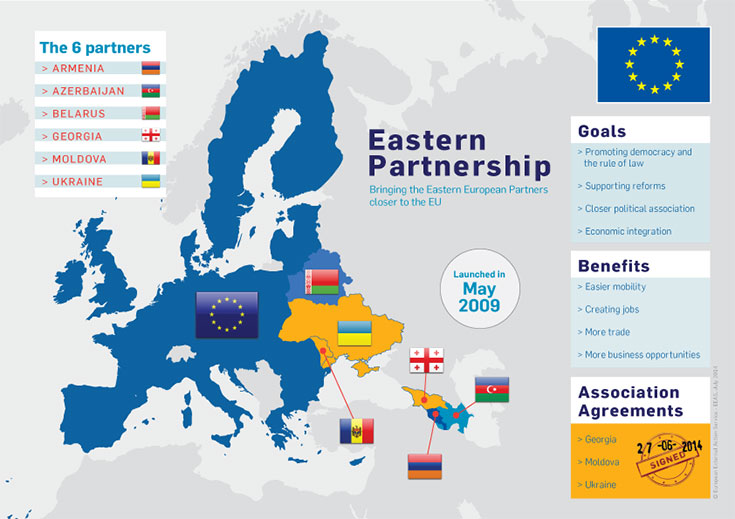
The European Parliament has adopted a resolution calling on
the Russian Federation to refrain from political, economic, and military
pressure on the countries of the Eastern Partnership. The document emphasizes
the right of Armenia, Azerbaijan, Georgia, Ukraine, Moldova, and Belarus to
independently choose their foreign policy course and path of development.
The adopted resolution is advisory in nature but reflects
the position of the majority of MEPs regarding Moscow’s growing influence in
the region. EU lawmakers expressed concern over “hybrid methods of influence”, including disinformation, economic restrictions, and security threats faced by
countries seeking closer ties with the EU.
Quote from the resolution:
“We support the sovereign right of Eastern Partnership countries to determine their foreign policy and urge the Russian Federation to cease attempts to impose influence through threats, coercion, or interference.”
The resolution also calls on the European Commission and the
European Council to step up economic and humanitarian support for states under
pressure, and to strengthen sanction mechanisms in the event of further
escalation by Russia.
The adopted resolution is not so much a legal tool as it is
a political signal directed at both Russia and the Eastern Partnership
countries. The EU is demonstrating its commitment to maintaining its role as a
guarantor of stability and free choice for post-Soviet countries—especially
amid the ongoing war in Ukraine and growing instability in the Caucasus.
Russia is losing strategic ground in the region. Since the
start of the war in Ukraine in 2022, trust in Moscow has significantly declined
in countries that were previously more aligned with it.
The EU aims to strengthen its "buffer zone" by
increasing support for countries such as Moldova and Georgia, which have chosen
the path of European integration but remain vulnerable to Russian influence.
Belarus is seen as a special case: despite its political
dependence on the Kremlin, Brussels still includes it in the list of countries
with "potential for democratic transformation".
Russia’s reaction is likely to be negative, including accusations of “interference in internal affairs” and attempts to undermine historical ties in the region. For Eastern Partnership countries, the resolution sends a signal that the EU remains invested in their sovereignty and is prepared to offer support under pressure. Moldova and Georgia, in particular, may use the resolution as a diplomatic lever to accelerate their integration with the EU.


 Latest news
Latest news
Latest newsMilitary Parade as a Manifesto: What Armenia Wants to Tell the World on May 28
25.May.2026
The War in Ukraine: The Russian Army is Already Running Out of Steam
25.May.2026
Railway Breakthrough: Armenia Integrates into the Akhalkalaki–Kars Route
24.May.2026
Tbilisi on the Eve of May 26: Independence Day Turns Into a Day of Political Struggle
24.May.2026
The US and Iran Continue Negotiations on a Possible Agreement and Extension of the Ceasefire
23.May.2026
The United States Suspends Participation in Ukraine Negotiations
22.May.2026
Azerbaijan and Georgia Strengthen Strategic Partnership with New Package of Agreements Signed
21.May.2026
Russia and China Strengthen Coordination on Key International Issues
20.May.2026
Beijing’s Hidden Role: Chinese Military Training for Russian Forces Revealed
19.May.2026
Pakistan Delivers Iran’s Revised Proposal to the US to End the War
18.May.2026