
 27 May 2026









What Did Aliyev and Pashinyan Agree on in Moscow?
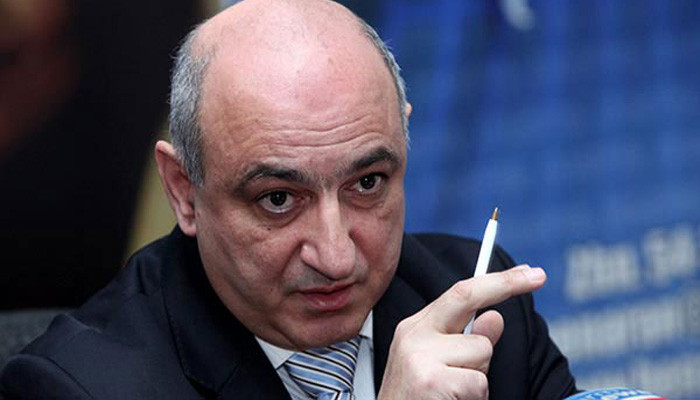
Political analyst and Honorary President of the Yerevan Press Club, Boris Navasardyan, commented on the results of the CIS Moscow summit, including the agreements reached and decisions made during the meeting, in an interview with the program “Complex Question.”
According to Navasardyan, the agreement reached during the meeting between Russian President Vladimir Putin and Armenian Prime Minister Nikol Pashinyan—that as of January 1, 2025, Russian border guards will cease to serve at the checkpoint on the Armenia-Iran border and that control will be transferred to Armenia’s National Security Service (NSS RA)—came as a complete surprise to political circles in Yerevan. Additionally, from the same date, the NSS Border Troops of Armenia will participate in guarding the state border between Armenia and Iran, and Armenia and Turkey, in conjunction with Russia’s Federal Security Service (FSB) Border Service. This decision was unexpected as the Armenian government had not previously raised the issue of protecting its own borders.
As a result, the question of whether control over the transportation route between the western regions of the Republic of Azerbaijan and the Nakhchivan Autonomous Republic (the Zangezur Corridor) would be carried out by the FSB Border Service of Russia, as stipulated in Article 9 of the “Statement of the President of the Republic of Azerbaijan, the Prime Minister of the Republic of Armenia, and the President of the Russian Federation” of November 10, 2020, was removed from the agenda.
According to Navasardyan, this raises the question: Will the November 10, 2020, Statement be officially revised? If not, the FSB’s control over the railway and the highway will remain intact. In this case, the agreement reached between Putin and Pashinyan only means that Armenia gains control over the checkpoint at the Armenia-Iran border, which does not exclude the FSB’s continued control over the railway and the highway. Therefore, Armenia needs to push for either a revision of the Statement or its nullification.
If the Statement remains unchanged, Armenia’s control over the checkpoint will be significant only for achieving EU visa liberalization. Navasardyan suggests that, in return for this concession, Moscow may have secured Armenia’s agreement not to extend the mandate of EU “observers” on the border with Azerbaijan.


 Latest news
Latest news
Latest newsMilitary Parade as a Manifesto: What Armenia Wants to Tell the World on May 28
25.May.2026
The War in Ukraine: The Russian Army is Already Running Out of Steam
25.May.2026
Railway Breakthrough: Armenia Integrates into the Akhalkalaki–Kars Route
24.May.2026
Tbilisi on the Eve of May 26: Independence Day Turns Into a Day of Political Struggle
24.May.2026
The US and Iran Continue Negotiations on a Possible Agreement and Extension of the Ceasefire
23.May.2026
The United States Suspends Participation in Ukraine Negotiations
22.May.2026
Azerbaijan and Georgia Strengthen Strategic Partnership with New Package of Agreements Signed
21.May.2026
Russia and China Strengthen Coordination on Key International Issues
20.May.2026
Beijing’s Hidden Role: Chinese Military Training for Russian Forces Revealed
19.May.2026
Pakistan Delivers Iran’s Revised Proposal to the US to End the War
18.May.2026