
 27 May 2026









Kazakhstan slams European Parliament’s resolution on recent protests
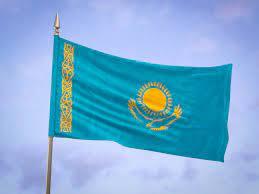
A resolution adopted by the European Parliament on the situation in Kazakhstan was met with a backlash from the country’s foreign ministry, which described it as “not only biased but also based on prejudiced opinions and assumptions,” Caspian News reports.
“The apparent lack of a credible analysis of the tragic January events in Kazakhstan is disconcerting,” the ministry said. “We find it unacceptable that a document of this nature has been adopted before the publication of the findings of the official investigation initiated by the leadership of the Republic of Kazakhstan.” According to the statement, the investigation results will be openly shared with the international community.
In the document passed on Thursday by a massive majority, the European Parliament strongly condemned the Kazakh authorities’ reaction to the recent protests, saying that the actions of the security forces to peaceful demonstrations were “very harsh.” In addition, the EU and the international community have been urged to initiate a “proper” investigation and impose sanctions against Kazakhstan’s high-level officials under the EU Global Human Rights Sanctions Regime. The resolution also called on the European External Action Service, the European Bank for Reconstruction and Development, and the World Bank to halt financing programs in Kazakhstan “until the government takes substantial and tangible efforts to improve its human rights record.”
A total of 589 out of 671 voting lawmakers supported the document, while 35 voted against it and 47 abstained.
The Kazakh Foreign Ministry said that while drafting the resolution, neither members of the European Parliament nor any of the Parliament’s political groups had requested any clarification or statement from Kazakh officials.
“The earlier conclusion of the Ministry of Foreign Affairs of the Republic of Kazakhstan that there were serious discrepancies and inaccuracies in the publications of certain foreign media outlets describing legitimate actions of law enforcement agencies against terrorist, extremist, and criminal groups, has also been ignored,” the statement reads.
Officials in Kazakhstan believe that the resolution of the European Parliament “undermines and damages” the process of adopting and implementing the political reforms aimed “at consolidating democratic institutions and the development of civil society.”
The biggest crisis to shake the Central Asian country since it gained independence began on January 2, in Zhanaozen city in Kazakhstan’s oil-rich western region of Mangystau, where people flocked to the streets after the sudden hike in the liquefied petroleum gas (LPG) prices. The demonstrations quickly extended to other oil towns — Aktau, Aktobe, and Atyrau — and then erupted in Kazakhstan’s capital city of Nur-Sultan and Almaty, the largest city.
Although the Kazakh government decided to lower LPG prices, the peaceful protests quickly spiraled into violent clashes, with the most intense in Almaty. According to the official data, at least 4,500 people were injured, another 225 people, including 19 security officials, died during the clashes.
To help the country stabilize the situation, a peacekeeping contingent of more than 2,000 troops of the Collective Treaty Security Organization (CSTO) member states arrived in Kazakhstan. The military alliance between six former Soviet countries, including Russia, Armenia, Belarus, Kazakhstan, Kyrgyzstan, and Tajikistan, which operates under a similar premise to that of NATO, sent their troops at the request of Kazakh President Kassym-Jomart Tokayev. As part of their task, joint forces protected important military, government, and other significant facilities in Almaty and the capital city of Nur-Sultan. By January 19, the CSTO peacekeeping forces had left Kazakhstan.
Currently, Kazakh law enforcement is carrying out a major domestic investigation into the causes behind the turmoil. According to General Prosecutor’s Office, over 800 criminal cases are under investigation.


 Latest news
Latest news
Latest newsMilitary Parade as a Manifesto: What Armenia Wants to Tell the World on May 28
25.May.2026
The War in Ukraine: The Russian Army is Already Running Out of Steam
25.May.2026
Railway Breakthrough: Armenia Integrates into the Akhalkalaki–Kars Route
24.May.2026
Tbilisi on the Eve of May 26: Independence Day Turns Into a Day of Political Struggle
24.May.2026
The US and Iran Continue Negotiations on a Possible Agreement and Extension of the Ceasefire
23.May.2026
The United States Suspends Participation in Ukraine Negotiations
22.May.2026
Azerbaijan and Georgia Strengthen Strategic Partnership with New Package of Agreements Signed
21.May.2026
Russia and China Strengthen Coordination on Key International Issues
20.May.2026
Beijing’s Hidden Role: Chinese Military Training for Russian Forces Revealed
19.May.2026
Pakistan Delivers Iran’s Revised Proposal to the US to End the War
18.May.2026