
 27 May 2026









Haiti: 'Key suspect' arrested after President Jovenel Moïse's assassination
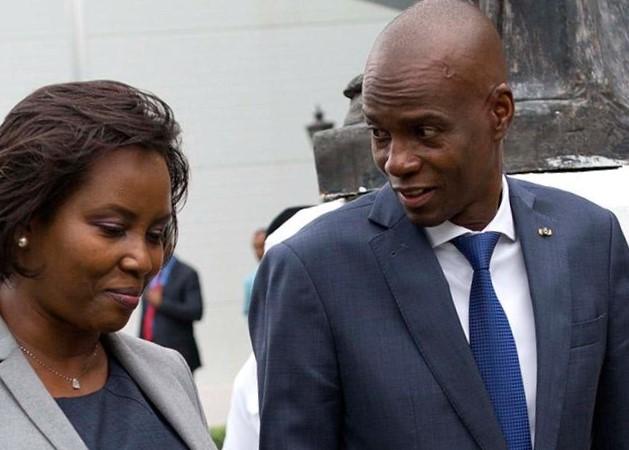
Police in Haiti say they have arrested a doctor they believe is a key suspect in organising last week's assassination of President Jovenel Moïse. BBC reports that Christian Emmanuel Sanon, a 63-year-old Haitian national, flew into the country on a private jet in early June with "political motives". Mr Moïse, 53, was killed at his residence on 7 July, by 28 foreign mercenaries, the police said earlier. His wife was injured in the attack, and then flown to the US for treatment.
Martine Moïse later described the moment assassins "riddled" her husband with bullets after bursting into their home in the middle of the night. She said the attack happened so quickly, her husband Jovenel was unable to "say a single word".
Change of mission
The arrest of Mr Sanon was announced at a police briefing late on Sunday in the capital Port-au-Prince. "This is an individual who entered Haiti on a private plane with political objectives," said Haiti's police chief Leon Charles. He said the initial plan had been to arrest President Moïse, but "the mission then changed". He did not elaborate. "When we, the police, blocked the progress of these bandits after they committed their crime, the first person that one of the assailants called was Christian Emmanuel Sanon," said Mr Charles. "He contacted two other people that we consider to be the masterminds of the assassination of President Jovenel Moïse." The police chief did not say who the other two people were.
American support
A delegation of senior US security and justice officials on Sunday arrived in Haiti to assess the security situation. The team will also meet three Haitian politicians. each of whom is claiming to be the country's legitimate leader. After the attack, Haiti's authorities asked the US and the UN to send troops to the country to protect key infrastructure. President Joe Biden's administration initially rejected the request - but has now decided to have a closer look at the situation.
Mr Moïse had been president of Haiti, the poorest nation in the Americas, since 2017. His time in office was rocky as he faced accusations of corruption and there were widespread demonstrations in the capital and other cities earlier this year.
Parliamentary elections should have been held in October 2019 but disputes have delayed them, meaning Mr Moïse had been ruling by decree. He had planned to hold a referendum on the proposed constitutional changes this September.
In February this year, on the day the opposition wanted him to leave office, Mr Moïse said an attempt to kill him and overthrow the government had been foiled. It is still unclear who organised last week's attack and with what motive. A number of questions remain unanswered, including how the alleged assassins were able to enter the property. Mr Moïse's bodyguards are due to be questioned later this week.
One prominent opposition figure has openly expressed scepticism over the current version of events. Former Haitian senator Steven Benoit told local station Magik9 radio on Friday it was "not Colombians who killed him", but did not provide evidence to back up his claims. Haitian police have said the majority of the mercenaries was Colombian, while two were joint US nationals.
Who is in charge of Haiti?
The constitution says the National Assembly should choose another president. But disputes meant that elections scheduled for October 2019 did not take place - and Mr Moïse had been ruling by decree amid widespread protests. Amendments to the constitution - not accepted by everyone - suggest the prime minister should take over. But Haiti has both an interim prime minister, Claude Joseph, and a new appointee, Ariel Henry, who has yet to be sworn in.
Both are claiming to be in charge. On Friday, a group of political parties signed a resolution proclaiming a new president - Joseph Lambert - with Mr Henry acting as his PM. The situation is doing little to resolve the political and economic instability that has long plagued the nation.


 Latest news
Latest news
Latest newsMilitary Parade as a Manifesto: What Armenia Wants to Tell the World on May 28
25.May.2026
The War in Ukraine: The Russian Army is Already Running Out of Steam
25.May.2026
Railway Breakthrough: Armenia Integrates into the Akhalkalaki–Kars Route
24.May.2026
Tbilisi on the Eve of May 26: Independence Day Turns Into a Day of Political Struggle
24.May.2026
The US and Iran Continue Negotiations on a Possible Agreement and Extension of the Ceasefire
23.May.2026
The United States Suspends Participation in Ukraine Negotiations
22.May.2026
Azerbaijan and Georgia Strengthen Strategic Partnership with New Package of Agreements Signed
21.May.2026
Russia and China Strengthen Coordination on Key International Issues
20.May.2026
Beijing’s Hidden Role: Chinese Military Training for Russian Forces Revealed
19.May.2026
Pakistan Delivers Iran’s Revised Proposal to the US to End the War
18.May.2026