
 28 May 2026









The Kremlin Tightens the Screws on Public Dissent
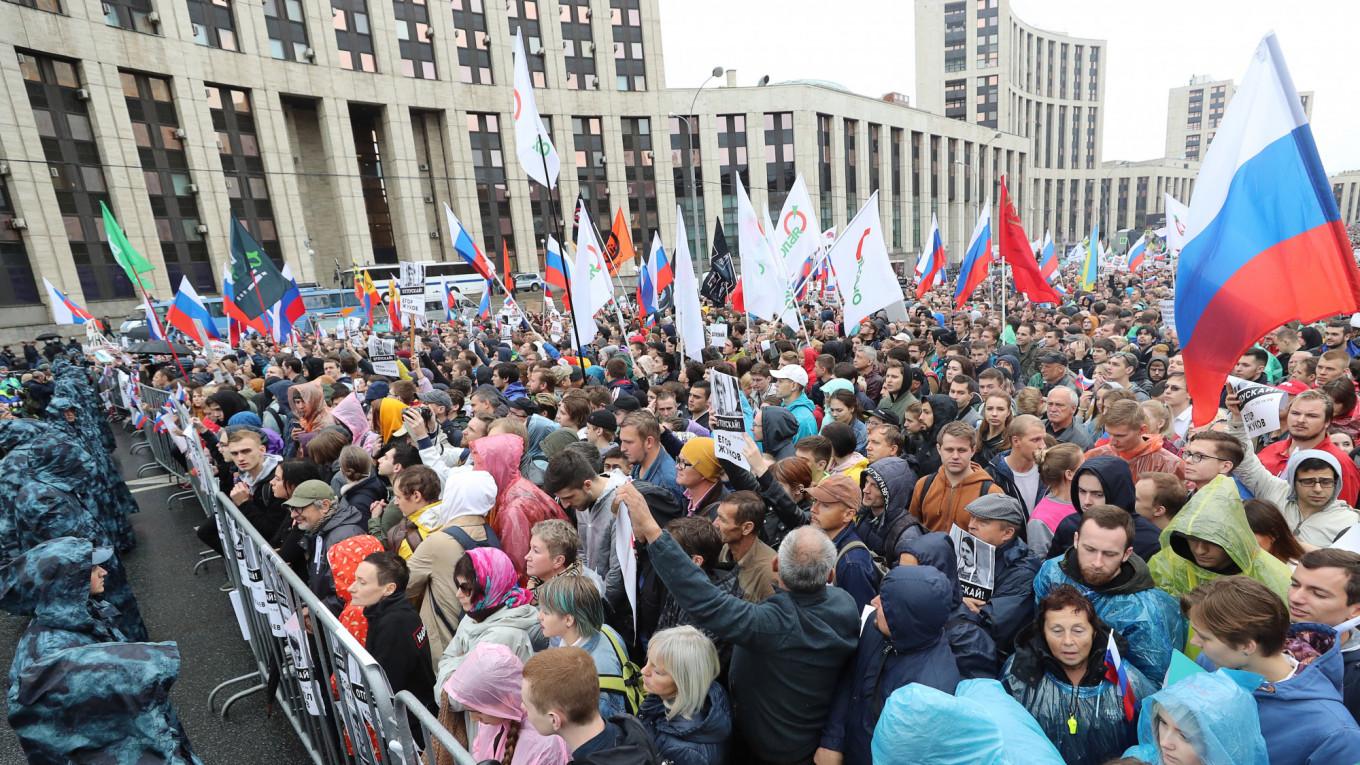
In Russia’s staid parliament, the dying days of 2020 were marked by unusually frenzied lawmaking activity, most of it centering on civil rights.
Over the course of a few days in late December, the State Duma passed a flurry of bills introducing sweeping new restrictions on political protests, legalizing censorship of social media and cementing broad new guidelines under which the government can designate individuals as “foreign agents.” They have already been signed into law by President Vladimir Putin.
To many observers of Russia’s political scene, the new legislation — coming on the heels of the August poisoning of opposition activist Alexei Navalny — represents a pronounced hardening of Russia’s authoritarian system ahead of parliamentary elections in the fall.
“The state is waging war on civil society,” said Andrei Kolesnikov, senior fellow in Russian domestic politics and political institutions at the Carnegie Moscow Center. “This is the natural evolution of authoritarianism.”
The laws are a mixed bag, some tightening long-standing screws on opposition activity, while others respond to newer threats.
New restrictions banning public demonstrations near law enforcement premises, defining single-person pickets — the traditional means of avoiding restrictions on mass gatherings — as protests, and prohibiting support of rallies by foreign individuals or organizations are the latest moves in a years-long tightening of laws on mass demonstrations.
Likewise, a law allowing individuals to be categorized as “foreign agents,” a legal term critics see as redolent of Soviet-era purges, comes after several years of the label being applied to organizations ranging from human rights groups to independent pollsters.
Other provisions, including those allowing the state to ban social media networks that censor Russian state media are new. One bill criminalizing the spread of libel online is aimed partly — according to its author, United Russia deputy Dmitry Vyatkin — at popular channels on the messaging app Telegram, which many Russians turn to for news and political gossip.
In particular, a law banning the disclosure of security service employees’ personal data has been linked by the BBC’s Russian Service to a recent Bellingcat investigation that used telephone and flight records to unmask the FSB officers behind the attempt on Alexei Navalny’s life.
More broadly however, the new restrictions are seen by political analysts as the Russian state girding itself for a difficult year in which the pro-Kremlin United Russia bloc will have to defend its supermajority in the State Duma amid a spirited opposition challenge and low approval ratings for the ruling party.
“These laws are a hedge against all possible scenarios,” said Carnegie’s Kolesnikov. “Including those related to the elections.”


 Latest news
Latest news
Latest newsMilitary Parade as a Manifesto: What Armenia Wants to Tell the World on May 28
25.May.2026
The War in Ukraine: The Russian Army is Already Running Out of Steam
25.May.2026
Railway Breakthrough: Armenia Integrates into the Akhalkalaki–Kars Route
24.May.2026
Tbilisi on the Eve of May 26: Independence Day Turns Into a Day of Political Struggle
24.May.2026
The US and Iran Continue Negotiations on a Possible Agreement and Extension of the Ceasefire
23.May.2026
The United States Suspends Participation in Ukraine Negotiations
22.May.2026
Azerbaijan and Georgia Strengthen Strategic Partnership with New Package of Agreements Signed
21.May.2026
Russia and China Strengthen Coordination on Key International Issues
20.May.2026
Beijing’s Hidden Role: Chinese Military Training for Russian Forces Revealed
19.May.2026
Pakistan Delivers Iran’s Revised Proposal to the US to End the War
18.May.2026