
 17 Oct 2026









Foreign Minister Zaharieva: EU Enlargement Policy Is in Interest of Both Candidate and Member States
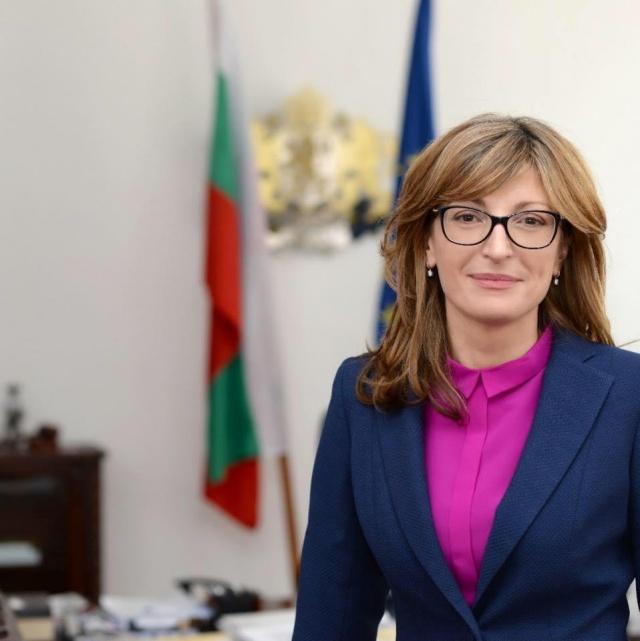
The policy of EU enlargement is in the common interest of both the countries aspiring for accession and those that are already members of the Union, Bulgarian Foreign Minister Ekaterina Zaharieva said here Tuesday. She was speaking at a discussion on the Croatian EU Council Presidency,
which began on January 1 this year, BTA reports.
There are improvements that can be made in the accession negotiation framework, but it is also possible for the Council to decide to launch negotiations with North Macedonia and Albania while consultations are being held on the new framework. One does not preclude the other, Zaharieva said.
Reforms are vital, above all for the public in these countries.This does not mean, however, that the endorsement of the new negotiation framework should be used as a cause to put off the launch of accession negotiations with countries that both the European Commission and part of the Member States agree are ready to launch such, Zaharieva argued.
As part of the discussion, Croatian Ambassador to Bulgaria Jasna Ognjanovac presented the priorities on which her country will focus during its six-month rotational presidency.
The priorities of the Croatian EU Council Presidency are subordinate to its motto, "A Strong Europe in a World of Challenges", and are divided into four areas: "A Europe that Develops", "A Europe that Connects", "A Europe that Protects", and "An Influential Europe".
The discussion was organized by the Croatian Embassy in Sofia and PanEuropa Bulgaria with the cooperation of the European Commission Representation in Bulgaria and the local chapter of the Konrad Adenauer Foundation.


 Latest news
Latest news
Latest newsBulgaria Asks NATO to Strengthen Its Defences Amid Black Sea Threats: Sofia Fears Growing Risks to Maritime Shipping
16.Oct.2026
Black Sea Shipping Risks Threaten Bulgaria’s 5 Million Tonnes of Wheat Exports
15.Oct.2026
Georgia’s Foreign Funding and Political Ban Laws Draw Criticism from the Venice Commission
15.Oct.2026
Kazakhstan Promotes a Caspian Green Energy Corridor: Astana Seeks New Routes to the European Market
14.Oct.2026
Inflation in Romania Accelerates to 6.61%: Rising Prices Increase Pressure on Households and the Economy
13.Oct.2026
Can Europe Protect the International Criminal Court from Trump’s Sanctions?
13.Oct.2026
Georgia’s Constitutional Court Continues Case on Banning Opposition Parties: Political Pluralism at Stake
12.Oct.2026
Azerbaijan and Iran Step Up Security Contacts Amid Hijab Protests
12.Oct.2026
Personnel Shortages Complicate Ukrainian Forces’ Rotation: Ukraine Faces Long-Term Challenges on the Front Line
11.Oct.2026
Trump Eases Sanctions on Russian Fuel After Talks with Putin: Kyiv Fears Boost to Moscow’s War Revenues
10.Oct.2026
Putin Seeks to Strengthen Russia’s Influence in the Post-Soviet Space Through the CIS
10.Oct.2026
Russia and the South Caucasus: External Pressure, Political Competition and a Crisis of Trust
10.Oct.2026
Peaceful Settlement Between Armenia and Azerbaijan: Moving from Declarations to Implementation
10.Oct.2026
Moldova Ready to Accept as Many Ukrainians as Necessary if Situation Worsens This Winter
09.Oct.2026
Turkmenistan Turns Avaza into a Regional Diplomatic Hub as Caspian, Central Asian and CIS Agendas Converge
08.Oct.2026