
 17 Oct 2026









German foreign minister threatens Russia with sanctions over Berlin contract killing
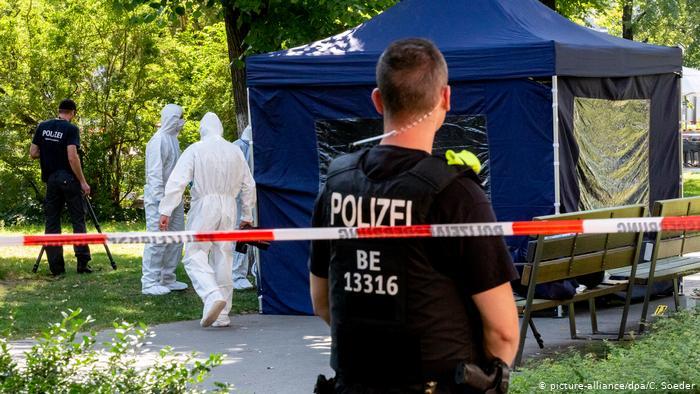
According to DW, German prosecutors have charged a Russian national with the suspected contract killing of a Georgian citizen in Berlin last year. Heiko Maas said the government "reserves the right to take further action."
German prosecutors on Thursday charged a Russian national with murder in the killing of a Georgian citizen in Berlin last year, a crime they believe was ordered by the Russian government.
Germany's foreign minister threatened the Kremlin with sanctions over the killing.
"The federal government expressly reserves the right to take further measures in this case," German Foreign Minister Heiko Maas said on Thursday in Vienna.
The minister characterized the situation as an "extremely serious matter" and said it was "indispensable" that it now be cleared up in court. He said the Russian ambassador had been "invited" to the foreign ministry for a meeting on Thursday.
Multiple assassination attempts
In December, the foreign ministry expelled two Russian diplomats from Berlin, citing a lack of cooperation with the investigation into the broad-daylight shooting of a 40-year-old Georgian of Chechen descent.
The victim, Tornike K., had fought against Russian troops in Chechnya and survived multiple prior assassination attempts.
Prosecutors said they believe that Russian state actors were behind the crime.
"The circumstances behind the contract killing was the opposition of the victim to the Russian state, to the governments of its autonomous republics Chechnya and Ingushetia, and to the pro-Russian government of Georgia," the prosecutor's office in Karlsruhe said.
Killer tasked with 'liquidating' victim
Prosecutors filed charges of murder and a violation of weapons laws against a Russian citizen they identified as Vadim K., who goes by the alias Vadim S.
At some point last year, "state agencies of the central government of the Russian Federation" tasked him with "liquidating" the victim, prosecutors said in a statement.
The suspect "accepted the state killing assignment," they said.
"He either hoped for a financial reward or he shared the motives of those who tasked him to kill a political opponent and take revenge for his participation in earlier conflicts with Russia."


 Latest news
Latest news
Latest newsBulgaria Asks NATO to Strengthen Its Defences Amid Black Sea Threats: Sofia Fears Growing Risks to Maritime Shipping
16.Oct.2026
Black Sea Shipping Risks Threaten Bulgaria’s 5 Million Tonnes of Wheat Exports
15.Oct.2026
Georgia’s Foreign Funding and Political Ban Laws Draw Criticism from the Venice Commission
15.Oct.2026
Kazakhstan Promotes a Caspian Green Energy Corridor: Astana Seeks New Routes to the European Market
14.Oct.2026
Inflation in Romania Accelerates to 6.61%: Rising Prices Increase Pressure on Households and the Economy
13.Oct.2026
Can Europe Protect the International Criminal Court from Trump’s Sanctions?
13.Oct.2026
Georgia’s Constitutional Court Continues Case on Banning Opposition Parties: Political Pluralism at Stake
12.Oct.2026
Azerbaijan and Iran Step Up Security Contacts Amid Hijab Protests
12.Oct.2026
Personnel Shortages Complicate Ukrainian Forces’ Rotation: Ukraine Faces Long-Term Challenges on the Front Line
11.Oct.2026
Trump Eases Sanctions on Russian Fuel After Talks with Putin: Kyiv Fears Boost to Moscow’s War Revenues
10.Oct.2026
Putin Seeks to Strengthen Russia’s Influence in the Post-Soviet Space Through the CIS
10.Oct.2026
Russia and the South Caucasus: External Pressure, Political Competition and a Crisis of Trust
10.Oct.2026
Peaceful Settlement Between Armenia and Azerbaijan: Moving from Declarations to Implementation
10.Oct.2026
Moldova Ready to Accept as Many Ukrainians as Necessary if Situation Worsens This Winter
09.Oct.2026
Turkmenistan Turns Avaza into a Regional Diplomatic Hub as Caspian, Central Asian and CIS Agendas Converge
08.Oct.2026