
 02 Sep 2026









The South Caucasus Strengthens Protection of Strategic Infrastructure: What Lies Behind the Eternity-2026 Exercises
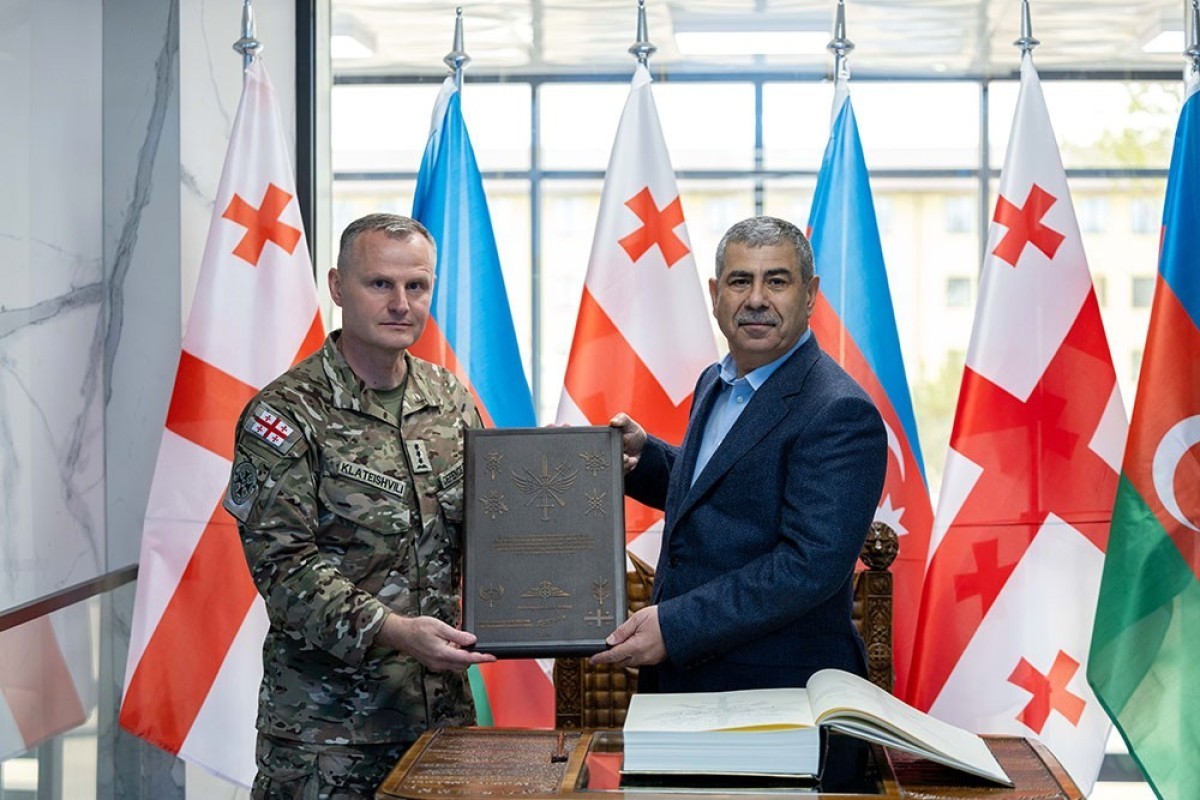
Azerbaijan, Turkiye, and Georgia continue to deepen their practical military cooperation in the field of regional security. In November 2026, Azerbaijan will host the joint computer-assisted command-and-staff exercise Eternity-2026, aimed at enhancing coordination in the protection of strategic facilities and critical transport and energy infrastructure across the three countries.
Preparations for the large-scale exercise have entered their final stage. Azerbaijan recently hosted the main planning conference, during which representatives of the defense ministries of the three participating states agreed on the key parameters of the upcoming drills. According to Azerbaijan's Ministry of Defense, the participants discussed the exercise scenario, the structure of the joint headquarters, the distribution of responsibilities among participating units, the sequence of tactical activities, as well as organizational and logistical arrangements.
In addition to military personnel from Azerbaijan, Turkiye, and Georgia, representatives of Azerbaijan's State Agency for the Protection of Strategic Facilities and Azerbaijan Railways will also take part in the exercise. The inclusion of civilian institutions highlights the comprehensive nature of the drills, which are designed to strengthen cooperation not only among the armed forces but also between military and civilian organizations responsible for safeguarding critical infrastructure.
Under the approved scenario, participants will rehearse the protection and defense of energy and transport infrastructure, as well as strategic communication routes running through the territories of the three countries. Particular emphasis will be placed on coordination between national headquarters, intelligence and information sharing, crisis response, and joint decision-making under simulated threat conditions.
The computer-assisted command-and-staff format enables participants to simulate a wide range of realistic operational scenarios without deploying large troop formations or conducting live-fire activities. This approach provides an effective platform for evaluating command-and-control systems, communications networks, and cooperation mechanisms between military and civilian authorities in response to contemporary security challenges.
The name Eternity is closely associated with one of the region's key energy projects — the Baku-Tbilisi-Ceyhan (BTC) oil pipeline and the South Caucasus Gas Pipeline, whose security remains a cornerstone of regional stability. The South Caucasus serves as a strategic transit corridor linking the Caspian region with European energy markets. Oil and gas pipelines, the Baku-Tbilisi-Kars railway, major international highways, and other critical infrastructure crossing Azerbaijan, Georgia, and Turkiye play a vital role in ensuring reliable energy and trade flows toward Europe.
Military cooperation among Azerbaijan, Turkiye, and Georgia has been developing for more than a decade and includes regular joint exercises, personnel training, professional exchanges, and coordinated efforts to protect critical infrastructure. At the same time, this trilateral format has traditionally focused on ensuring the security of international transport and energy projects rather than establishing a formal military alliance.
The outcomes of Eternity-2026 are expected to improve interoperability among the participating countries' command structures, enhance interagency coordination, and further strengthen the security of strategic infrastructure that is essential not only for the South Caucasus but also for the broader Eurasian region.
Security experts note that exercises of this kind reflect the three countries' shared commitment to increasing the resilience of transport, logistics, and energy corridors against a broad range of threats, including sabotage, terrorism, cyberattacks, and man-made emergencies. Their significance has grown further amid the expanding role of the Middle Corridor, the transcontinental trade route connecting China and Central Asia with the South Caucasus and Europe.


 Latest news
Latest news
Latest newsRomania Faces Political Deadlock: Nicusor Dan Moves to Form a New Government
01.Sep.2026
Pashinyan Meets Aliyev in Bishkek: Armenia and Azerbaijan Prepare for a New Stage in the Peace Process
01.Sep.2026
Ukraine Plans to Present Allies with a New War Strategy and Seek Early EU Funding
31.Aug.2026
The Mecca Pact — Protection or a Trap for Turkiye?
30.Aug.2026
Tigran Khzmalyan: Armenia must make a Decisive Choice in Favor of Europe
30.Aug.2026
Bulgaria to Strengthen Its Black Sea Fleet: Sofia to Receive Seven Minehunter Vessels
29.Aug.2026
Russia Intensifies Strikes on Ukraine’s Infrastructure, Targeting Warehouses and Logistics Hubs
28.Aug.2026
A New Economic Framework for Central Asia and the Caucasus: The Role of Azerbaijan and Uzbekistan
28.Aug.2026
Moscow Warns London: Russia Considers Strikes on British Military Targets
27.Aug.2026
Kazakhstan Launches a New Economic Strategy: GDP Growth, Investment and Pension Reform
27.Aug.2026
CIA Director Visits Moscow: Trump Hopes for Results
26.Aug.2026
Former Ukrainian Defense Minister Warns of Risk of Gradual Defeat in War with Russia
25.Aug.2026
Putin Authorizes Temporary State Management of Critical Infrastructure Vulnerable to Drone Attacks
24.Aug.2026
The United States Rapidly Expands Missile Production: Pentagon Accelerates Output of Tomahawks and Other Critical Weapons
24.Aug.2026
Record Supplies: Armenia Boosts Fish Exports to Georgia
23.Aug.2026