
 17 Oct 2026









Baku Says It has Reached ''Real Peace'' with Armenia, but Sets Condition for Historic Agreement
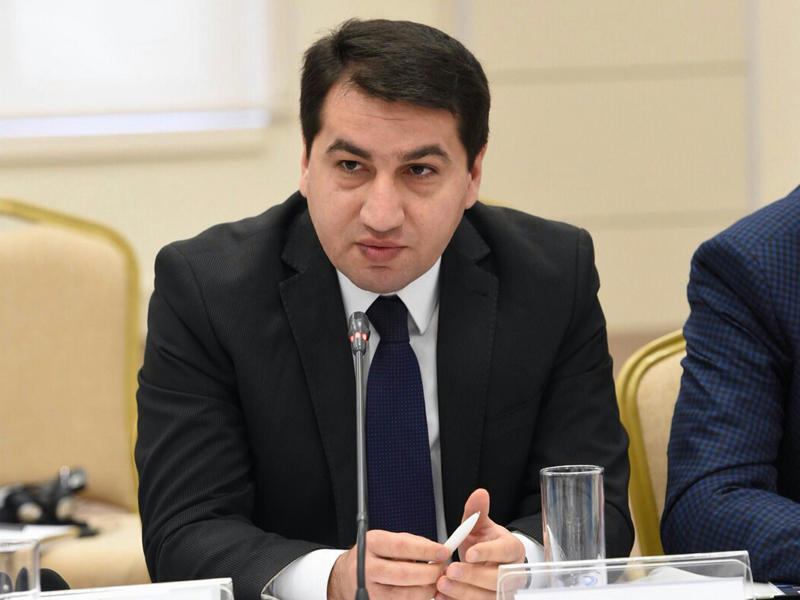
Azerbaijan believes its relationship with Armenia has already entered a stage of "real peace", but says the signing of a final peace treaty still hinges on one key issue — amendments to Armenia's Constitution. The statement was made by Hikmet Hajiyev, Assistant to the President of Azerbaijan, in an interview with Reuters.
According to Hajiyev, direct contacts between the two countries have increased significantly in recent months, while economic ties and trade are gradually recovering. As an example, he cited the supply of Azerbaijani petroleum products to Armenia, something that would have seemed almost unimaginable just a few years ago. In Baku's view, this demonstrates that peace between the two countries now exists not only in political rhetoric but also in practical day-to-day cooperation.
At the same time, Azerbaijani officials maintain that the preamble to Armenia's Constitution remains the main obstacle to a comprehensive peace agreement. Baku argues that references to late Soviet-era documents could be interpreted as territorial claims against Azerbaijan because they touch upon the issue of Nagorno-Karabakh. Azerbaijani authorities say they are not insisting on any specific legal mechanism but expect Armenia to formally remove provisions they believe contradict the principle of mutual recognition of territorial integrity.
Armenian Prime Minister Nikol Pashinyan has previously announced plans to pursue constitutional reform and submit a revised Constitution to a nationwide referendum. However, such a process would require a complex domestic political procedure and broad support from both parliament and the public. Azerbaijani officials have indicated that publishing a draft Constitution alone would not be sufficient; legally binding constitutional amendments are required.

Meanwhile, the two sides continue discussions on regional transport connectivity in the South Caucasus. Hajiyev said Azerbaijan has received positive signals from the United States regarding the implementation of the U.S.-backed TRIPP (Trump Route for International Peace and Prosperity) initiative. The proposed corridor would pass through Armenian territory, linking mainland Azerbaijan with the Nakhchivan Autonomous Republic and onward to Türkiye. According to Baku, infrastructure construction on Azerbaijan's side is expected to be completed by the end of 2026.
Analysts believe Azerbaijan's current position reflects its determination to consolidate the outcomes of recent years not only on the ground but also through legally binding guarantees. For Baku, eliminating any future basis for territorial disputes remains a strategic priority. In Armenia, however, constitutional reform remains a politically sensitive issue, as it affects not only relations with Azerbaijan but also public perceptions of the Nagorno-Karabakh conflict and its aftermath.
Should both sides overcome this final obstacle, the South Caucasus could see its first comprehensive peace treaty between Armenia and Azerbaijan in more than three decades of conflict. Such an agreement could unlock new transport corridors between Europe and Asia, significantly expand regional trade, and reshape the geopolitical balance among major stakeholders, including Russia, Turkiye, the United States, and the European Union.


 Latest news
Latest news
Latest newsBulgaria Asks NATO to Strengthen Its Defences Amid Black Sea Threats: Sofia Fears Growing Risks to Maritime Shipping
16.Oct.2026
Black Sea Shipping Risks Threaten Bulgaria’s 5 Million Tonnes of Wheat Exports
15.Oct.2026
Georgia’s Foreign Funding and Political Ban Laws Draw Criticism from the Venice Commission
15.Oct.2026
Kazakhstan Promotes a Caspian Green Energy Corridor: Astana Seeks New Routes to the European Market
14.Oct.2026
Inflation in Romania Accelerates to 6.61%: Rising Prices Increase Pressure on Households and the Economy
13.Oct.2026
Can Europe Protect the International Criminal Court from Trump’s Sanctions?
13.Oct.2026
Georgia’s Constitutional Court Continues Case on Banning Opposition Parties: Political Pluralism at Stake
12.Oct.2026
Azerbaijan and Iran Step Up Security Contacts Amid Hijab Protests
12.Oct.2026
Personnel Shortages Complicate Ukrainian Forces’ Rotation: Ukraine Faces Long-Term Challenges on the Front Line
11.Oct.2026
Trump Eases Sanctions on Russian Fuel After Talks with Putin: Kyiv Fears Boost to Moscow’s War Revenues
10.Oct.2026
Putin Seeks to Strengthen Russia’s Influence in the Post-Soviet Space Through the CIS
10.Oct.2026
Russia and the South Caucasus: External Pressure, Political Competition and a Crisis of Trust
10.Oct.2026
Peaceful Settlement Between Armenia and Azerbaijan: Moving from Declarations to Implementation
10.Oct.2026
Moldova Ready to Accept as Many Ukrainians as Necessary if Situation Worsens This Winter
09.Oct.2026
Turkmenistan Turns Avaza into a Regional Diplomatic Hub as Caspian, Central Asian and CIS Agendas Converge
08.Oct.2026