
 17 Oct 2026









The NATO Summit in Ankara Marked a New Stage in the Alliance's Transformation
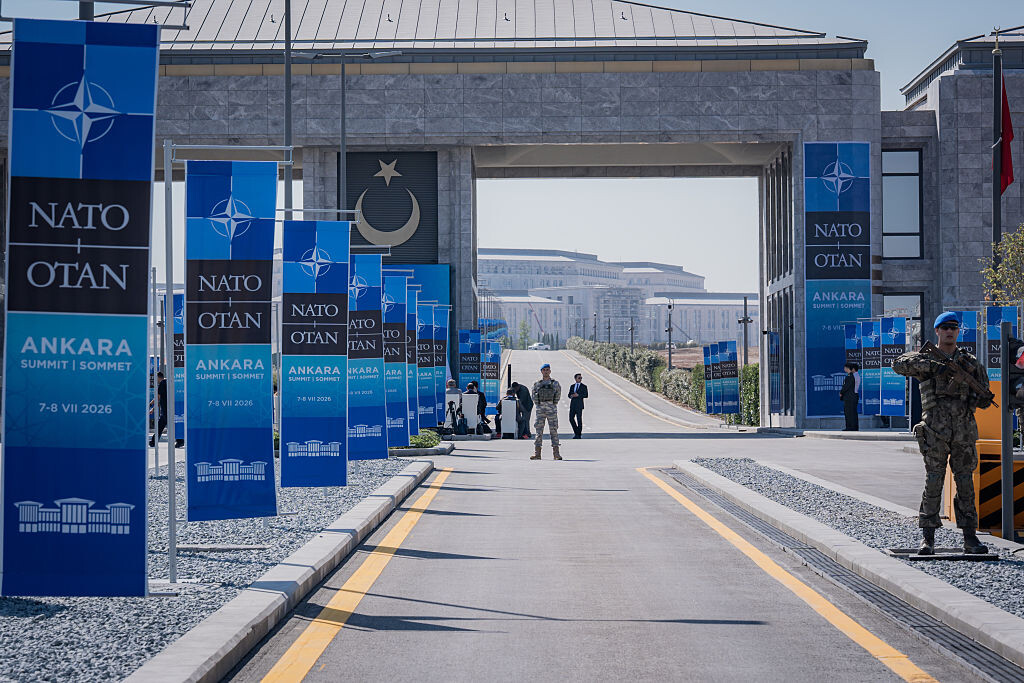
The two-day NATO Summit in
Ankara has emerged as one of the Alliance's most significant meetings in recent
years. For the first time since 2004, Turkiye is hosting NATO heads of state and
government, with the agenda reflecting the Alliance's efforts to adapt to the
evolving European security environment. The central issues under discussion
include increased defense spending, long-term support for Ukraine, the
expansion of defense-industrial cooperation, and a redistribution of security
responsibilities between the United States and its European allies.
As the summit enters its final
day, Allied leaders are expected to endorse a series of measures aimed at
significantly increasing defense investment and accelerating military
modernization. One of the key priorities is securing greater financial
contributions from European member states, reflecting Washington's
long-standing call for a more balanced sharing of the burden of collective
defense. U.S. President Donald Trump has once again emphasized that European
allies should assume a larger share of NATO's defense expenditures while
preserving transatlantic unity.
Ukraine remains one of the
summit's central topics. According to the draft final declaration, NATO members
are expected to reaffirm their commitment to providing approximately €70
billion in military assistance to Kyiv in 2026, including weapons, ammunition,
training, and other forms of security support, while maintaining a comparable
level of assistance in 2027. Alliance officials have stressed that NATO will
continue coordinating military aid deliveries and strengthening long-term
mechanisms to support Ukraine's armed forces.
 The GlobalEye
is a multi-role airborne early warning & control platform from
Swedish defence and security company Saab
The GlobalEye
is a multi-role airborne early warning & control platform from
Swedish defence and security company Saab
Alongside the summit, the NATO
Defence Industry Forum has brought together leading Western defense
manufacturers to discuss new procurement initiatives and industrial
cooperation. Among the most notable developments are negotiations on the
acquisition of Saab GlobalEye airborne early warning and control aircraft, the
expansion of NATO's strategic airlift capabilities, a joint procurement
initiative for MQ-4C Triton maritime surveillance drones, and an agreement
between U.S.-based Lockheed Martin and Germany's Rheinmetall to establish
production of ATACMS tactical missile systems in Germany. Analysts say these
initiatives demonstrate NATO's growing emphasis on strengthening Europe's
defense-industrial base and reducing dependence on external supply chains.
 The MQ-4C Triton is an American
high-altitude long endurance unmanned aerial vehicle developed for and flown by
the United States Navy and Royal Australian Air Force as a surveillance
aircraft
The MQ-4C Triton is an American
high-altitude long endurance unmanned aerial vehicle developed for and flown by
the United States Navy and Royal Australian Air Force as a surveillance
aircraft
One of the most closely
watched events on the sidelines of the summit has been the meeting between
Turkish President Recep Tayyip Erdogan and U.S. President Donald Trump.
According to Western media reports, the U.S. administration has expressed
readiness to consider lifting restrictions on Turkiye's participation in the
F-35 fighter aircraft program and easing sanctions imposed following Ankara's
purchase of the Russian S-400 air defense system. Although no final decisions
have been announced, the discussions are widely viewed as a sign of gradual
normalization in U.S.-Turkish relations after years of tensions.
Hosting the summit represents
a significant diplomatic achievement for Turkiye, which continues to strengthen
its position as one of NATO's most strategically important members. Owing to
its location at the crossroads of Europe, the Middle East, and the Black Sea
region, Ankara has sought to reinforce its role as a key regional security
actor. Against the backdrop of the ongoing war in Ukraine, instability in the
Middle East, and intensifying geopolitical competition, Turkiye's importance as
both a strategic partner and a logistical hub continues to grow.
Security analysts note that the Ankara summit highlights NATO's continuing transformation from an alliance focused primarily on collective defense into one placing increasing emphasis on strengthening its defense-industrial capabilities and ensuring long-term deterrence. At the same time, the meeting underscores an evolving balance within the Alliance, with European members assuming greater responsibility for defense financing while the United States seeks to maintain its strategic leadership by gradually shifting more of the military and financial burden to its allies. According to experts, this model is likely to shape NATO's future development and have a lasting impact on the European security architecture.
CCBS Expert Group


 Latest news
Latest news
Latest newsBulgaria Asks NATO to Strengthen Its Defences Amid Black Sea Threats: Sofia Fears Growing Risks to Maritime Shipping
16.Oct.2026
Black Sea Shipping Risks Threaten Bulgaria’s 5 Million Tonnes of Wheat Exports
15.Oct.2026
Georgia’s Foreign Funding and Political Ban Laws Draw Criticism from the Venice Commission
15.Oct.2026
Kazakhstan Promotes a Caspian Green Energy Corridor: Astana Seeks New Routes to the European Market
14.Oct.2026
Inflation in Romania Accelerates to 6.61%: Rising Prices Increase Pressure on Households and the Economy
13.Oct.2026
Can Europe Protect the International Criminal Court from Trump’s Sanctions?
13.Oct.2026
Georgia’s Constitutional Court Continues Case on Banning Opposition Parties: Political Pluralism at Stake
12.Oct.2026
Azerbaijan and Iran Step Up Security Contacts Amid Hijab Protests
12.Oct.2026
Personnel Shortages Complicate Ukrainian Forces’ Rotation: Ukraine Faces Long-Term Challenges on the Front Line
11.Oct.2026
Trump Eases Sanctions on Russian Fuel After Talks with Putin: Kyiv Fears Boost to Moscow’s War Revenues
10.Oct.2026
Putin Seeks to Strengthen Russia’s Influence in the Post-Soviet Space Through the CIS
10.Oct.2026
Russia and the South Caucasus: External Pressure, Political Competition and a Crisis of Trust
10.Oct.2026
Peaceful Settlement Between Armenia and Azerbaijan: Moving from Declarations to Implementation
10.Oct.2026
Moldova Ready to Accept as Many Ukrainians as Necessary if Situation Worsens This Winter
09.Oct.2026
Turkmenistan Turns Avaza into a Regional Diplomatic Hub as Caspian, Central Asian and CIS Agendas Converge
08.Oct.2026