
 17 Oct 2026









Drone Strike on Nakhchivan: A New Escalation in Tensions Between Azerbaijan and Iran
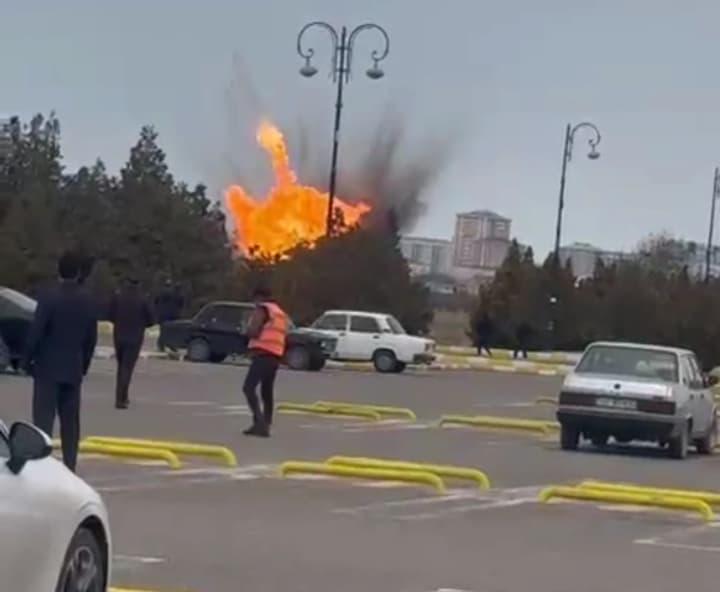
On 5 March 2026, the situation in the South Caucasus escalated sharply following a drone attack on the territory of the Nakhchivan Autonomous Republic (an exclave of Azerbaijan bordering Iran, Turkiye, and Armenia). The primary target of the strike was the international airport in the city of Nakhchivan. The incident has become one of the most serious episodes in Azerbaijani-Iranian relations in recent years and triggered a sharp reaction from the Azerbaijani authorities.
According to Azerbaijani officials, several unmanned aerial vehicles crossed the state border from the direction of Iran around midday. One of the drones struck the passenger terminal building of Nakhchivan International Airport, damaging part of the façade and surrounding infrastructure. Another drone crashed near the village of Shakarabad in the Babek district, not far from a school building. As a result of the attack, civilians — including airport employees and local residents — were injured. All those wounded were hospitalized. Following the incident, airport operations were temporarily suspended, and several flights were cancelled or diverted.
Witnesses shared videos on social media showing damage to the terminal building, shattered windows, and debris from the drones scattered across the airport area. It is worth noting that Nakhchivan’s airport is located approximately ten kilometers from the Iranian border, making it potentially vulnerable to strikes by short- and medium-range unmanned aerial systems.
Azerbaijani military experts suggest that the attack may have involved Iranian-made loitering munitions, particularly drones from the Shahed family or long-range strike UAVs such as the Arash‑2. Similar systems have previously been used in various conflicts across the Middle East. However, the exact type of drone has not yet been officially confirmed, as fragments of the UAVs are currently undergoing technical examination.
Baku’s reaction followed almost immediately. The President of Azerbaijan, Ilham Aliyev, convened an emergency meeting of the National Security Council, during which the incident was described as an act of aggression against the state. The Azerbaijani leader characterized the strike as “an unprovoked act of terror and aggression against Azerbaijan” and emphasized that the country “reserves the right to take retaliatory measures”.
During the meeting, the president ordered the armed forces to raise combat readiness, strengthen the country’s air defense systems, and prepare possible response measures.
In one of his statements, Aliyev stressed: “Any hostile force will feel the full power of our iron fist”.
At the same time, Azerbaijan initiated diplomatic measures. The Ministry of Foreign Affairs summoned the Iranian ambassador to Baku, Mojtaba Demirchilu, and handed him an official note of protest. In the document, the Azerbaijani side stated that the drone attack constitutes a gross violation of international law and poses a threat to regional security. Baku demanded official explanations from Tehran, a thorough investigation of the incident, and guarantees that such attacks would not occur again in the future.
In its official statement, Azerbaijan’s Ministry of Foreign Affairs emphasized that “the attack on Azerbaijan’s civilian infrastructure represents a violation of international law and contributes to further escalation of tensions in the region”.
At the same time, the country’s General Prosecutor’s Office opened a criminal investigation into the drone attack.
Tehran, however, rejected the accusations. Iranian officials stated that the country had no involvement in the incident. Iran’s Deputy Foreign Minister, Kazem Gharibabadi, said that Tehran does not carry out attacks against neighboring states and called for waiting for the results of a full investigation. According to him, “Iran does not attack neighboring countries”.
Despite the official denial, Azerbaijani sources claim that a preliminary analysis of the drones’ flight trajectories and technical characteristics indicates that the UAVs may have been launched from Iranian territory. These findings are currently being examined by military specialists and technical experts.
Following the incident, the Azerbaijani armed forces were placed on heightened combat alert. Air defense systems in Nakhchivan were reinforced, and additional security measures were implemented at strategic facilities across the region. According to several reports, the deployment of additional military units near the Iranian border is also under consideration.
The incident has raised serious concerns among international observers. Nakhchivan occupies a strategic position in the South Caucasus and serves as an important transportation hub linking the Caucasus, Turkiye, and the Middle East. The region also plays a key role in the network of regional energy and logistics corridors.
The broader context of the incident is linked to ongoing geopolitical tensions. Relations between Azerbaijan and Iran have remained complicated for several years. One source of tension is Baku’s close military and technological cooperation with Israel, as well as Azerbaijan’s strategic alliance with Turkiye. Another point of disagreement concerns regional transport initiatives, including a proposed corridor through southern Armenia that could reshape trade routes in the South Caucasus and reduce Iran’s role as a transit hub.
Analysts suggest that the situation could develop according to several scenarios. The most likely outcome is diplomatic de-escalation, should the parties agree to an international investigation of the incident. Another possibility involves limited retaliatory actions by Azerbaijan. The most dangerous scenario would be further escalation, potentially affecting not only the South Caucasus but also the broader Middle East region.
Thus, the drone strike on Nakhchivan represents an unprecedented episode in relations between Azerbaijan and Iran. Given the region’s strategic importance, existing political tensions, and the broader instability surrounding Iran, the incident could become one of the key factors of potential destabilization in the South Caucasus in the near future.


 Latest news
Latest news
Latest newsBulgaria Asks NATO to Strengthen Its Defences Amid Black Sea Threats: Sofia Fears Growing Risks to Maritime Shipping
16.Oct.2026
Black Sea Shipping Risks Threaten Bulgaria’s 5 Million Tonnes of Wheat Exports
15.Oct.2026
Georgia’s Foreign Funding and Political Ban Laws Draw Criticism from the Venice Commission
15.Oct.2026
Kazakhstan Promotes a Caspian Green Energy Corridor: Astana Seeks New Routes to the European Market
14.Oct.2026
Inflation in Romania Accelerates to 6.61%: Rising Prices Increase Pressure on Households and the Economy
13.Oct.2026
Can Europe Protect the International Criminal Court from Trump’s Sanctions?
13.Oct.2026
Georgia’s Constitutional Court Continues Case on Banning Opposition Parties: Political Pluralism at Stake
12.Oct.2026
Azerbaijan and Iran Step Up Security Contacts Amid Hijab Protests
12.Oct.2026
Personnel Shortages Complicate Ukrainian Forces’ Rotation: Ukraine Faces Long-Term Challenges on the Front Line
11.Oct.2026
Trump Eases Sanctions on Russian Fuel After Talks with Putin: Kyiv Fears Boost to Moscow’s War Revenues
10.Oct.2026
Putin Seeks to Strengthen Russia’s Influence in the Post-Soviet Space Through the CIS
10.Oct.2026
Russia and the South Caucasus: External Pressure, Political Competition and a Crisis of Trust
10.Oct.2026
Peaceful Settlement Between Armenia and Azerbaijan: Moving from Declarations to Implementation
10.Oct.2026
Moldova Ready to Accept as Many Ukrainians as Necessary if Situation Worsens This Winter
09.Oct.2026
Turkmenistan Turns Avaza into a Regional Diplomatic Hub as Caspian, Central Asian and CIS Agendas Converge
08.Oct.2026