
 17 Oct 2026









- The
Georgian authorities stepped back from previously declared plans for European
integration, suspending the process of accession to the European Union;
- A
“foreign agents” law for NGOs was introduced, modeled on Russian legislation;
- Street
protests were harshly suppressed.
Estonia Transfers Ambassador from Tbilisi to Yerevan Amid Cooling Relations with Georgia
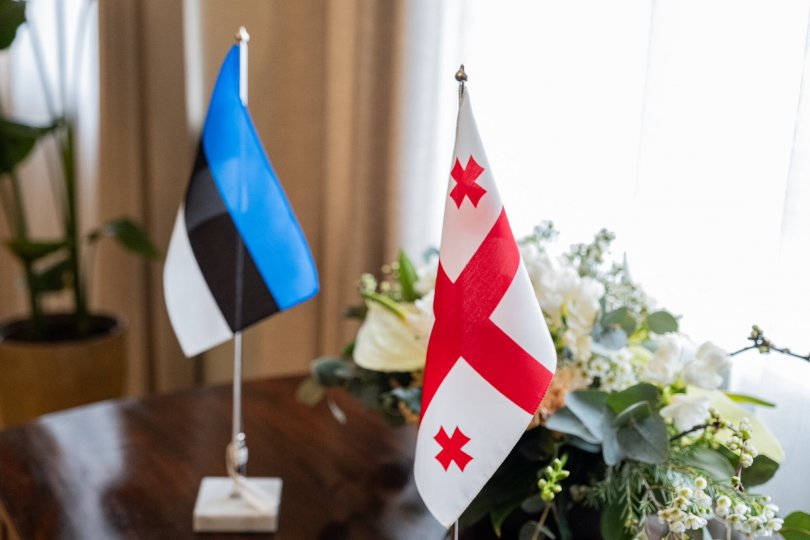
The Ministry of Foreign
Affairs of Estonia has decided to transfer Ambassador Marge Mardisalu-Kahar
from Georgia to Armenia and to end her tenure as head of the diplomatic mission
in Tbilisi as of March 10, 2026, according to the Estonian public broadcaster ERR.
Until
a new ambassador is appointed, Estonia’s diplomatic representation in Georgia will
be headed by Chargé d’Affaires Gita Kalmet. Estonia has not
specified when a new ambassador to Tbilisi will be named.
Mardisalu-Kahar
will remain Estonia’s representative to Armenia, where the official opening of
a new Estonian embassy in Yerevan is planned for March. She will become
Estonia’s first resident ambassador to the country.
Representatives
of the Estonian Foreign Ministry explained the move as a shift in foreign
policy priorities amid cooling relations with Georgia and strengthened
cooperation with Armenia.
According
to the official statement, relations with Georgia have deteriorated since the
change of government in Tbilisi in 2024:
The
Estonian Foreign Ministry noted that support for Georgian state institutions is
no longer a priority of Estonia’s foreign policy, while emphasizing that it
continues to support Georgia’s territorial integrity as well as the development
of civil society and independent media.
Georgian
officials have stated that they do not intend to “attach excessive importance”
to Estonia’s decision, stressing that such personnel decisions fall within the
sovereign prerogative of each state.
The
ambassador’s departure from Tbilisi may be perceived as a symbolic sign of a
deterioration in political dialogue between Tallinn and Tbilisi. For many
years, Estonia has been one of the most active supporters of Georgia’s
Euro-Atlantic integration, providing financial and expert assistance for
reforms and cooperation with the EU.
The
transfer of the ambassador to Yerevan, by contrast, reflects Estonia’s growing
strategic interest in the South Caucasus in light of new geopolitical
realities. In recent years, Armenia has intensified contacts with the EU and
several European capitals in an effort to build a more balanced and sustainable
regional position.
Experts note that although
Estonia’s diplomatic presence in Tbilisi formally remains, such personnel
decisions may weaken bilateral political dialogue and reduce the intensity of
high-level cooperation, particularly at a time when Georgia is seeking to
strengthen its foreign policy trajectory.


 Latest news
Latest news
Latest newsBulgaria Asks NATO to Strengthen Its Defences Amid Black Sea Threats: Sofia Fears Growing Risks to Maritime Shipping
16.Oct.2026
Black Sea Shipping Risks Threaten Bulgaria’s 5 Million Tonnes of Wheat Exports
15.Oct.2026
Georgia’s Foreign Funding and Political Ban Laws Draw Criticism from the Venice Commission
15.Oct.2026
Kazakhstan Promotes a Caspian Green Energy Corridor: Astana Seeks New Routes to the European Market
14.Oct.2026
Inflation in Romania Accelerates to 6.61%: Rising Prices Increase Pressure on Households and the Economy
13.Oct.2026
Can Europe Protect the International Criminal Court from Trump’s Sanctions?
13.Oct.2026
Georgia’s Constitutional Court Continues Case on Banning Opposition Parties: Political Pluralism at Stake
12.Oct.2026
Azerbaijan and Iran Step Up Security Contacts Amid Hijab Protests
12.Oct.2026
Personnel Shortages Complicate Ukrainian Forces’ Rotation: Ukraine Faces Long-Term Challenges on the Front Line
11.Oct.2026
Trump Eases Sanctions on Russian Fuel After Talks with Putin: Kyiv Fears Boost to Moscow’s War Revenues
10.Oct.2026
Putin Seeks to Strengthen Russia’s Influence in the Post-Soviet Space Through the CIS
10.Oct.2026
Russia and the South Caucasus: External Pressure, Political Competition and a Crisis of Trust
10.Oct.2026
Peaceful Settlement Between Armenia and Azerbaijan: Moving from Declarations to Implementation
10.Oct.2026
Moldova Ready to Accept as Many Ukrainians as Necessary if Situation Worsens This Winter
09.Oct.2026
Turkmenistan Turns Avaza into a Regional Diplomatic Hub as Caspian, Central Asian and CIS Agendas Converge
08.Oct.2026