
 17 Oct 2026









Beyond Protocol: Why Aliyev Did Not Travel to Moscow
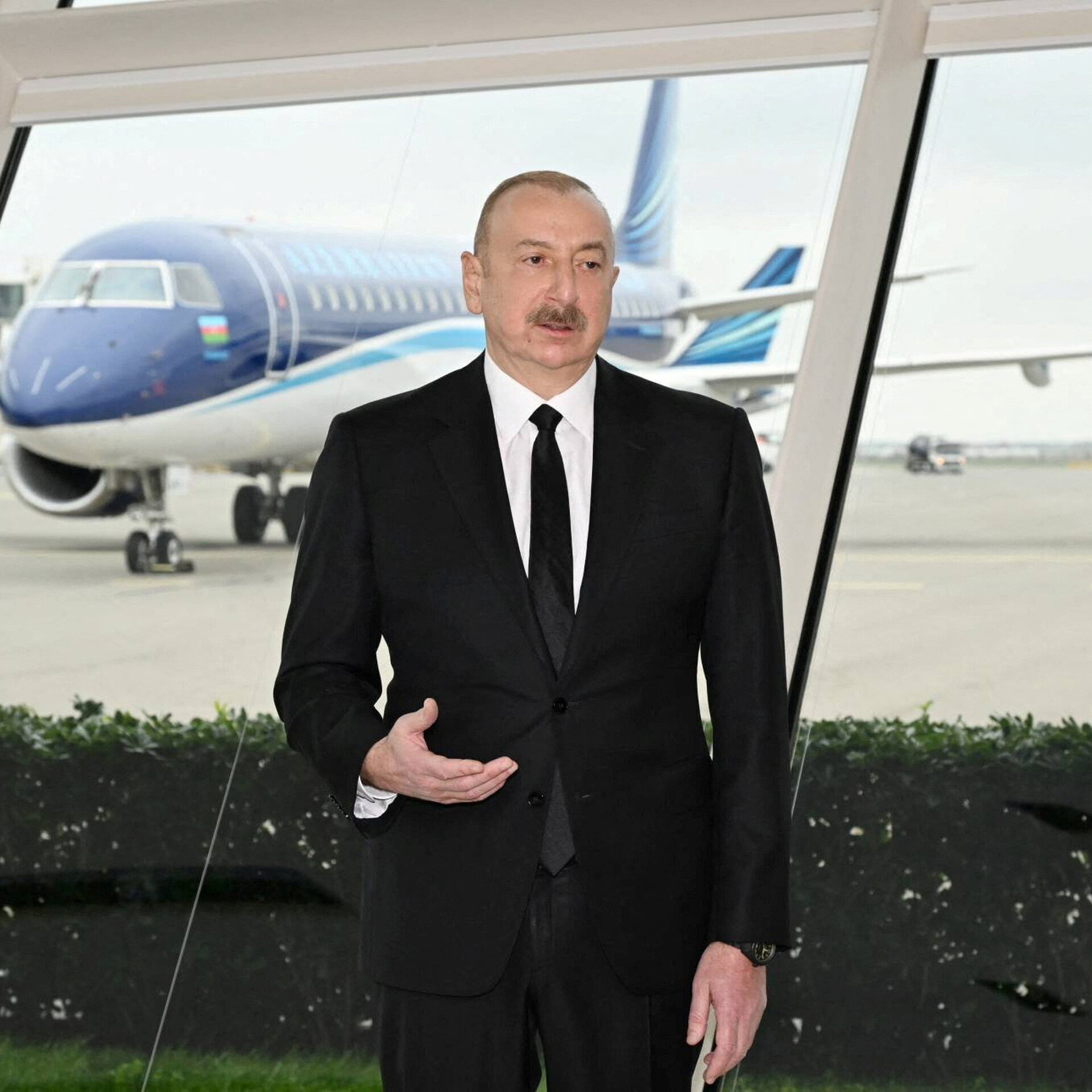
The
reason why President of Azerbaijan Ilham Aliyev did not travel to Russia in
December 2025 for a number of scheduled events is not merely a случайное
совпадение of circumstances, but rather an indicator of a more complex dynamic
in relations between Baku and Moscow, where official explanations intersect
with deeper political signals.
On 22 December 2025, an informal summit of the leaders of
the Commonwealth of Independent States (CIS) was scheduled to take place in
Saint Petersburg – a meeting at which, according to Kremlin statements, Aliyev
and other heads of state were expected to attend. The Russian side had publicly
and well in advance announced that it anticipated the participation of the
Azerbaijani leader in the two-day event on 21–22 December and was prepared for
his visit.
However, as the summit date approached, Aliyev’s administration
announced that the president would be unable to participate due to a “busy work
schedule”. This explanation was presented officially and repeatedly echoed by
Azerbaijan’s state news agency and the presidential press service.
At first glance, this is a standard formulation often used
by leaders who prefer to avoid direct political commentary. Nevertheless, the
timing of the refusal – coming just hours before the start of the summit,
despite prior preparations and confirmations of the invitation – prompted
analysts to question whether the matter was truly limited to calendar
constraints.
Behind this decision lies a broader context of bilateral
relations, which in 2025 experienced noticeable strain. In particular, the
deterioration in the atmosphere between Baku and Moscow has been linked to a
series of incidents, including the crash of an Azerbaijan Airlines (AZAL)
passenger aircraft in December 2024 over Russian territory and the subsequent
diplomatic frictions. These events became a source of irritation for Baku,
which has insisted on a thorough and transparent investigation, official
accountability and compensation, as well as acknowledgment that Russian air
defense systems may have been involved in the tragedy.
At the same time, a sharper tone has emerged in
Azerbaijan’s overall approach toward Russia. The Azerbaijani leadership has
strengthened its foreign policy independence, emphasizing a multi-vector
strategy and active cooperation with Turkey, the United States, and other
partners. This, in turn, reflects a desire to distance itself from a one-sided
reliance on Moscow. Experts note that such steps – including the refusal to
participate in key regional forums – may serve as a demonstration of political
autonomy and a signal of a reassessment of foreign policy priorities.
Russian officials, including Foreign Ministry spokeswoman
Maria Zakharova and Kremlin spokesman Dmitry Peskov, responded to this position
with “understanding”, stressing that the reasons were clear, while also
confirming that Russian President Vladimir Putin congratulated Aliyev on his
birthday by phone on 24 December and expressed an intention to maintain and
strengthen partnership relations.
Thus, while Ilham Aliyev’s decision not to attend the Moscow summit in December 2025 may appear on the surface to be driven by scheduling issues, in a broader context it reflects a shift in the balance of Russian-Azerbaijani relations, where symbolic gestures and participation in international formats are used not only for agenda-setting but also as instruments of foreign policy independence and strategic positioning on the global stage.


 Latest news
Latest news
Latest newsBulgaria Asks NATO to Strengthen Its Defences Amid Black Sea Threats: Sofia Fears Growing Risks to Maritime Shipping
16.Oct.2026
Black Sea Shipping Risks Threaten Bulgaria’s 5 Million Tonnes of Wheat Exports
15.Oct.2026
Georgia’s Foreign Funding and Political Ban Laws Draw Criticism from the Venice Commission
15.Oct.2026
Kazakhstan Promotes a Caspian Green Energy Corridor: Astana Seeks New Routes to the European Market
14.Oct.2026
Inflation in Romania Accelerates to 6.61%: Rising Prices Increase Pressure on Households and the Economy
13.Oct.2026
Can Europe Protect the International Criminal Court from Trump’s Sanctions?
13.Oct.2026
Georgia’s Constitutional Court Continues Case on Banning Opposition Parties: Political Pluralism at Stake
12.Oct.2026
Azerbaijan and Iran Step Up Security Contacts Amid Hijab Protests
12.Oct.2026
Personnel Shortages Complicate Ukrainian Forces’ Rotation: Ukraine Faces Long-Term Challenges on the Front Line
11.Oct.2026
Trump Eases Sanctions on Russian Fuel After Talks with Putin: Kyiv Fears Boost to Moscow’s War Revenues
10.Oct.2026
Putin Seeks to Strengthen Russia’s Influence in the Post-Soviet Space Through the CIS
10.Oct.2026
Russia and the South Caucasus: External Pressure, Political Competition and a Crisis of Trust
10.Oct.2026
Peaceful Settlement Between Armenia and Azerbaijan: Moving from Declarations to Implementation
10.Oct.2026
Moldova Ready to Accept as Many Ukrainians as Necessary if Situation Worsens This Winter
09.Oct.2026
Turkmenistan Turns Avaza into a Regional Diplomatic Hub as Caspian, Central Asian and CIS Agendas Converge
08.Oct.2026