
 17 Oct 2026









An Ultimatum Disguised as Negotiations: How Moscow and the West Are Raising the Stakes Over Ukraine
Vladimir
Putin’s statement that Russia is prepared to expand military operations in
Ukraine if peace talks fail came at a moment when diplomacy and the battlefield
are becoming ever more tightly intertwined. Speaking at an annual meeting with
senior military commanders, the Russian president effectively articulated
Moscow’s ultimatum logic: either negotiations on Russia’s terms, or the
continuation and deepening of the war.
“If the opposing side and its foreign patrons refuse to engage in substantive dialogue, Russia will achieve the liberation of its historical lands by military means”, Putin said, stressing that Moscow would prefer to “eliminate the root causes of the conflict” through diplomacy. This formula, familiar from previous Kremlin statements, was once again used as an ideological and political justification for potential escalation.
The context in which these remarks were made is of critical
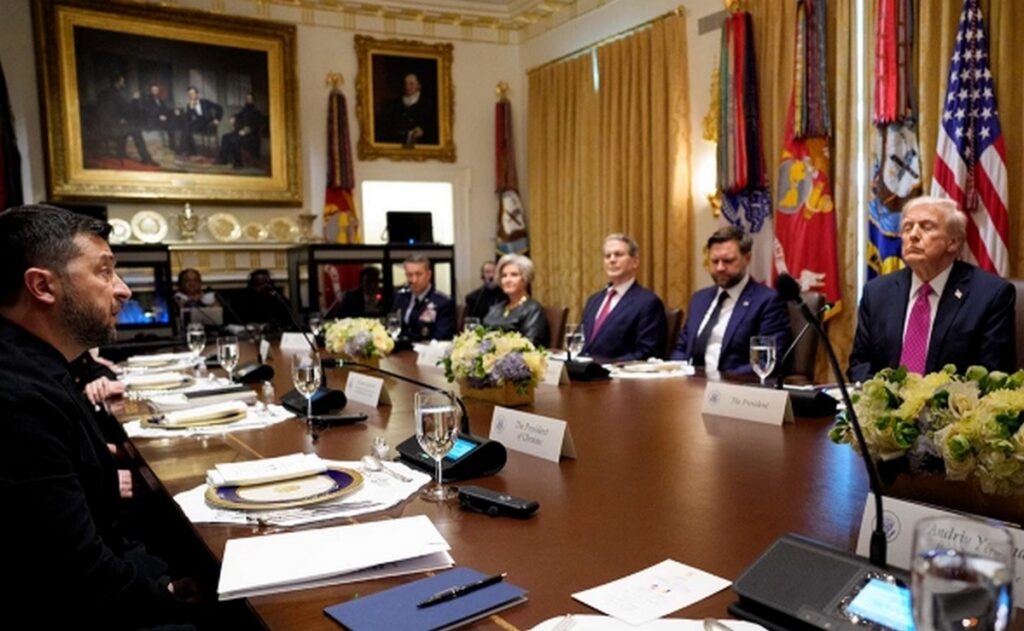
importance. In recent months, the administration of U.S. President Donald Trump
has intensified diplomatic efforts aimed at ending the nearly four-year war
that began with Russia’s full-scale invasion of Ukraine in February 2022.
However, as Western analysts note, these initiatives have run into “sharply conflicting
demands” from the parties: Moscow insists on recognition of new territorial
realities, while Kyiv and its allies view Russia’s actions as illegal
aggression that cannot be legitimized through negotiations.
Putin, for his part, is seeking to reinforce diplomatic pressure with military arguments. He claims that “the Russian army has seized and is firmly holding the strategic initiative along the entire front line”, and warns of plans to expand a so-called “buffer security zone” along Russia’s border. This rhetoric is intended to convey that time is on Moscow’s side and that any delay in negotiations will only worsen Ukraine’s position.
Assessments by independent analytical centers, however,
appear far more restrained. According to the latest report by the Institute for
the Study of War (ISW), published on December 16, the fighting remains largely
positional in nature. Russian forces continue attacks on several axes,
including the Pokrovsk, Kostiantynivka, and Lyman areas, but no significant
operational breakthroughs have been recorded. Ukrainian forces, in turn, are
conducting localized counterattacks and striking Russian rear-area
infrastructure, undermining the image of “unconditional dominance” projected by
the Kremlin.
ISW also emphasizes that alongside its military rhetoric,
Moscow is conducting an active information campaign portraying the EU and the
United States as direct participants in the conflict. According to analysts,
this narrative is aimed at mobilizing Russian society and preparing it for a
prolonged confrontation with the West. “The Kremlin continues to demonstrate a
lack of readiness for compromise, particularly on the territorial issue”, the
institute’s assessment notes.
On the opposite side of the diplomatic arena, the EU and
the United States are increasingly vocal about providing Ukraine with “reliable
security guarantees”. These statements signal that even in the event of a
ceasefire, Kyiv should not be left in a vulnerable position or pushed back into
a “gray zone” between Russia and the West. For Moscow, this is a clear
indication that a potential peace settlement would not lead to Ukraine’s
strategic weakening and therefore fails to meet the Kremlin’s core demands.
As a result, the current phase of the war is characterized
by a dangerous gap between rhetoric and reality. On the one hand are Putin’s
hardline statements about expanding “historical lands” and maintaining military
initiative; on the other are analytical assessments pointing to a protracted,
grinding conflict with no decisive turning points. In this configuration,
negotiations cease to be a search for compromise and instead become a
continuation of the war by other means.
Consequently, diplomatic initiatives – including those led by Washington – remain trapped between Moscow’s maximalist demands and the principled stance of Kyiv and its allies. The threat of expanded military action has become an instrument of political pressure, while the prospect of peace increasingly depends not on words spoken at the negotiating table, but on the ability of the parties to endure a long-term military and economic confrontation.
Expert Group CCBS


 Latest news
Latest news
Latest newsBulgaria Asks NATO to Strengthen Its Defences Amid Black Sea Threats: Sofia Fears Growing Risks to Maritime Shipping
16.Oct.2026
Black Sea Shipping Risks Threaten Bulgaria’s 5 Million Tonnes of Wheat Exports
15.Oct.2026
Georgia’s Foreign Funding and Political Ban Laws Draw Criticism from the Venice Commission
15.Oct.2026
Kazakhstan Promotes a Caspian Green Energy Corridor: Astana Seeks New Routes to the European Market
14.Oct.2026
Inflation in Romania Accelerates to 6.61%: Rising Prices Increase Pressure on Households and the Economy
13.Oct.2026
Can Europe Protect the International Criminal Court from Trump’s Sanctions?
13.Oct.2026
Georgia’s Constitutional Court Continues Case on Banning Opposition Parties: Political Pluralism at Stake
12.Oct.2026
Azerbaijan and Iran Step Up Security Contacts Amid Hijab Protests
12.Oct.2026
Personnel Shortages Complicate Ukrainian Forces’ Rotation: Ukraine Faces Long-Term Challenges on the Front Line
11.Oct.2026
Trump Eases Sanctions on Russian Fuel After Talks with Putin: Kyiv Fears Boost to Moscow’s War Revenues
10.Oct.2026
Putin Seeks to Strengthen Russia’s Influence in the Post-Soviet Space Through the CIS
10.Oct.2026
Russia and the South Caucasus: External Pressure, Political Competition and a Crisis of Trust
10.Oct.2026
Peaceful Settlement Between Armenia and Azerbaijan: Moving from Declarations to Implementation
10.Oct.2026
Moldova Ready to Accept as Many Ukrainians as Necessary if Situation Worsens This Winter
09.Oct.2026
Turkmenistan Turns Avaza into a Regional Diplomatic Hub as Caspian, Central Asian and CIS Agendas Converge
08.Oct.2026