
 17 Oct 2026









- Energy – development of long-term projects and stable supply
chains amid global market pressures;
- Agriculture – expanding India’s presence in the Russian food market;
- Defense industry – from joint production to maintenance and technological
cooperation;
- Migration policy – regulated labor mobility and educational programs;
- Nuclear energy – development and implementation of advanced civilian
nuclear technologies.
- a reliable supplier of
energy resources at competitive prices,
- a key partner in
military technologies, including joint
development,
- an important actor in
Eurasian security, influencing regional
balance.
- India’s ability to balance relations with the U.S., China,
and Russia;
- Russia’s capacity to maintain supply volumes and offer
competitive terms;
- The global geopolitical environment, particularly trends in
the energy markets.
Russia–India: A New Architecture of Partnership. What Stands Behind Putin’s Visit to New Delhi?
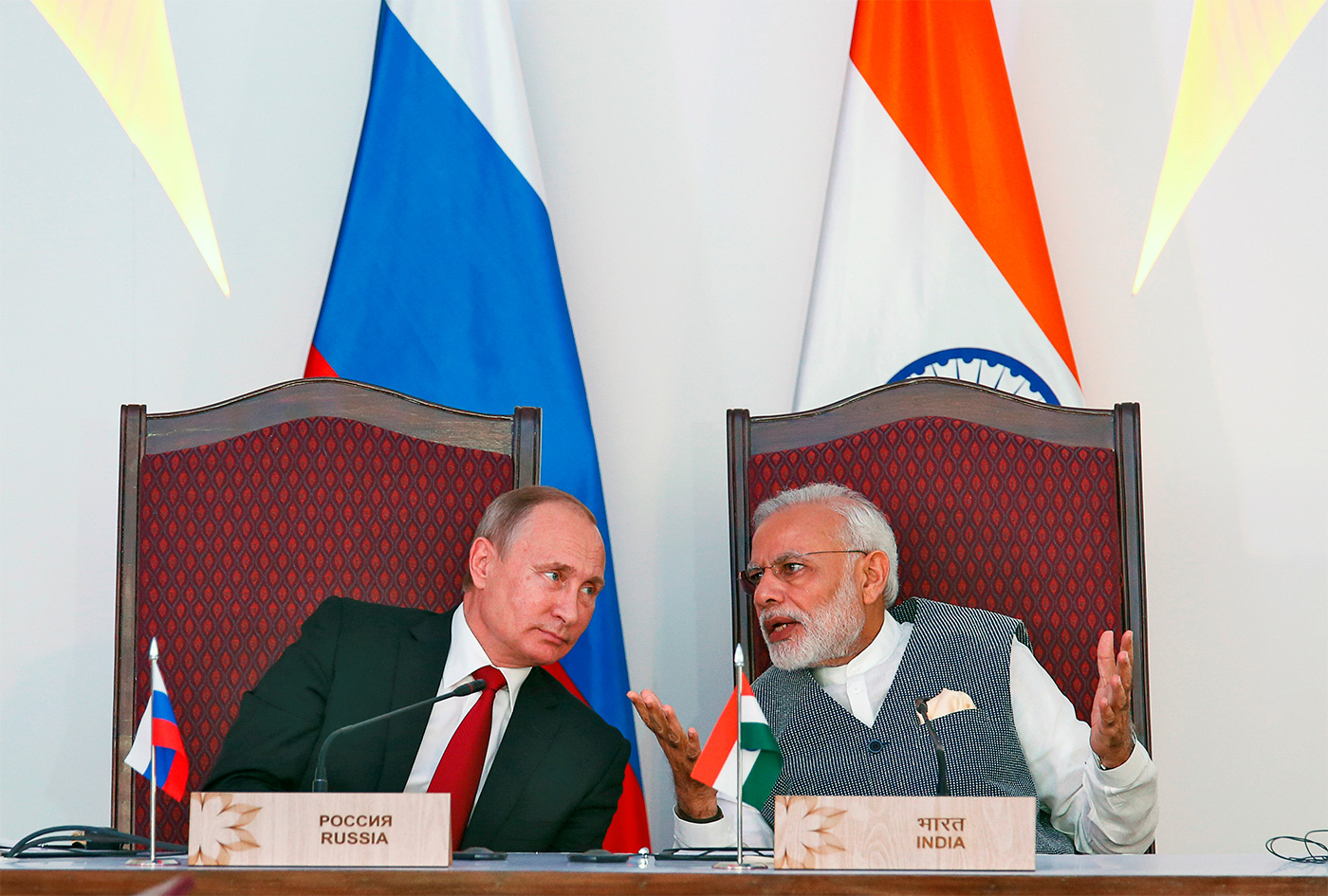
Vladimir
Putin’s visit to India has become one of the most significant diplomatic events
of the year – not only because of the agreements signed, but also due to the
symbolism they carry. Indian Prime Minister Narendra Modi and Russian President
Vladimir Putin confirmed that bilateral relations are entering a new phase,
extending far beyond traditional areas such as oil supplies and military
cooperation.
The two sides set an ambitious goal – to increase bilateral
trade to $100
billion by 2030, which implies not just expanding trade
volumes, but a deeper interconnection between the two economies. This is
particularly notable against the backdrop of ongoing global sanctions and
political turbulence, which push Moscow to seek broader economic alternatives
and new strategic footholds in Asia.
In recent years, Russia–India relations have been centered
mainly on energy and military cooperation, but the current shift is evident.
During the visit, agreements were concluded in several key areas:
Taken together, these agreements indicate an intention to
build a systemic partnership in which energy and defense are only parts of a
broader, multi-layered model of cooperation.
Putin’s visit came at a moment when India is strengthening
ties with the United States and G20 countries while maintaining strategic
autonomy. New Delhi continues to adhere to its “multi-vector” foreign policy,
balancing between Washington, Brussels, Moscow, and Beijing.
From India’s perspective, Russia remains:
For Moscow, India is one of the few major markets where
sanctions have not disrupted trade or technological cooperation.
The Russian side assured Indian partners of the “uninterrupted
supply” of oil and energy resources – despite U.S. pressure. This
declaration served as a political signal: Russia intends to retain India as a
key export destination, compensating for reduced European consumption.
In the long term, developments in nuclear energy and future
energy agreements may turn India into one of the central energy hubs linked to
Russia.
Russia and India are restructuring their partnership toward high technology, nuclear energy, the agricultural sector, and migration programs. Against the backdrop of global competition, India gains additional leverage in relations with the U.S. and EU, while Moscow strengthens its position in the Asia-Pacific region. In essence, Russia is broadening its geoeconomic base beyond China, while India enhances its energy security amid growing demand. This dynamic positions Russia and India as a potentially pivotal bilateral alliance outside the Western bloc – shaping transport corridors, trade networks, and technological markets.
If the stated goals of increasing trade and launching new
projects are successfully implemented, the Russia–India partnership could
become one of the most dynamic in Eurasia. However, much depends on several key
factors:
For now, one thing is clear: Putin’s visit to India represents an attempt by both countries to move from a traditional “pragmatic friendship” toward a multi-dimensional strategy of cooperation – one that may shape regional dynamics for years to come.


 Latest news
Latest news
Latest newsBulgaria Asks NATO to Strengthen Its Defences Amid Black Sea Threats: Sofia Fears Growing Risks to Maritime Shipping
16.Oct.2026
Black Sea Shipping Risks Threaten Bulgaria’s 5 Million Tonnes of Wheat Exports
15.Oct.2026
Georgia’s Foreign Funding and Political Ban Laws Draw Criticism from the Venice Commission
15.Oct.2026
Kazakhstan Promotes a Caspian Green Energy Corridor: Astana Seeks New Routes to the European Market
14.Oct.2026
Inflation in Romania Accelerates to 6.61%: Rising Prices Increase Pressure on Households and the Economy
13.Oct.2026
Can Europe Protect the International Criminal Court from Trump’s Sanctions?
13.Oct.2026
Georgia’s Constitutional Court Continues Case on Banning Opposition Parties: Political Pluralism at Stake
12.Oct.2026
Azerbaijan and Iran Step Up Security Contacts Amid Hijab Protests
12.Oct.2026
Personnel Shortages Complicate Ukrainian Forces’ Rotation: Ukraine Faces Long-Term Challenges on the Front Line
11.Oct.2026
Trump Eases Sanctions on Russian Fuel After Talks with Putin: Kyiv Fears Boost to Moscow’s War Revenues
10.Oct.2026
Putin Seeks to Strengthen Russia’s Influence in the Post-Soviet Space Through the CIS
10.Oct.2026
Russia and the South Caucasus: External Pressure, Political Competition and a Crisis of Trust
10.Oct.2026
Peaceful Settlement Between Armenia and Azerbaijan: Moving from Declarations to Implementation
10.Oct.2026
Moldova Ready to Accept as Many Ukrainians as Necessary if Situation Worsens This Winter
09.Oct.2026
Turkmenistan Turns Avaza into a Regional Diplomatic Hub as Caspian, Central Asian and CIS Agendas Converge
08.Oct.2026