
 17 Oct 2026









Serbia’s European Integration: Prospects and Obstacles
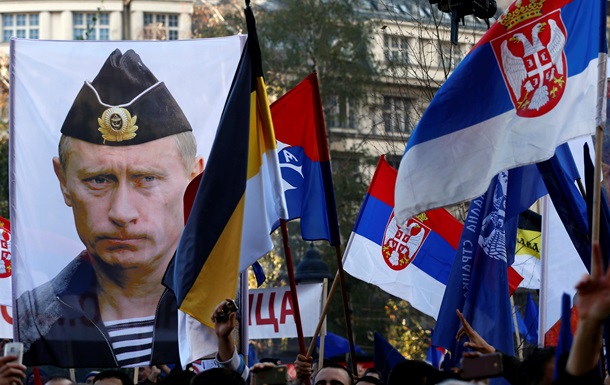
Serbia, the largest country in
the Western Balkans, is facing a historic choice regarding its future political
orientation. Although this decision has been on the agenda since the late
1990s, it remains unresolved and is likely to stay so for some time. The
country is undergoing a process of transformation; however, without integration
into Western institutions – above all, the European Union – this transformation
remains incomplete. Other major international actors, particularly Russia and
to some extent China, are attempting to influence Belgrade in directions that
serve their strategic interests.
A rational choice regarding
economic integration, trade, investment, and the consolidation of democracy should
naturally steer Serbia toward the West. However, as various examples
demonstrate, rationality is not the only factor at play. Emotional ties with
Russia, Orthodox Christianity, Russian support for Serbia in the Kosovo
dispute, and Moscow's sophisticated influence – often amplified by the EU’s
slow and hesitant approach – enable Russia to maintain a strong position in
Serbia. This has led to a stalemate that requires urgent attention to avoid
prolonged uncertainty and indecision.
China, meanwhile, offers a potential alternative, primarily as a trading partner and investor. However, its interests in Serbia's future orientation may diverge from those of Moscow, not least due to China's contemporary international rhetoric. Given these dynamics, one can observe a gradual shift in Serbia’s political course.
This article analyzes the
current state of Serbia’s European integration process. It examines
institutional, political, and socio-cultural factors that slow down
negotiations with the European Union. Particular attention is paid to the
Kosovo issue, the influence of external actors (Russia and China), and the
dynamics of public opinion. The article also presents data on public support
for EU membership among the Serbian population.
Contradictory signals continue
to emerge from Belgrade regarding the possibility of reorienting its foreign
policy from Russia toward the European Union. There is a domestic consensus in
favor of maintaining the EU path and commitment to European integration. On the
other hand, Serbia has refused to impose sanctions on Russia, primarily due to
deeply rooted historical grievances – most notably the NATO bombings of the
1990s and Western support for Kosovo’s independence. Russia (alongside China) continues to defend
Serbia's territorial integrity at the United Nations and other international
forums.
Serbia effectively finds
itself a hostage of the broader Russia–West confrontation. It is compelled to
present different positions depending on whether it is engaging with European
or Russian representatives. Thus, from Moscow’s perspective, Serbia is a
partner whose loyalty is largely contingent on the state of Russia’s relations
with the West and developments in Ukraine. Serbia’s position on the Ukraine
conflict is itself ambiguous: while Belgrade supports Ukraine’s territorial
integrity – reflecting its own concerns over Kosovo’s status – it
simultaneously avoids aligning fully with Western sanctions or rhetoric.

One of the key obstacles to
Serbia’s EU accession remains the Kosovo question. Brussels has consistently
emphasized that normalization of relations between Belgrade and Pristina is a
prerequisite for further progress in EU accession talks. However, the Serbian
political elite is unwilling to make compromises that a significant portion of
the public would perceive as a betrayal of national interests. This issue
largely accounts for the stagnation of the negotiation process and contributes
to the image of Serbia as a country oscillating between a European course and a
nationalist agenda.
Public opinion also plays a crucial role. According to a survey I conducted in 2025 as part of this research, only 33% of Serbian citizens support EU membership, while over 40% are opposed, and around a quarter remain undecided. For comparison, support for EU accession in Albania and North Macedonia exceeds 80%, highlighting regional disparities in perceptions of the EU. Data from the International Republican Institute (IRI) in 2024 similarly reflect this polarization: 40% of Serbians expressed support for European integration, while 34-43% opposed it. These findings confirm a high degree of societal polarization, which complicates the implementation of reforms and reduces the Serbian government’s political flexibility.

External actors also play a
significant role. Russia and China have been actively strengthening their
economic and political presence in Serbia, investing in infrastructure, energy,
and technology. These countries are perceived by a significant segment of the
Serbian population as viable alternatives to the EU, thereby reducing
Belgrade’s dependence on Brussels. Notably, Serbia’s alignment with the EU’s
Common Foreign and Security Policy (CFSP) stood at approximately 47% in 2024,
underscoring the limited degree of conformity with EU foreign policy expectations.
Domestic political dynamics
further hinder integration. The European Commission’s annual reports
consistently point to shortcomings in the rule of law, pressure on independent
media, and the concentration of power in the executive branch. According to
several experts, elements of "managed democracy" are becoming
increasingly evident in Serbia, directly conflicting with the Copenhagen
criteria that underpin EU accession. This situation not only diminishes the
EU's willingness to accelerate negotiations but also reinforces perceptions
within Serbia that the EU applies "double standards".
In conclusion, Serbia's prospects for EU membership are shaped by a complex interplay of interrelated factors: the unresolved Kosovo issue, declining public support for accession, the influence of Russia and China, and weak institutional reforms. The most likely scenario for the coming years is a continuation of the current stagnation in negotiations, despite the formal maintenance of a pro-EU orientation. However, a breakthrough remains possible if the Serbian leadership demonstrates political will to resolve the Kosovo dispute and strengthen democratic institutions – and if the European Union offers clearer guarantees and a concrete timeline for accession. Failing that, growing uncertainty could further deepen Serbia’s ties with Russia and China, entrenching its position as a "country between two worlds" and postponing EU integration indefinitely.


 Latest news
Latest news
Latest newsBulgaria Asks NATO to Strengthen Its Defences Amid Black Sea Threats: Sofia Fears Growing Risks to Maritime Shipping
16.Oct.2026
Black Sea Shipping Risks Threaten Bulgaria’s 5 Million Tonnes of Wheat Exports
15.Oct.2026
Georgia’s Foreign Funding and Political Ban Laws Draw Criticism from the Venice Commission
15.Oct.2026
Kazakhstan Promotes a Caspian Green Energy Corridor: Astana Seeks New Routes to the European Market
14.Oct.2026
Inflation in Romania Accelerates to 6.61%: Rising Prices Increase Pressure on Households and the Economy
13.Oct.2026
Can Europe Protect the International Criminal Court from Trump’s Sanctions?
13.Oct.2026
Georgia’s Constitutional Court Continues Case on Banning Opposition Parties: Political Pluralism at Stake
12.Oct.2026
Azerbaijan and Iran Step Up Security Contacts Amid Hijab Protests
12.Oct.2026
Personnel Shortages Complicate Ukrainian Forces’ Rotation: Ukraine Faces Long-Term Challenges on the Front Line
11.Oct.2026
Trump Eases Sanctions on Russian Fuel After Talks with Putin: Kyiv Fears Boost to Moscow’s War Revenues
10.Oct.2026
Putin Seeks to Strengthen Russia’s Influence in the Post-Soviet Space Through the CIS
10.Oct.2026
Russia and the South Caucasus: External Pressure, Political Competition and a Crisis of Trust
10.Oct.2026
Peaceful Settlement Between Armenia and Azerbaijan: Moving from Declarations to Implementation
10.Oct.2026
Moldova Ready to Accept as Many Ukrainians as Necessary if Situation Worsens This Winter
09.Oct.2026
Turkmenistan Turns Avaza into a Regional Diplomatic Hub as Caspian, Central Asian and CIS Agendas Converge
08.Oct.2026