
 17 Oct 2026









Trump and Zelensky in Washington: The Return of “Hardline Support” Policy
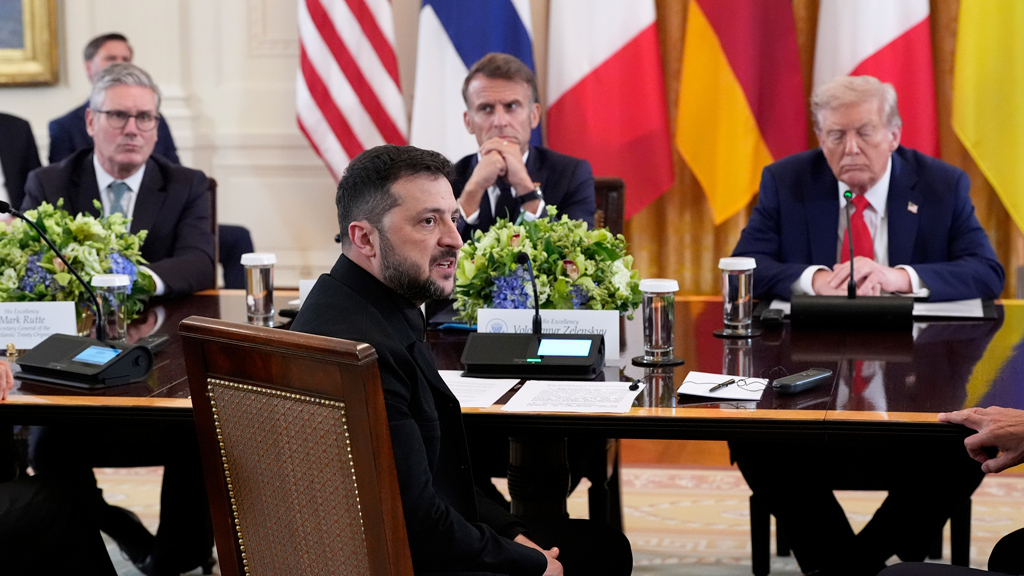
On October 17, 2025, U.S. President Donald Trump and Ukrainian President Volodymyr Zelensky met at the White House. This was their second meeting in the past two months – and arguably the most important one, not only for bilateral relations but also for understanding the future of the West’s overall policy toward the war in Ukraine.
Trump once again demonstrated that his approach to foreign policy fundamentally differs from Joe Biden’s. While the previous administration based its support for Ukraine on moral responsibility and the defense of “democratic values”, the current White House prefers the language of deals and balance.
Support for Kyiv has not stopped, but it is increasingly being tied to conditions. Behind closed doors, Washington insists on the “rationalization” of military aid: fewer blank checks, more accountability, logistics, and oversight. It’s a pragmatic approach where humanitarian rhetoric gives way to political calculation.
For the American electorate, Trump is projecting the image of a leader who doesn’t waste resources but negotiates even with allies on “tough terms”. On the eve of the 2026 presidential campaign, this image is vital – support for Ukraine in the U.S. remains significant, but no longer unconditional.

For Zelensky, the visit to Washington was a necessary step to maintain trust and attention from his key partner. Today, every diplomatic contact for Kyiv is equivalent to a new supply line to the front. The Ukrainian president arrived with specific requests: additional air defense systems and long-range strike capabilities – both crucial for sustaining the country’s defenses. However, in response, he received not promises but a formula: “The U.S. is ready to help — but on mutually acceptable terms”.
This caution from Washington reflects not indifference but fatigue. The U.S. wants to see in Kyiv not just an ally, but a partner capable of implementing reforms, curbing corruption, and managing resources effectively. It is diplomacy of survival – where maintaining support requires constant reminders that Ukraine remains the West’s strategic shield.
For Russia, the Trump-Zelensky meeting was an unpleasant but expected development. After months of uncertainty in U.S.-Ukraine relations, the Kremlin had clearly counted on weakening coordination between them. That did not happen.
Formally, the U.S. did not announce new arms deliveries, yet the very fact of the meeting in the White House shows that the West still sees Ukraine as part of its security architecture, not a temporary project.
Moscow will likely interpret this as a signal to accelerate its own operations before Western military aid to Kyiv regains momentum. This could lead to a new wave of escalation as early as this autumn – particularly in the southern and eastern sectors.
The most important aspect of this meeting is not the specific decisions, but the tone. Trump is not abandoning Ukraine, but he is no longer turning it into a symbol. He brings the issue back into the realm of realism: support must have a price, a purpose, and a timeframe.
For Europe, this is also a challenge. The EU must now decide whether it can compensate for a potential decrease in U.S. involvement – or whether it will once again remain dependent on Washington’s decisions.
For Ukraine, it is a reminder that to preserve international interest, it must demonstrate not only heroism but also strategic resilience.
The Trump-Zelensky meeting was neither a breakthrough nor a failure. It was a diplomatic pause before a regrouping, during which Washington seeks balance between domestic skepticism and external necessity.
Thus, Kyiv is being reminded that Western support is not infinite – every new commitment must now be earned with arguments and results. At the same time, Moscow has been warned that despite turbulence in Western capitals, the political foundation of support for Ukraine remains strong. In other words, on October 17 in Washington, they did not decide the fate of the war, but they did determine what kind of war it will be: long, calculated, and controlled.
Expert Group CCBS


 Latest news
Latest news
Latest newsBulgaria Asks NATO to Strengthen Its Defences Amid Black Sea Threats: Sofia Fears Growing Risks to Maritime Shipping
16.Oct.2026
Black Sea Shipping Risks Threaten Bulgaria’s 5 Million Tonnes of Wheat Exports
15.Oct.2026
Georgia’s Foreign Funding and Political Ban Laws Draw Criticism from the Venice Commission
15.Oct.2026
Kazakhstan Promotes a Caspian Green Energy Corridor: Astana Seeks New Routes to the European Market
14.Oct.2026
Inflation in Romania Accelerates to 6.61%: Rising Prices Increase Pressure on Households and the Economy
13.Oct.2026
Can Europe Protect the International Criminal Court from Trump’s Sanctions?
13.Oct.2026
Georgia’s Constitutional Court Continues Case on Banning Opposition Parties: Political Pluralism at Stake
12.Oct.2026
Azerbaijan and Iran Step Up Security Contacts Amid Hijab Protests
12.Oct.2026
Personnel Shortages Complicate Ukrainian Forces’ Rotation: Ukraine Faces Long-Term Challenges on the Front Line
11.Oct.2026
Trump Eases Sanctions on Russian Fuel After Talks with Putin: Kyiv Fears Boost to Moscow’s War Revenues
10.Oct.2026
Putin Seeks to Strengthen Russia’s Influence in the Post-Soviet Space Through the CIS
10.Oct.2026
Russia and the South Caucasus: External Pressure, Political Competition and a Crisis of Trust
10.Oct.2026
Peaceful Settlement Between Armenia and Azerbaijan: Moving from Declarations to Implementation
10.Oct.2026
Moldova Ready to Accept as Many Ukrainians as Necessary if Situation Worsens This Winter
09.Oct.2026
Turkmenistan Turns Avaza into a Regional Diplomatic Hub as Caspian, Central Asian and CIS Agendas Converge
08.Oct.2026