
 17 Oct 2026









Russia and Syria: A New Chapter in Relations After the Coup
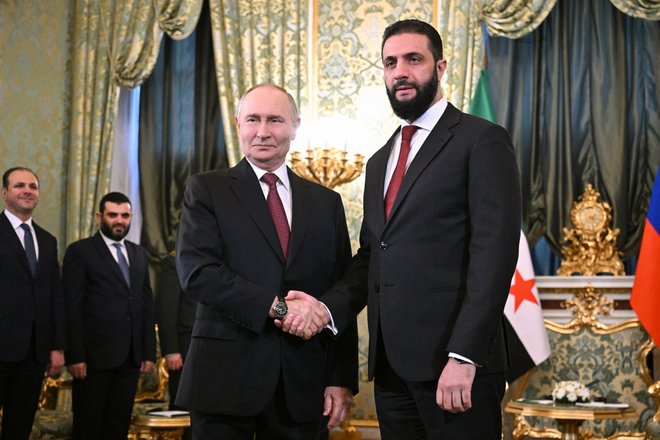
The Kremlin has hosted the
first official meeting between Russian President Vladimir Putin and Syria’s new
leader, Ahmed al-Sharaa, who came to power following the overthrow of Bashar
al-Assad’s regime at the end of 2024. The main topic of the talks was the
future of Russia’s military bases in Syria, as well as the format of bilateral
cooperation in this new phase.
The
Kremlin officially announced that the parties discussed the future of the Khmeimim airbase, the naval facility in
Tartus, and the possible presence
near Qamishli airport in
northeastern Syria. According to the Russian Ministry of Foreign Affairs, the
discussions included a “possible restructuring” of the military sites. However,
private channels suggest Moscow’s main goal is to preserve its key positions.

At the
opening of the meeting, al-Sharaa stated that Damascus “respects all agreements
concluded with Moscow” and seeks to “restore and reinterpret relations” in a
new form – based on Syria’s independence and sovereignty. The word
“reinterpret” signals a willingness to strike a negotiated balance: not blind
loyalty, but mutual benefit.
One of
the most sensitive issues is al-Sharaa’s demand to bring Bashar al-Assad to
justice for alleged crimes against the Syrian people. Damascus may officially
request that Moscow extradite Assad, but the Kremlin is unlikely to agree,
citing the risk of undermining trust in Russia’s guarantees to other allies and
partners. Notably, al-Sharaa has so far avoided directly mentioning Assad’s
extradition in public, instead emphasizing adherence to existing agreements and
protection of Syria’s interests.
Beyond
the military dimension, the meeting carried strong economic motives. The two
leaders discussed Russian participation in rebuilding Syria’s energy,
transportation, and infrastructure networks, as well as oil and gas extraction
projects. Russia has previously announced plans to use its remaining bases as
logistical hubs for delivering aid to Africa by sea and air. The two countries
are expected to soon convene an intergovernmental commission to coordinate
trade and investment cooperation.
Putin,
in turn, welcomed Syria’s recent parliamentary elections, calling them a
“success” and a step toward national consolidation.
It is
worth noting that the contract granting a Russian contractor management rights
over the Tartus port was annulled by the new Syrian government. Following the
coup, Russian ships withdrew from the port, although some naval presence
remained close to Syrian territorial waters. The Khmeimim base, which had
served as Russia’s main air hub in Syria, also came under multiple attacks in
2025. In particular, on May 20-21, 2025, the group “Burkan al-Furat” launched
an armed assault on the base, resulting in casualties on both sides. Legally,
the Khmeimim base operates under a 2015 agreement with Syria, but its
legitimacy has been disputed since Assad’s fall.

The
overthrow of Assad and the rise of al-Sharaa mark not just a domestic change of
power, but also a shift in the architecture of influence in the Middle East.
Russia has lost one of its core allies, forcing it to search for ways to retain
its foothold.
On one
hand, Moscow is keen to preserve its strategic positions in Syria – they
provide access to the Mediterranean Sea, control over regional air corridors,
and leverage in regional affairs. On the other hand, Russia faces resource
constraints, continued involvement in the war in Ukraine, and the need to
balance relations with new regional actors.
Pressure from Israel cannot be ruled out either, as it calls for the demilitarization of southern Syria. Regional powers and the United States are also questioning Russia’s role under Syria’s new political order. The key point, however, is that al-Sharaa, despite his tough rhetoric, appears willing to keep Russia’s bases in place – as long as they serve Syria’s national interests.
The loss of established allies
and the need to restructure its presence may weaken Russia’s western reach in
the region. Still, Moscow could leverage participation in Syria’s
reconstruction to maintain economic influence. Turkey, Iran, Saudi Arabia, and
the U.S. all see the new situation as an opportunity to strengthen their own
foothold in Syria. For al-Sharaa, the priority is to show that he is not just a
revolutionary leader but also a political leader capable of building diplomatic
bridges and maintaining control over key strategic gateways.
Expert Group CCBS


 Latest news
Latest news
Latest newsBulgaria Asks NATO to Strengthen Its Defences Amid Black Sea Threats: Sofia Fears Growing Risks to Maritime Shipping
16.Oct.2026
Black Sea Shipping Risks Threaten Bulgaria’s 5 Million Tonnes of Wheat Exports
15.Oct.2026
Georgia’s Foreign Funding and Political Ban Laws Draw Criticism from the Venice Commission
15.Oct.2026
Kazakhstan Promotes a Caspian Green Energy Corridor: Astana Seeks New Routes to the European Market
14.Oct.2026
Inflation in Romania Accelerates to 6.61%: Rising Prices Increase Pressure on Households and the Economy
13.Oct.2026
Can Europe Protect the International Criminal Court from Trump’s Sanctions?
13.Oct.2026
Georgia’s Constitutional Court Continues Case on Banning Opposition Parties: Political Pluralism at Stake
12.Oct.2026
Azerbaijan and Iran Step Up Security Contacts Amid Hijab Protests
12.Oct.2026
Personnel Shortages Complicate Ukrainian Forces’ Rotation: Ukraine Faces Long-Term Challenges on the Front Line
11.Oct.2026
Trump Eases Sanctions on Russian Fuel After Talks with Putin: Kyiv Fears Boost to Moscow’s War Revenues
10.Oct.2026
Putin Seeks to Strengthen Russia’s Influence in the Post-Soviet Space Through the CIS
10.Oct.2026
Russia and the South Caucasus: External Pressure, Political Competition and a Crisis of Trust
10.Oct.2026
Peaceful Settlement Between Armenia and Azerbaijan: Moving from Declarations to Implementation
10.Oct.2026
Moldova Ready to Accept as Many Ukrainians as Necessary if Situation Worsens This Winter
09.Oct.2026
Turkmenistan Turns Avaza into a Regional Diplomatic Hub as Caspian, Central Asian and CIS Agendas Converge
08.Oct.2026