
 17 Oct 2026









Georgia after Municipal Elections: Protests and Political Crisis
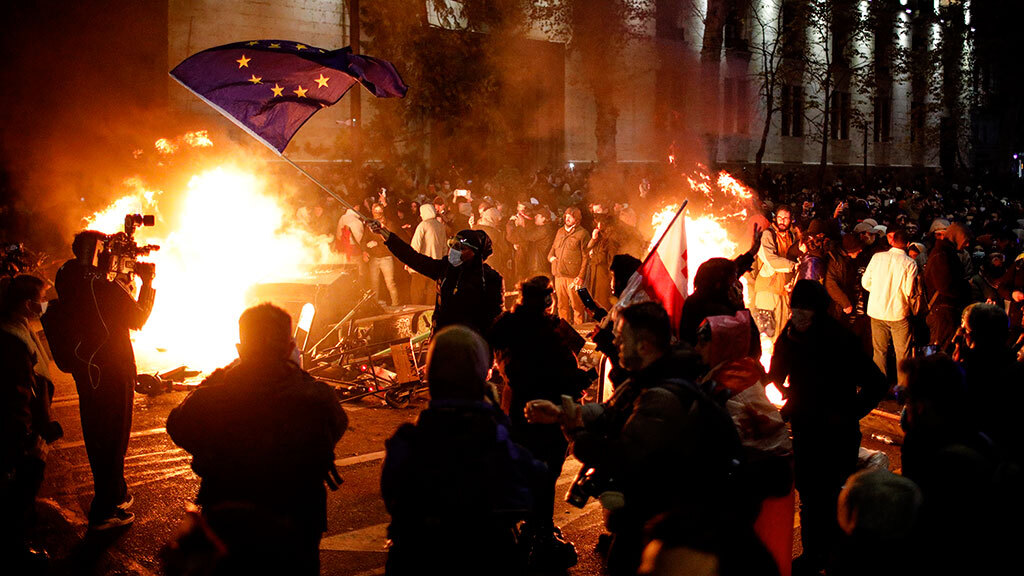
On October 4, municipal elections were held in Georgia, which were supposed to confirm the political balance in the country. However, the vote immediately lost legitimacy in the eyes of a significant part of society: the largest opposition blocs – including parties united around Mikheil Saakashvili and other opposition leaders – announced a boycott. Their argument was simple: participation under the current conditions is meaningless, since the electoral process is controlled by the ruling Georgian Dream party.
On the same day, tens of thousands of people took to the streets of Tbilisi. The scale of the protest came as a surprise even to the authorities: not only opposition supporters but also apolitical citizens dissatisfied with rising prices, corruption, and the country’s foreign policy course joined the demonstrations. The slogan “Georgia is not Russia” once again became a symbolic marker – protesters see in the government’s actions tendencies toward authoritarianism and rapprochement with Moscow.

Events at the presidential palace escalated the situation. The crowd attempted to break into the building where government representatives were present. The police used water cannons and tear gas, which caused an even greater wave of indignation. Images of the crackdown quickly spread across international media, while human rights organizations denounced the excessive use of force.
For the ruling Georgian Dream party, the elections were of symbolic rather than municipal importance. Demonstrating control over the political system was meant to reaffirm its status as the “sole manager” of the country. However, the boycott and mass protests called this control into question. The government’s forceful response shows that instead of seeking dialogue with society, it has chosen the path of tightening repression.
Georgia has traditionally positioned itself as a country with a pro-Western course, striving for membership in the EU and NATO. However, in recent years Tbilisi has pursued a dual policy: on the one hand, a declarative commitment to the European vector; on the other, real steps toward deepening economic and political ties with Russia and Iran. This has caused concern in the West, and the current protests only reinforce the perception of Georgia as a country drifting toward authoritarianism.
If the protests continue, the authorities are likely to increase pressure, which could lead to new clashes and further radicalization of society. International partners, including the EU and the US, may demand negotiations with the opposition, linking them to financial and political support. A force-based scenario may temporarily suppress protests, but the cost of such suppression will be a further loss of trust domestically and a deterioration of the country’s image abroad.


 Latest news
Latest news
Latest newsBulgaria Asks NATO to Strengthen Its Defences Amid Black Sea Threats: Sofia Fears Growing Risks to Maritime Shipping
16.Oct.2026
Black Sea Shipping Risks Threaten Bulgaria’s 5 Million Tonnes of Wheat Exports
15.Oct.2026
Georgia’s Foreign Funding and Political Ban Laws Draw Criticism from the Venice Commission
15.Oct.2026
Kazakhstan Promotes a Caspian Green Energy Corridor: Astana Seeks New Routes to the European Market
14.Oct.2026
Inflation in Romania Accelerates to 6.61%: Rising Prices Increase Pressure on Households and the Economy
13.Oct.2026
Can Europe Protect the International Criminal Court from Trump’s Sanctions?
13.Oct.2026
Georgia’s Constitutional Court Continues Case on Banning Opposition Parties: Political Pluralism at Stake
12.Oct.2026
Azerbaijan and Iran Step Up Security Contacts Amid Hijab Protests
12.Oct.2026
Personnel Shortages Complicate Ukrainian Forces’ Rotation: Ukraine Faces Long-Term Challenges on the Front Line
11.Oct.2026
Trump Eases Sanctions on Russian Fuel After Talks with Putin: Kyiv Fears Boost to Moscow’s War Revenues
10.Oct.2026
Putin Seeks to Strengthen Russia’s Influence in the Post-Soviet Space Through the CIS
10.Oct.2026
Russia and the South Caucasus: External Pressure, Political Competition and a Crisis of Trust
10.Oct.2026
Peaceful Settlement Between Armenia and Azerbaijan: Moving from Declarations to Implementation
10.Oct.2026
Moldova Ready to Accept as Many Ukrainians as Necessary if Situation Worsens This Winter
09.Oct.2026
Turkmenistan Turns Avaza into a Regional Diplomatic Hub as Caspian, Central Asian and CIS Agendas Converge
08.Oct.2026