
 17 Oct 2026









Russia and Belarus Launch Large-Scale Joint Military Exercise “Zapad-2025” Near NATO Borders
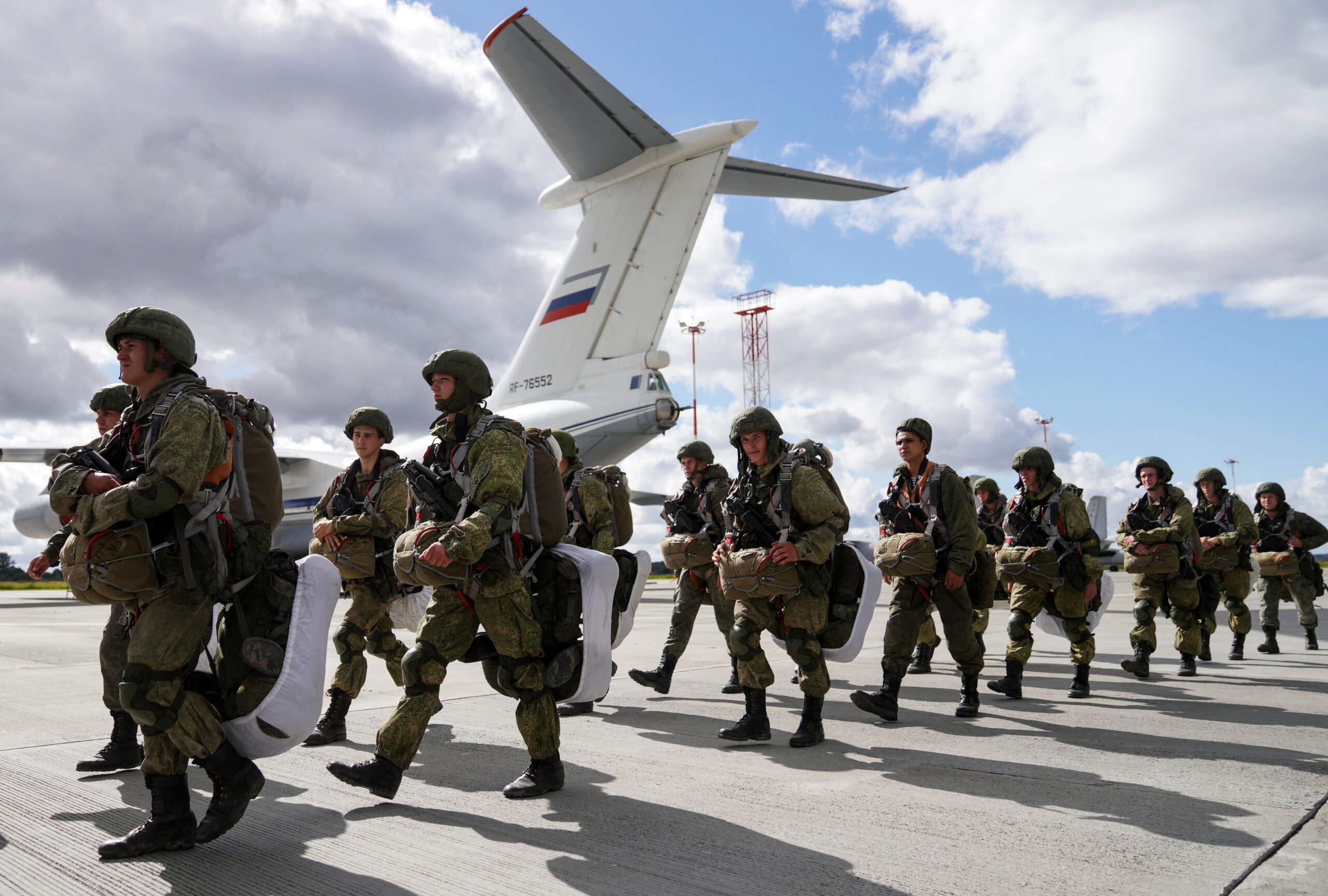
Russia and Belarus have begun the large-scale joint military exercise “Zapad-2025,” near NATO borders, just two days after Poland shot down Russian drones that had crossed into its airspace.
According to the Ministry of Defense, during the first phase
of the maneuvers, troops will rehearse repelling an attack on the territory of
Russia and Belarus – the Union State. The second phase of the drills aims at
restoring territorial integrity and “destroying the enemy”, with the
involvement of coalition forces from allied states.
The exercises are being conducted at training grounds in
Russia and Belarus, close to the borders with Poland and the Baltic states –
Lithuania and Latvia. Belarusian President Alexander Lukashenko and the Russian
leadership stated that the event had been planned in advance and is not
directly related to the recent drone incident. In response, NATO countries have
voiced concern over the growing military activity on the border. Poland, in
particular, temporarily closed part of its border with Belarus during the
exercises.
Belarusian military officials noted that the drills would
take place at a “significant distance” from the borders with Poland, Lithuania,
Latvia, and Ukraine. The arsenal involved includes drones, electronic warfare
systems, and artificial intelligence elements, including tools to support
command and decision-making.
The “Zapad-2025” drills are not mere routine exercises:
their launch immediately after the drone incursion into Polish airspace is
perceived as a symbolic response by Moscow and Minsk. Even if it is officially
stated that the planning began earlier, the timing and the location – NATO’s
borders – amplify the sense of threat, serving as both political and
psychological signaling.
The drone incident and the subsequent measures, including
border closures and military-diplomatic responses, further erode trust between
Russia/Belarus and NATO countries. This could aggravate existing defense
tensions, strain cooperation, and raise military readiness along the borders.
It is also noted that the exercises will involve drones,
electronic warfare, and artificial intelligence for decision-making support.
This reflects a broader trend: wars and conflicts increasingly depend not only
on quantitative forces – armored vehicles and troops – but also on technology,
intelligence, and information warfare. For Russia and Belarus, this is a way to
demonstrate readiness for modern challenges.
Likely responses may include intensified surveillance and
reconnaissance missions along the borders, reinforcement of air defenses, and
more frequent joint drills in NATO member states – especially in Poland,
Lithuania, and Latvia. Diplomatic protests and efforts to coordinate allies
through NATO and the EU are also expected. All of this risks fueling an
escalation cycle, with each side reacting to the other’s moves.
For Lukashenko, participating in such significant exercises
consolidates his role as Moscow’s ally, which is crucial given sanctions,
external pressure, and the need to demonstrate national significance. For
Russia, it is a way to show it still holds initiative on security matters
despite international isolation and challenges.
Exercises near NATO borders, particularly when dangerous incidents occur in parallel (such as drone incursions), carry the risk of misinterpretation and overreaction by NATO’s defensive forces. A single miscalculation or unfortunate maneuver could be perceived as aggression and provoke a retaliatory step.


 Latest news
Latest news
Latest newsBulgaria Asks NATO to Strengthen Its Defences Amid Black Sea Threats: Sofia Fears Growing Risks to Maritime Shipping
16.Oct.2026
Black Sea Shipping Risks Threaten Bulgaria’s 5 Million Tonnes of Wheat Exports
15.Oct.2026
Georgia’s Foreign Funding and Political Ban Laws Draw Criticism from the Venice Commission
15.Oct.2026
Kazakhstan Promotes a Caspian Green Energy Corridor: Astana Seeks New Routes to the European Market
14.Oct.2026
Inflation in Romania Accelerates to 6.61%: Rising Prices Increase Pressure on Households and the Economy
13.Oct.2026
Can Europe Protect the International Criminal Court from Trump’s Sanctions?
13.Oct.2026
Georgia’s Constitutional Court Continues Case on Banning Opposition Parties: Political Pluralism at Stake
12.Oct.2026
Azerbaijan and Iran Step Up Security Contacts Amid Hijab Protests
12.Oct.2026
Personnel Shortages Complicate Ukrainian Forces’ Rotation: Ukraine Faces Long-Term Challenges on the Front Line
11.Oct.2026
Trump Eases Sanctions on Russian Fuel After Talks with Putin: Kyiv Fears Boost to Moscow’s War Revenues
10.Oct.2026
Putin Seeks to Strengthen Russia’s Influence in the Post-Soviet Space Through the CIS
10.Oct.2026
Russia and the South Caucasus: External Pressure, Political Competition and a Crisis of Trust
10.Oct.2026
Peaceful Settlement Between Armenia and Azerbaijan: Moving from Declarations to Implementation
10.Oct.2026
Moldova Ready to Accept as Many Ukrainians as Necessary if Situation Worsens This Winter
09.Oct.2026
Turkmenistan Turns Avaza into a Regional Diplomatic Hub as Caspian, Central Asian and CIS Agendas Converge
08.Oct.2026