
 17 Oct 2026









Iranian President Backs “3+3” Format as a Tool for Caucasus Settlement
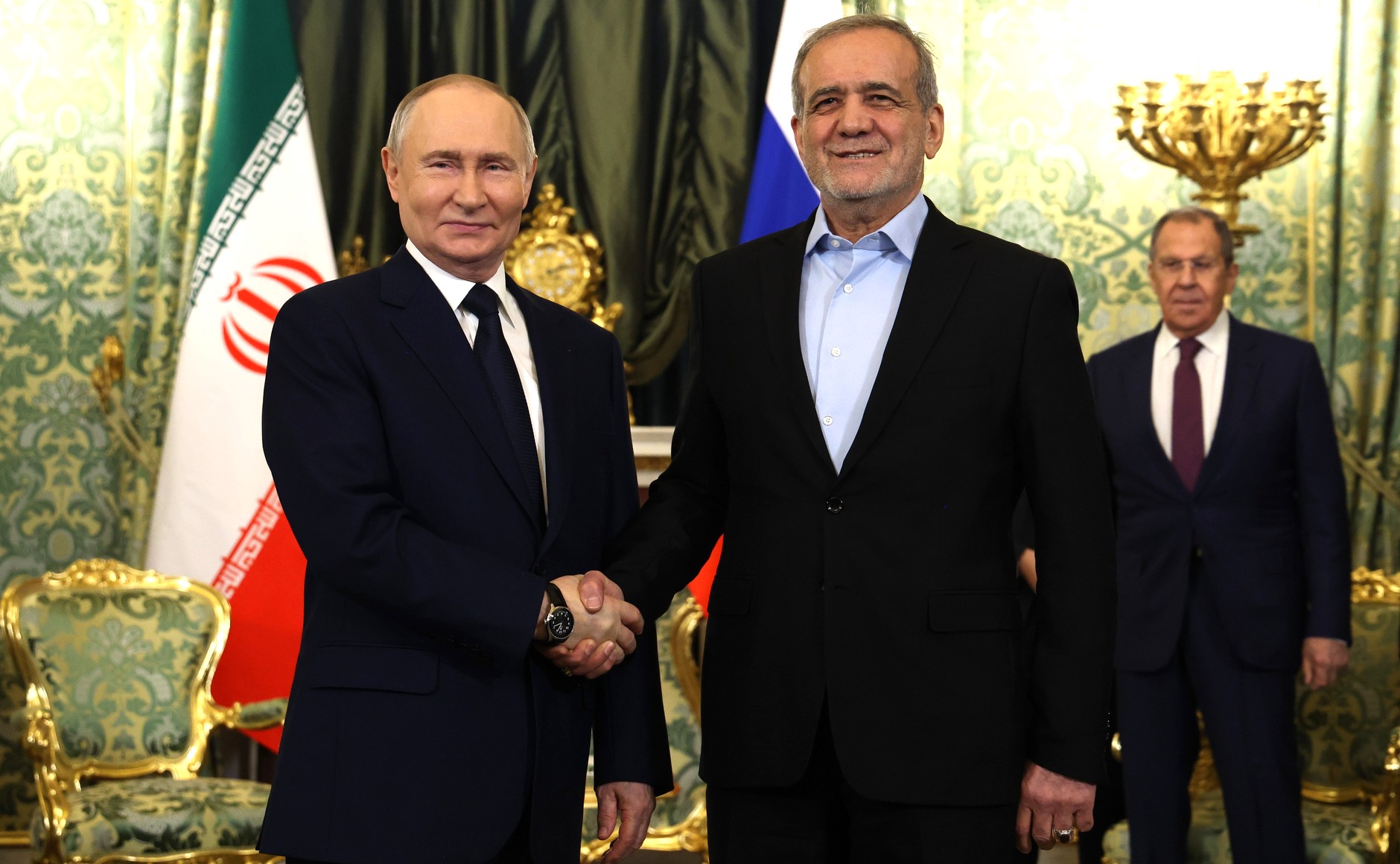
Iranian President Masoud Pezeshkian, in a phone conversation with Vladimir Putin, expressed support for the regional cooperation format “3+3” (Russia, Iran, Turkey + Armenia, Azerbaijan, Georgia). According to the Iranian leader, this mechanism could become “the most effective tool for resolving conflict situations in the South Caucasus.” Later, this position was confirmed by an official representative of the Iranian Foreign Ministry.
The “3+3” format was first proposed in 2020 as an alternative to Western negotiation platforms. Its goal is to resolve crises in the South Caucasus without the involvement of external actors such as the US or the EU. The idea is based on the principle that “regional problems should be solved by regional countries.” However, the initiative was long hindered by Georgia’s reluctance to participate, as Tbilisi refused to engage due to Russia’s occupation of part of its territory.
Pezeshkian’s support signals that Iran intends to strengthen its influence in the region at a time when Armenia and Azerbaijan are only beginning to build a new system of relations following the Washington peace deal.
Thus, Tehran seeks to prevent the South Caucasus from becoming a zone of US or EU dominance. Backing the “3+3” format allows Iran to counter Western initiatives, including the new TRIPP transport corridor project.
For Moscow, “3+3” is a chance to maintain its foothold in a region where its influence has declined noticeably after the 2020 Nagorno-Karabakh war and the Armenia–Azerbaijan agreement brokered by the US. By endorsing this model, which excludes the West, Pezeshkian effectively played into the Kremlin’s hands. Georgia, however, remains skeptical: Tbilisi fears that dialogue “on equal terms” with Moscow could legitimize the loss of Abkhazia and South Ossetia.
Against the backdrop of competing initiatives (TRIPP, the Middle Corridor, Western-led negotiation platforms), “3+3” is turning into a tool of struggle over who sets the rules in the region. For Iran, it is a chance to assert itself as a key player; for Russia, a way to hold on; for Turkey, an opportunity to consolidate its role as a regional leader.
Pezeshkian’s support for the “3+3” format is no accident: Iran aims to seize the initiative in Caucasus politics, limit Western influence, and strengthen its position alongside Turkey and Russia. Yet the project’s success will depend on the willingness of Armenia and Georgia to participate. For now, “3+3” remains less a functioning platform than an instrument of geopolitical competition.


 Latest news
Latest news
Latest newsBulgaria Asks NATO to Strengthen Its Defences Amid Black Sea Threats: Sofia Fears Growing Risks to Maritime Shipping
16.Oct.2026
Black Sea Shipping Risks Threaten Bulgaria’s 5 Million Tonnes of Wheat Exports
15.Oct.2026
Georgia’s Foreign Funding and Political Ban Laws Draw Criticism from the Venice Commission
15.Oct.2026
Kazakhstan Promotes a Caspian Green Energy Corridor: Astana Seeks New Routes to the European Market
14.Oct.2026
Inflation in Romania Accelerates to 6.61%: Rising Prices Increase Pressure on Households and the Economy
13.Oct.2026
Can Europe Protect the International Criminal Court from Trump’s Sanctions?
13.Oct.2026
Georgia’s Constitutional Court Continues Case on Banning Opposition Parties: Political Pluralism at Stake
12.Oct.2026
Azerbaijan and Iran Step Up Security Contacts Amid Hijab Protests
12.Oct.2026
Personnel Shortages Complicate Ukrainian Forces’ Rotation: Ukraine Faces Long-Term Challenges on the Front Line
11.Oct.2026
Trump Eases Sanctions on Russian Fuel After Talks with Putin: Kyiv Fears Boost to Moscow’s War Revenues
10.Oct.2026
Putin Seeks to Strengthen Russia’s Influence in the Post-Soviet Space Through the CIS
10.Oct.2026
Russia and the South Caucasus: External Pressure, Political Competition and a Crisis of Trust
10.Oct.2026
Peaceful Settlement Between Armenia and Azerbaijan: Moving from Declarations to Implementation
10.Oct.2026
Moldova Ready to Accept as Many Ukrainians as Necessary if Situation Worsens This Winter
09.Oct.2026
Turkmenistan Turns Avaza into a Regional Diplomatic Hub as Caspian, Central Asian and CIS Agendas Converge
08.Oct.2026