
 17 Oct 2026









Protest at Russian Base in Armenia
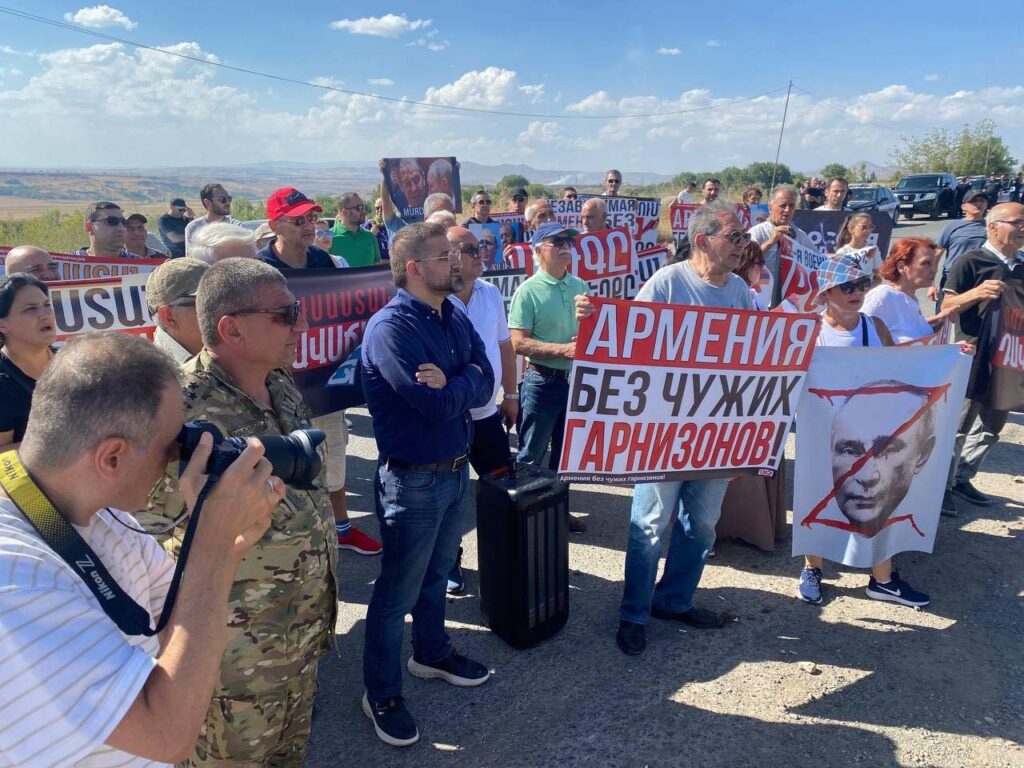
On August 23, 2025, a protest took place at the gates of Russia’s 102nd military base in Gyumri, organized by the opposition party “For the Republic”. Participants demanded the withdrawal of the base from Armenian territory, expressing their discontent in sharp forms.
According to the organizers, the protest was symbolic: its aim was to remind the public that the presence of Russian troops in Armenia is increasingly perceived as a restriction of the country’s sovereignty. The demonstration began early in the morning, which, according to political analysts, was intended to catch the military and local residents off guard and ensure maximum resonance in the media.
It should be noted that the 102nd base in Gyumri is the largest Russian military facility in the South Caucasus. Its presence in Armenia is regulated by bilateral agreements, with the term extended until 2044. Formally, the base serves as a guarantor of Armenia’s security, especially in the context of the Armenian-Azerbaijani conflict. However, following the 2020 Nagorno-Karabakh war and the subsequent deterioration of relations with Moscow, voices have increasingly been heard claiming that Russia “failed to fulfill its allied obligations” and did not defend Armenia’s interests.
Thus, the “For the Republic” protest reflects growing discontent within parts of Armenian society toward Russia’s military and political presence. Whereas earlier criticism of Russia came mainly from the diaspora and certain NGOs, today the slogan “Russia is not a guarantor of security” is becoming part of the political mainstream. This may signal the beginning of a gradual reorientation of Armenia toward the West and regional partners (EU, USA, Iran), especially after the Washington declaration with Azerbaijan.
However, such demonstrations may also exacerbate internal divisions. A significant part of Armenian society still regards Russia’s presence as an important deterrent. Escalation between “pro-Russian” and “anti-Russian” forces in the country could lead to deeper political polarization and new street clashes.
For external players – the US, EU, and Turkey – the protest served as an indicator that the window for diplomatic and economic expansion into Armenia is widening. Moscow, on the other hand, may view the demonstration as a “hostile act” and increase pressure on the Armenian authorities.
The protest at the 102nd base is not an isolated incident but rather a symptom of profound changes in Armenian politics and society. Armenia is gradually moving away from seeing Russia as the sole guarantor of its security. The question is whether the authorities will be able to maintain a balance between the “traditional ally” and new partners without triggering severe domestic destabilization.


 Latest news
Latest news
Latest newsBulgaria Asks NATO to Strengthen Its Defences Amid Black Sea Threats: Sofia Fears Growing Risks to Maritime Shipping
16.Oct.2026
Black Sea Shipping Risks Threaten Bulgaria’s 5 Million Tonnes of Wheat Exports
15.Oct.2026
Georgia’s Foreign Funding and Political Ban Laws Draw Criticism from the Venice Commission
15.Oct.2026
Kazakhstan Promotes a Caspian Green Energy Corridor: Astana Seeks New Routes to the European Market
14.Oct.2026
Inflation in Romania Accelerates to 6.61%: Rising Prices Increase Pressure on Households and the Economy
13.Oct.2026
Can Europe Protect the International Criminal Court from Trump’s Sanctions?
13.Oct.2026
Georgia’s Constitutional Court Continues Case on Banning Opposition Parties: Political Pluralism at Stake
12.Oct.2026
Azerbaijan and Iran Step Up Security Contacts Amid Hijab Protests
12.Oct.2026
Personnel Shortages Complicate Ukrainian Forces’ Rotation: Ukraine Faces Long-Term Challenges on the Front Line
11.Oct.2026
Trump Eases Sanctions on Russian Fuel After Talks with Putin: Kyiv Fears Boost to Moscow’s War Revenues
10.Oct.2026
Putin Seeks to Strengthen Russia’s Influence in the Post-Soviet Space Through the CIS
10.Oct.2026
Russia and the South Caucasus: External Pressure, Political Competition and a Crisis of Trust
10.Oct.2026
Peaceful Settlement Between Armenia and Azerbaijan: Moving from Declarations to Implementation
10.Oct.2026
Moldova Ready to Accept as Many Ukrainians as Necessary if Situation Worsens This Winter
09.Oct.2026
Turkmenistan Turns Avaza into a Regional Diplomatic Hub as Caspian, Central Asian and CIS Agendas Converge
08.Oct.2026