
 17 Oct 2026









U.S. Suspends Section 907: A New Stage in Relations with Azerbaijan
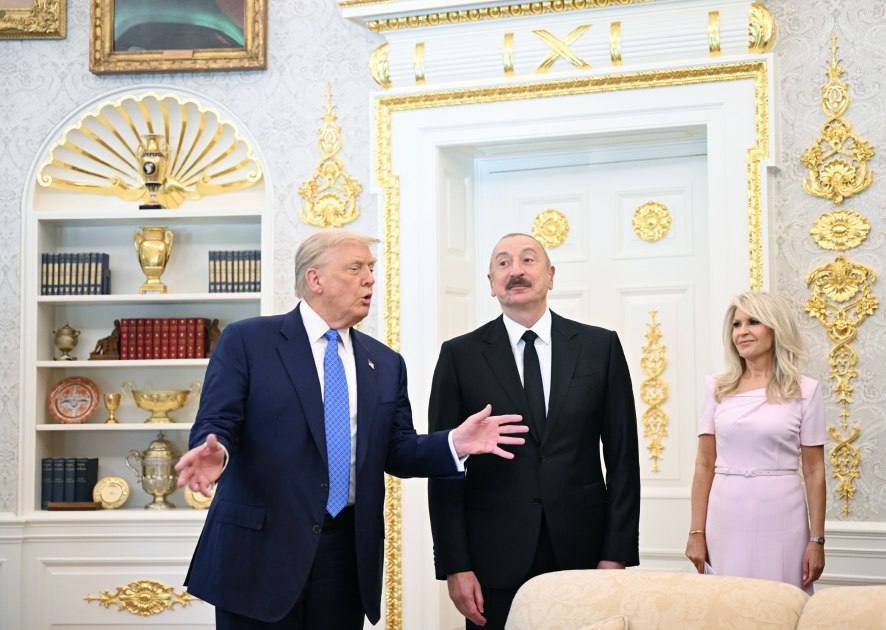
The United States has officially signed a document suspending the implementation of Section 907 with regard to Azerbaijan. The decision has been described as a historic step that opens a new chapter in bilateral relations.
Azerbaijani President Ilham Aliyev welcomed the move, calling it “fair and timely”. According to him, lifting the restrictions creates a foundation for strategic partnership in the fields of energy, investment, infrastructure, technology, and artificial intelligence.
It should be noted that this amendment was adopted by the U.S. Congress in 1992. It prohibited direct government assistance to Azerbaijan as long as Baku was “maintaining a blockade of Armenia and Nagorno-Karabakh”. For decades, the law remained a serious political barrier in relations between the two countries.
Although since 2001 its provisions had been periodically waived by presidential decrees on the grounds of U.S. national security, the current suspension is the first to be framed as a long-term political gesture.
Against the backdrop of Azerbaijan’s growing role as an energy and transit hub, the U.S. decision demonstrates Washington’s intention to strengthen cooperation in the Caspian region, reducing Europe’s dependence on Russian energy supplies. For the United States, this move opens the door to deeper partnerships in energy, infrastructure, and new technologies, including green energy and digitalization. For the region, it signals that the South Caucasus is becoming an arena of active U.S. policy, while Russia’s and Iran’s influence is diminishing.
Thus, the suspension of Section 907 has become a turning point in U.S.–Azerbaijani relations. This step consolidates the strategic partnership and positions Baku as one of the key players in the new geopolitics of the South Caucasus.


 Latest news
Latest news
Latest newsBulgaria Asks NATO to Strengthen Its Defences Amid Black Sea Threats: Sofia Fears Growing Risks to Maritime Shipping
16.Oct.2026
Black Sea Shipping Risks Threaten Bulgaria’s 5 Million Tonnes of Wheat Exports
15.Oct.2026
Georgia’s Foreign Funding and Political Ban Laws Draw Criticism from the Venice Commission
15.Oct.2026
Kazakhstan Promotes a Caspian Green Energy Corridor: Astana Seeks New Routes to the European Market
14.Oct.2026
Inflation in Romania Accelerates to 6.61%: Rising Prices Increase Pressure on Households and the Economy
13.Oct.2026
Can Europe Protect the International Criminal Court from Trump’s Sanctions?
13.Oct.2026
Georgia’s Constitutional Court Continues Case on Banning Opposition Parties: Political Pluralism at Stake
12.Oct.2026
Azerbaijan and Iran Step Up Security Contacts Amid Hijab Protests
12.Oct.2026
Personnel Shortages Complicate Ukrainian Forces’ Rotation: Ukraine Faces Long-Term Challenges on the Front Line
11.Oct.2026
Trump Eases Sanctions on Russian Fuel After Talks with Putin: Kyiv Fears Boost to Moscow’s War Revenues
10.Oct.2026
Putin Seeks to Strengthen Russia’s Influence in the Post-Soviet Space Through the CIS
10.Oct.2026
Russia and the South Caucasus: External Pressure, Political Competition and a Crisis of Trust
10.Oct.2026
Peaceful Settlement Between Armenia and Azerbaijan: Moving from Declarations to Implementation
10.Oct.2026
Moldova Ready to Accept as Many Ukrainians as Necessary if Situation Worsens This Winter
09.Oct.2026
Turkmenistan Turns Avaza into a Regional Diplomatic Hub as Caspian, Central Asian and CIS Agendas Converge
08.Oct.2026