
 17 Oct 2026









Azerbaijan to Begin Gas Exports to Syria via Turkey: A New Phase in Regional Energy Cooperation
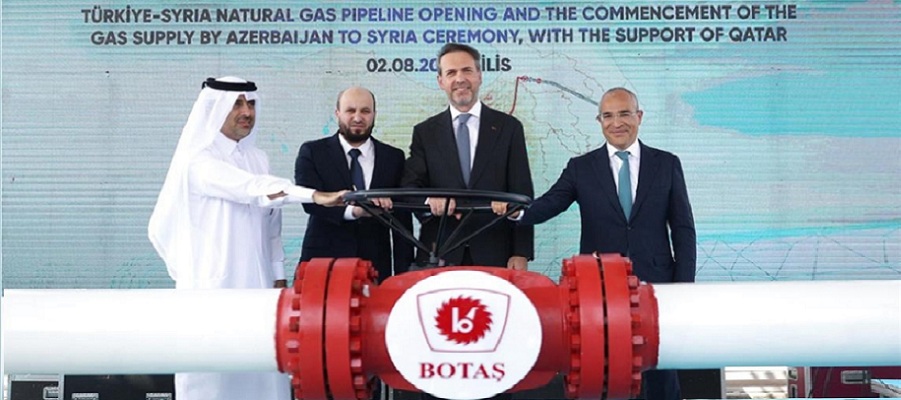
Turkey and Azerbaijan have announced the launch of a new energy route that will facilitate the export of Azerbaijani natural gas to Syria. The news was confirmed by Turkey’s Minister of Energy and Natural Resources, Alparslan Bayraktar. Deliveries began on August 2, 2025, as part of a special swap agreement between Ankara, Baku, and Damascus.
According to Bayraktar, the move was made possible thanks to the existing TANAP infrastructure and Turkey’s expanded transit capabilities, which continue to bolster its role as a key energy hub between East and West.
“Azerbaijani gas will help ensure the energy security not only of Turkey, but also of Middle Eastern countries. The start of deliveries to Syria demonstrates our ability to implement complex regional projects even under conditions of geopolitical turbulence”, the minister stated.
This step strengthens Azerbaijan’s status as a major energy exporter and a reliable partner in energy diplomacy. After expanding exports to Europe through the Southern Gas Corridor, Baku is now entering the Middle Eastern market – a region that was previously inaccessible due to instability and sanctions.
Ankara, for its part, is leveraging its geography and infrastructure – including TANAP and coastal gas terminals – to increase its political influence. Turkey’s role in transiting gas to Syria allows it to reinforce its position and expand its influence in Syria’s post-war reconstruction.
Syria remains a zone of high instability, and the long-term viability of this route depends on the political will of all parties and the security situation on the ground. The launch of Azerbaijani gas supplies to Syria via Turkey is not merely an economic agreement – it is a significant geopolitical signal. It demonstrates the strengthening of the Baku-Ankara energy alliance, the expansion of Turkey’s influence in the Middle East, and Azerbaijan’s growing role as a provider of stability in the energy sector – even in the most volatile regions.


 Latest news
Latest news
Latest newsBulgaria Asks NATO to Strengthen Its Defences Amid Black Sea Threats: Sofia Fears Growing Risks to Maritime Shipping
16.Oct.2026
Black Sea Shipping Risks Threaten Bulgaria’s 5 Million Tonnes of Wheat Exports
15.Oct.2026
Georgia’s Foreign Funding and Political Ban Laws Draw Criticism from the Venice Commission
15.Oct.2026
Kazakhstan Promotes a Caspian Green Energy Corridor: Astana Seeks New Routes to the European Market
14.Oct.2026
Inflation in Romania Accelerates to 6.61%: Rising Prices Increase Pressure on Households and the Economy
13.Oct.2026
Can Europe Protect the International Criminal Court from Trump’s Sanctions?
13.Oct.2026
Georgia’s Constitutional Court Continues Case on Banning Opposition Parties: Political Pluralism at Stake
12.Oct.2026
Azerbaijan and Iran Step Up Security Contacts Amid Hijab Protests
12.Oct.2026
Personnel Shortages Complicate Ukrainian Forces’ Rotation: Ukraine Faces Long-Term Challenges on the Front Line
11.Oct.2026
Trump Eases Sanctions on Russian Fuel After Talks with Putin: Kyiv Fears Boost to Moscow’s War Revenues
10.Oct.2026
Putin Seeks to Strengthen Russia’s Influence in the Post-Soviet Space Through the CIS
10.Oct.2026
Russia and the South Caucasus: External Pressure, Political Competition and a Crisis of Trust
10.Oct.2026
Peaceful Settlement Between Armenia and Azerbaijan: Moving from Declarations to Implementation
10.Oct.2026
Moldova Ready to Accept as Many Ukrainians as Necessary if Situation Worsens This Winter
09.Oct.2026
Turkmenistan Turns Avaza into a Regional Diplomatic Hub as Caspian, Central Asian and CIS Agendas Converge
08.Oct.2026