
 17 Oct 2026









Etchmiadzin at the Epicenter of Political Processes in Armenia
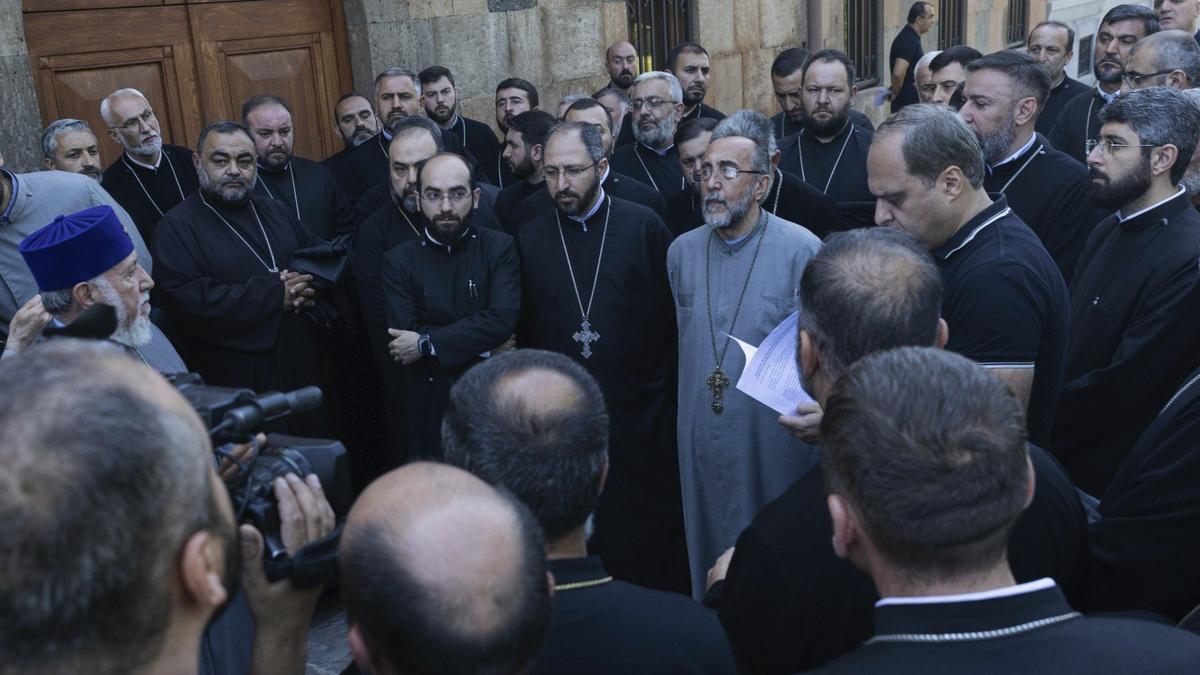
Armenian Prime Minister Nikol Pashinyan has escalated his
conflict with the Armenian Apostolic Church. In a recent speech, he accused the
Church leadership of holding an "anti-national" position, effectively
labeling Catholicos Karekin II as someone acting in the interests of the
political opposition.
Pashinyan called for mass protest gatherings in Etchmiadzin – the spiritual
capital of Armenia – a move unprecedented in the history of church-state
relations in the country.
In late June, the country’s security services attempted to
arrest Archbishop Mikael Adjapahyan directly on the grounds of the Etchmiadzin
Monastery. The raid ended in clashes with parishioners, who blocked the
monastery’s entrances. Under public pressure, the arrest turned into a court
case: the archbishop was temporarily released on bail, but the legal
proceedings continue.
The Armenian Church has traditionally played a key role in
shaping national identity and political legitimacy. The attack on the
Catholicos is not merely an ideological conflict but an attempt to weaken one
of the few independent centers of influence in the country.
By calling for protests at the walls of Etchmiadzin,
Pashinyan seeks to craft the image of a "people’s leader cleansing the
Church of corrupt elites". This is a political strategy aimed at seizing
the moral authority of the Church ahead of possible early elections. For the
first time since independence, Armenia risks facing a deep institutional rift
between the state and the Church.
It should be noted that Moscow has traditionally relied on
church structures as a loyal element of its influence in the region. The attack
on the Catholicos can be seen as a weakening of the pro-Russian lobby and a
shift towards the West. Furthermore, the intensifying conflict could lead to
mass unrest in religious centers and increased opposition protests, which are
already using the narrative of "insulting national sanctities".
Thus, this attack on the Church benefits Armenia’s leader by mobilizing his electoral base and completing his break with the "traditional elites". Moreover, weakening the conservative Church, traditionally tied to Russia, strengthens Yerevan’s pro-Western course.


 Latest news
Latest news
Latest newsBulgaria Asks NATO to Strengthen Its Defences Amid Black Sea Threats: Sofia Fears Growing Risks to Maritime Shipping
16.Oct.2026
Black Sea Shipping Risks Threaten Bulgaria’s 5 Million Tonnes of Wheat Exports
15.Oct.2026
Georgia’s Foreign Funding and Political Ban Laws Draw Criticism from the Venice Commission
15.Oct.2026
Kazakhstan Promotes a Caspian Green Energy Corridor: Astana Seeks New Routes to the European Market
14.Oct.2026
Inflation in Romania Accelerates to 6.61%: Rising Prices Increase Pressure on Households and the Economy
13.Oct.2026
Can Europe Protect the International Criminal Court from Trump’s Sanctions?
13.Oct.2026
Georgia’s Constitutional Court Continues Case on Banning Opposition Parties: Political Pluralism at Stake
12.Oct.2026
Azerbaijan and Iran Step Up Security Contacts Amid Hijab Protests
12.Oct.2026
Personnel Shortages Complicate Ukrainian Forces’ Rotation: Ukraine Faces Long-Term Challenges on the Front Line
11.Oct.2026
Trump Eases Sanctions on Russian Fuel After Talks with Putin: Kyiv Fears Boost to Moscow’s War Revenues
10.Oct.2026
Putin Seeks to Strengthen Russia’s Influence in the Post-Soviet Space Through the CIS
10.Oct.2026
Russia and the South Caucasus: External Pressure, Political Competition and a Crisis of Trust
10.Oct.2026
Peaceful Settlement Between Armenia and Azerbaijan: Moving from Declarations to Implementation
10.Oct.2026
Moldova Ready to Accept as Many Ukrainians as Necessary if Situation Worsens This Winter
09.Oct.2026
Turkmenistan Turns Avaza into a Regional Diplomatic Hub as Caspian, Central Asian and CIS Agendas Converge
08.Oct.2026