
 17 Oct 2026









- Growing public dissatisfaction with Russia's role in the South Caucasus after the exodus of the Armenian population from Nagorno-Karabakh;
- Strengthening pro-European sentiment in Armenia;
- Intensification of Armenia’s relations with France, the U.S., and the EU;
- Statements by Pashinyan suggesting that “Armenia’s foreign policy course needs reassessment.”
Valentina Matvienko’s Visit to Yerevan: “There Is No Crisis of Trust Between Russia and Armenia”
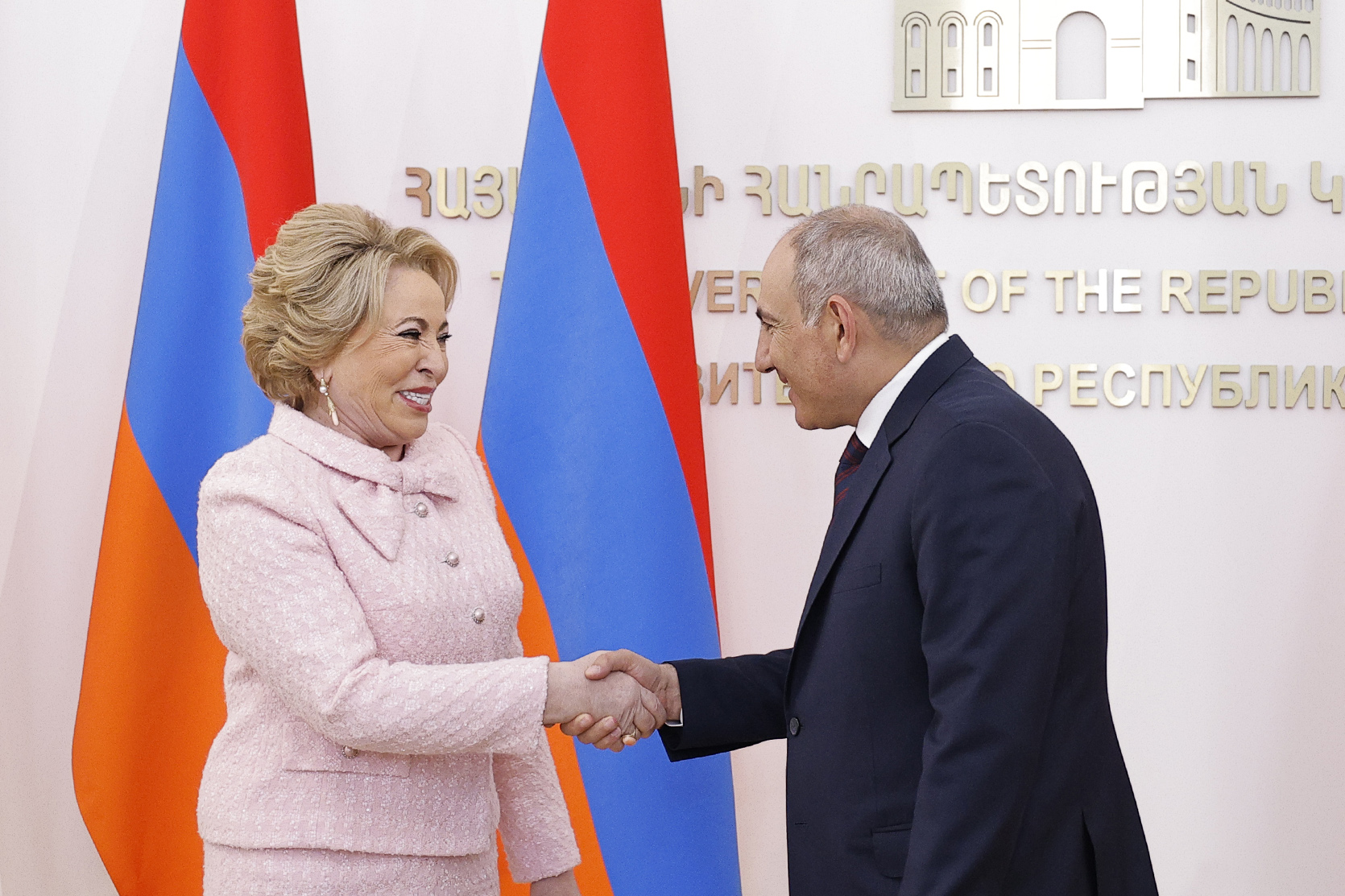
On June 6, 2025, Chairwoman of the Federation Council of the Russian Federation Valentina Matvienko arrived in Yerevan, where she met with Armenian Prime Minister Nikol Pashinyan. This event became an important element against the backdrop of increasingly unstable Russian-Armenian relations observed over the past several months.
Matvienko conveyed personal greetings from Russian President Vladimir Putin to Pashinyan and emphasized that constructive relations between Moscow and Yerevan continue, despite some disagreements that have emerged following events in Nagorno-Karabakh and Armenia's efforts to improve ties with the West.
Matvienko's quote: “There is no and cannot be a crisis of trust. Armenia is our strategic ally and an important partner in the CSTO and the EAEU.”
The meeting took place amid:
Nevertheless, Matvienko sought to demonstrate that the Kremlin remains interested in maintaining influence and allied relations with Armenia. During the meeting, Nikol Pashinyan confirmed his commitment to a “strategic dialogue,” but according to Armenian sources, did not give any clear signals that Armenia is returning to closer coordination with Russia on defense and security matters. The Armenian side continues to emphasize a multi-vector foreign policy, in which Moscow is just one of several partners.
Matvienko's visit can be seen as an attempt by Russia to retain Armenia within its sphere of influence, amid growing competition with the West. It also sends a message to domestic and international audiences that Russia has not lost control over its CSTO allies. For Armenia, the visit presents an opportunity to show openness to dialogue, while still pursuing a balanced foreign policy.
The visit did not mark a breakthrough but was symbolically important: Russia is trying to reaffirm its presence in the South Caucasus. However, trust between the sides continues to erode, and this visit is unlikely to reverse Armenia's strategic drift toward the West.


 Latest news
Latest news
Latest newsBulgaria Asks NATO to Strengthen Its Defences Amid Black Sea Threats: Sofia Fears Growing Risks to Maritime Shipping
16.Oct.2026
Black Sea Shipping Risks Threaten Bulgaria’s 5 Million Tonnes of Wheat Exports
15.Oct.2026
Georgia’s Foreign Funding and Political Ban Laws Draw Criticism from the Venice Commission
15.Oct.2026
Kazakhstan Promotes a Caspian Green Energy Corridor: Astana Seeks New Routes to the European Market
14.Oct.2026
Inflation in Romania Accelerates to 6.61%: Rising Prices Increase Pressure on Households and the Economy
13.Oct.2026
Can Europe Protect the International Criminal Court from Trump’s Sanctions?
13.Oct.2026
Georgia’s Constitutional Court Continues Case on Banning Opposition Parties: Political Pluralism at Stake
12.Oct.2026
Azerbaijan and Iran Step Up Security Contacts Amid Hijab Protests
12.Oct.2026
Personnel Shortages Complicate Ukrainian Forces’ Rotation: Ukraine Faces Long-Term Challenges on the Front Line
11.Oct.2026
Trump Eases Sanctions on Russian Fuel After Talks with Putin: Kyiv Fears Boost to Moscow’s War Revenues
10.Oct.2026
Putin Seeks to Strengthen Russia’s Influence in the Post-Soviet Space Through the CIS
10.Oct.2026
Russia and the South Caucasus: External Pressure, Political Competition and a Crisis of Trust
10.Oct.2026
Peaceful Settlement Between Armenia and Azerbaijan: Moving from Declarations to Implementation
10.Oct.2026
Moldova Ready to Accept as Many Ukrainians as Necessary if Situation Worsens This Winter
09.Oct.2026
Turkmenistan Turns Avaza into a Regional Diplomatic Hub as Caspian, Central Asian and CIS Agendas Converge
08.Oct.2026