
 17 Oct 2026









What Did Aliyev and Pashinyan Agree on in Moscow?
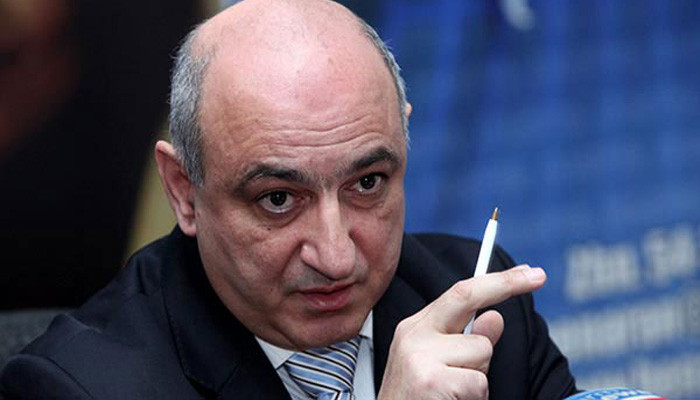
Political analyst and Honorary President of the Yerevan Press Club, Boris Navasardyan, commented on the results of the CIS Moscow summit, including the agreements reached and decisions made during the meeting, in an interview with the program “Complex Question.”
According to Navasardyan, the agreement reached during the meeting between Russian President Vladimir Putin and Armenian Prime Minister Nikol Pashinyan—that as of January 1, 2025, Russian border guards will cease to serve at the checkpoint on the Armenia-Iran border and that control will be transferred to Armenia’s National Security Service (NSS RA)—came as a complete surprise to political circles in Yerevan. Additionally, from the same date, the NSS Border Troops of Armenia will participate in guarding the state border between Armenia and Iran, and Armenia and Turkey, in conjunction with Russia’s Federal Security Service (FSB) Border Service. This decision was unexpected as the Armenian government had not previously raised the issue of protecting its own borders.
As a result, the question of whether control over the transportation route between the western regions of the Republic of Azerbaijan and the Nakhchivan Autonomous Republic (the Zangezur Corridor) would be carried out by the FSB Border Service of Russia, as stipulated in Article 9 of the “Statement of the President of the Republic of Azerbaijan, the Prime Minister of the Republic of Armenia, and the President of the Russian Federation” of November 10, 2020, was removed from the agenda.
According to Navasardyan, this raises the question: Will the November 10, 2020, Statement be officially revised? If not, the FSB’s control over the railway and the highway will remain intact. In this case, the agreement reached between Putin and Pashinyan only means that Armenia gains control over the checkpoint at the Armenia-Iran border, which does not exclude the FSB’s continued control over the railway and the highway. Therefore, Armenia needs to push for either a revision of the Statement or its nullification.
If the Statement remains unchanged, Armenia’s control over the checkpoint will be significant only for achieving EU visa liberalization. Navasardyan suggests that, in return for this concession, Moscow may have secured Armenia’s agreement not to extend the mandate of EU “observers” on the border with Azerbaijan.


 Latest news
Latest news
Latest newsBulgaria Asks NATO to Strengthen Its Defences Amid Black Sea Threats: Sofia Fears Growing Risks to Maritime Shipping
16.Oct.2026
Black Sea Shipping Risks Threaten Bulgaria’s 5 Million Tonnes of Wheat Exports
15.Oct.2026
Georgia’s Foreign Funding and Political Ban Laws Draw Criticism from the Venice Commission
15.Oct.2026
Kazakhstan Promotes a Caspian Green Energy Corridor: Astana Seeks New Routes to the European Market
14.Oct.2026
Inflation in Romania Accelerates to 6.61%: Rising Prices Increase Pressure on Households and the Economy
13.Oct.2026
Can Europe Protect the International Criminal Court from Trump’s Sanctions?
13.Oct.2026
Georgia’s Constitutional Court Continues Case on Banning Opposition Parties: Political Pluralism at Stake
12.Oct.2026
Azerbaijan and Iran Step Up Security Contacts Amid Hijab Protests
12.Oct.2026
Personnel Shortages Complicate Ukrainian Forces’ Rotation: Ukraine Faces Long-Term Challenges on the Front Line
11.Oct.2026
Trump Eases Sanctions on Russian Fuel After Talks with Putin: Kyiv Fears Boost to Moscow’s War Revenues
10.Oct.2026
Putin Seeks to Strengthen Russia’s Influence in the Post-Soviet Space Through the CIS
10.Oct.2026
Russia and the South Caucasus: External Pressure, Political Competition and a Crisis of Trust
10.Oct.2026
Peaceful Settlement Between Armenia and Azerbaijan: Moving from Declarations to Implementation
10.Oct.2026
Moldova Ready to Accept as Many Ukrainians as Necessary if Situation Worsens This Winter
09.Oct.2026
Turkmenistan Turns Avaza into a Regional Diplomatic Hub as Caspian, Central Asian and CIS Agendas Converge
08.Oct.2026