
 17 Oct 2026









Question to Pashinyan: Do you fear 3rd war between Armenia, Azerbaijan?
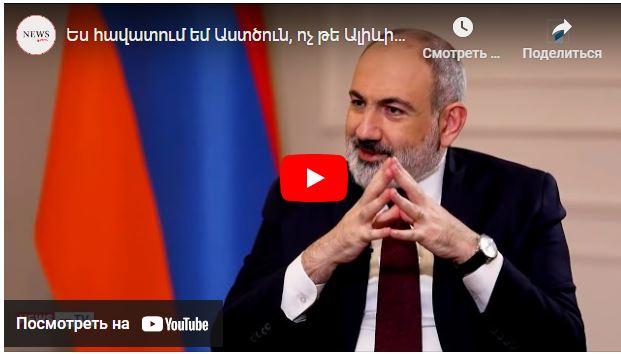
As for regional destabilization and steps towards it, of course, anyone with common sense would be concerned. Armenian Prime Minister Nikol Pashinyan said this in an interview with The Telegraph's international commentator Roland Oliphant Sunday—and answering the question whether he fears that a third war may start between Armenia and Azerbaijan.
‘"Fear’ is not the right word to use, because the Republic of Armenia is a democratic, developing state and, as I have already said, the Republic of Armenia is implementing large-scale reforms to improve the resilience of the country, and by the way, in recent years, I think the international community and our community have seen and saw that the resilience of our country has improved significantly. We continue the path of reforms to further improve Armenia's resilience.. As for regional destabilization and steps towards it, of course, anyone with common sense would be concerned," he said.
Pashinyan said that the interstate nature of relations between Armenia and Azerbaijan should be noted.
"Although we do not have diplomatic relations, I have to refer to the documents we signed, to rely on those documents. I already said that we have signed a document with Azerbaijan on non-use of force and threat of force. If we look at it with this logic and if Azerbaijan were to not respect the documents signed by itself, then Azerbaijan might attack any country, why only Armenia? Look around Azerbaijan, if they were to not respect their international commitments, then they could attack any of their neighboring countries, if that were the case," he added.
And to Oliphant's question that if Pashinyan receives those international commitments, does he trust Aliyev to keep those commitments, Pashinyan said: "I trust in God, and I believe that every self-respecting state should follow its commitments."


 Latest news
Latest news
Latest newsBulgaria Asks NATO to Strengthen Its Defences Amid Black Sea Threats: Sofia Fears Growing Risks to Maritime Shipping
16.Oct.2026
Black Sea Shipping Risks Threaten Bulgaria’s 5 Million Tonnes of Wheat Exports
15.Oct.2026
Georgia’s Foreign Funding and Political Ban Laws Draw Criticism from the Venice Commission
15.Oct.2026
Kazakhstan Promotes a Caspian Green Energy Corridor: Astana Seeks New Routes to the European Market
14.Oct.2026
Inflation in Romania Accelerates to 6.61%: Rising Prices Increase Pressure on Households and the Economy
13.Oct.2026
Can Europe Protect the International Criminal Court from Trump’s Sanctions?
13.Oct.2026
Georgia’s Constitutional Court Continues Case on Banning Opposition Parties: Political Pluralism at Stake
12.Oct.2026
Azerbaijan and Iran Step Up Security Contacts Amid Hijab Protests
12.Oct.2026
Personnel Shortages Complicate Ukrainian Forces’ Rotation: Ukraine Faces Long-Term Challenges on the Front Line
11.Oct.2026
Trump Eases Sanctions on Russian Fuel After Talks with Putin: Kyiv Fears Boost to Moscow’s War Revenues
10.Oct.2026
Putin Seeks to Strengthen Russia’s Influence in the Post-Soviet Space Through the CIS
10.Oct.2026
Russia and the South Caucasus: External Pressure, Political Competition and a Crisis of Trust
10.Oct.2026
Peaceful Settlement Between Armenia and Azerbaijan: Moving from Declarations to Implementation
10.Oct.2026
Moldova Ready to Accept as Many Ukrainians as Necessary if Situation Worsens This Winter
09.Oct.2026
Turkmenistan Turns Avaza into a Regional Diplomatic Hub as Caspian, Central Asian and CIS Agendas Converge
08.Oct.2026