
 17 Oct 2026









Azerbaijan has a plan B if Armenia refuses to open ‘Zangezur corridor’
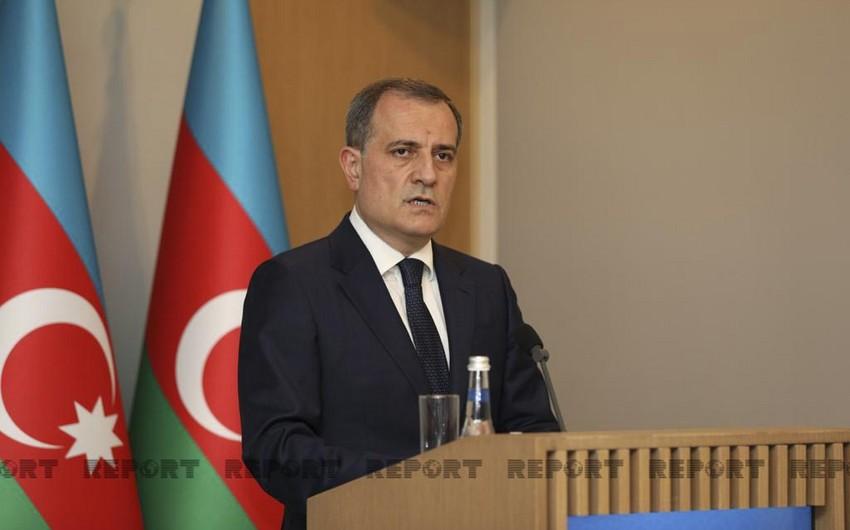
The operation of the "Zangezur corridor" can increase cargo transportation through the Middle Corridor by 5-8 million tons per year. As Interfax reported, Azerbaijan's Minister of Foreign Affairs Jeyhun Bayramov stated this in an interview to Azertac news agency and Magyar Demokrata Hungarian newspaper, within the framework of his official visit to Hungary.
"The Zangezur corridor is one of the elements of the East-West transport route. Experts have estimated that the Zangezur corridor can add an additional 5-8 million tons of cargo transportation [(annually)] to the Middle Corridor. This is a great benefit not only for Azerbaijan and Armenia, but also for other countries," Bayramov said.
The Azerbaijani FM stated that the opening of the "Zangezur corridor," i.e. unhindered communication between the main part of Azerbaijan and its exclave of Nakhchivan Autonomous Republic, is part of the tripartite statement signed by the leaders of Azerbaijan, Russia, and Armenia on November 10, 2020.
At the same time, the Azerbaijani FM noted that Armenia has taken a “non-constructive position” regarding the opening of the “Zangezur corridor."
"Azerbaijan will continue the work in this regard, keeping in mind plan B. And for us, the project will be implemented even without the participation of Armenia; but in that case, it [(Armenia)] will simply remain out of the number of beneficiaries," the Azerbaijani FM said..
Interfax noted that Azerbaijan plans to complete all work in its territory by 2024 for the launch of the "Zangezur corridor."
Armenia is not against the opening of regional transport communications, but asserts the jurisdiction of the countries through whose territory these communications will pass.


 Latest news
Latest news
Latest newsBulgaria Asks NATO to Strengthen Its Defences Amid Black Sea Threats: Sofia Fears Growing Risks to Maritime Shipping
16.Oct.2026
Black Sea Shipping Risks Threaten Bulgaria’s 5 Million Tonnes of Wheat Exports
15.Oct.2026
Georgia’s Foreign Funding and Political Ban Laws Draw Criticism from the Venice Commission
15.Oct.2026
Kazakhstan Promotes a Caspian Green Energy Corridor: Astana Seeks New Routes to the European Market
14.Oct.2026
Inflation in Romania Accelerates to 6.61%: Rising Prices Increase Pressure on Households and the Economy
13.Oct.2026
Can Europe Protect the International Criminal Court from Trump’s Sanctions?
13.Oct.2026
Georgia’s Constitutional Court Continues Case on Banning Opposition Parties: Political Pluralism at Stake
12.Oct.2026
Azerbaijan and Iran Step Up Security Contacts Amid Hijab Protests
12.Oct.2026
Personnel Shortages Complicate Ukrainian Forces’ Rotation: Ukraine Faces Long-Term Challenges on the Front Line
11.Oct.2026
Trump Eases Sanctions on Russian Fuel After Talks with Putin: Kyiv Fears Boost to Moscow’s War Revenues
10.Oct.2026
Putin Seeks to Strengthen Russia’s Influence in the Post-Soviet Space Through the CIS
10.Oct.2026
Russia and the South Caucasus: External Pressure, Political Competition and a Crisis of Trust
10.Oct.2026
Peaceful Settlement Between Armenia and Azerbaijan: Moving from Declarations to Implementation
10.Oct.2026
Moldova Ready to Accept as Many Ukrainians as Necessary if Situation Worsens This Winter
09.Oct.2026
Turkmenistan Turns Avaza into a Regional Diplomatic Hub as Caspian, Central Asian and CIS Agendas Converge
08.Oct.2026