
 17 Oct 2026









Iranian, Chinese Ministers Discuss Deepening Economic Ties
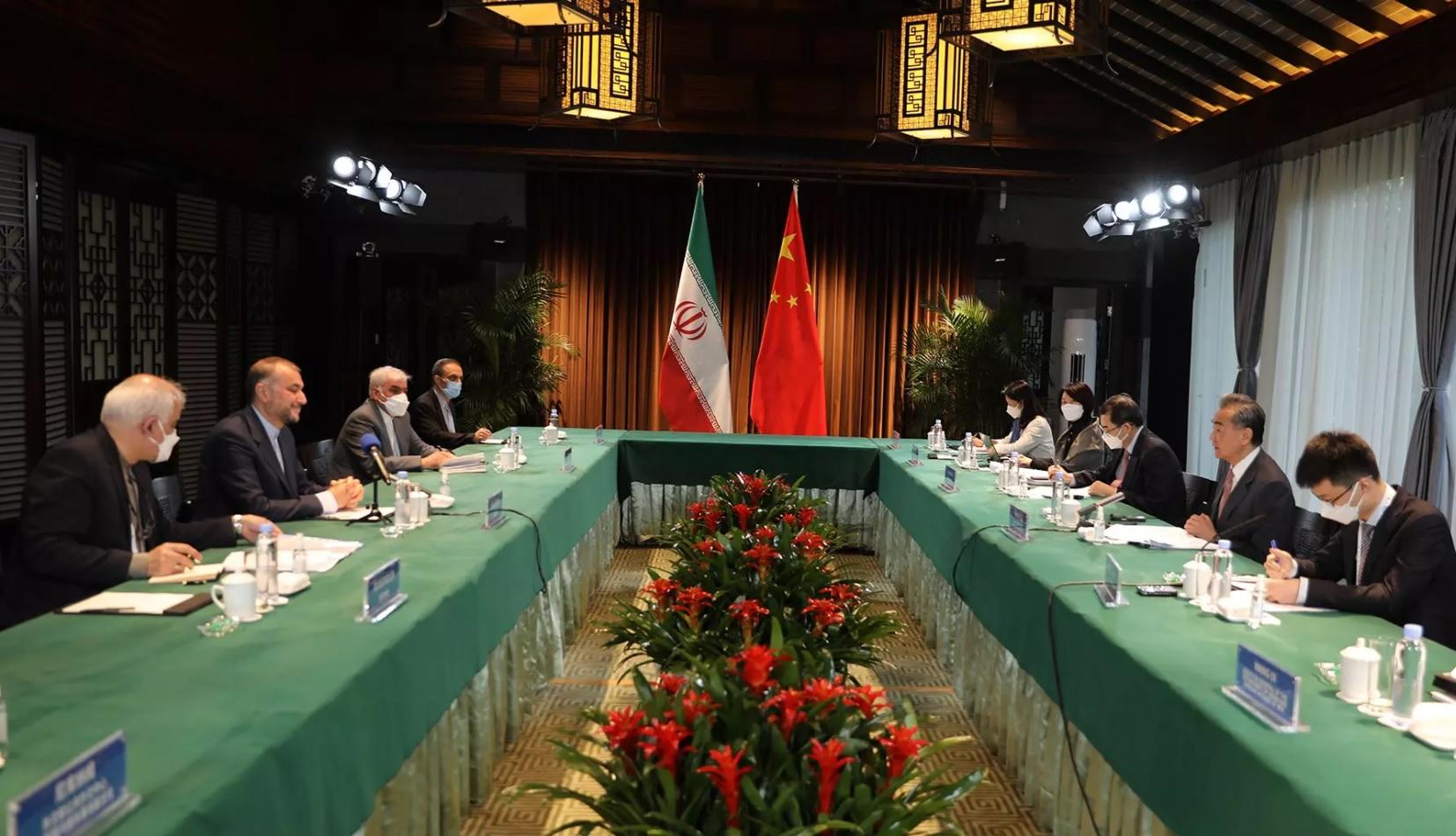
Iranian Foreign Minister Hossein Amir-Abdollahian and his Chinese counterpart Wang Yi discussed the expansion of bilateral economic ties and cooperation in international organizations at a meeting held in the Chinese city of Tunxi.
According Caspian News, The two foreign ministers stressed the need to speed up the finalization of projects and to continue consultations over the expansion of economic cooperation between Tehran and Beijing. Amir-Abdollahian noted the need for realizing the huge potential of the two countries, especially in their respective economic spheres. Referring to China and Iran’s cooperation in international bodies, he cited the politicization of human rights and interference in other countries’ internal affairs as key issues the two countries are fighting against. The Iranian minister accused Western governments of placing “illegal” sanctions against independent nations and stressed that confronting this issue was important for stability and preventing crises.
On his part, Wang Yi underscored the need for cooperation and close consultations between Tehran and Beijing to make their strategic 25-year pact operational. The 25-year cooperation pact was first proposed by Iran's Supreme Leader Ali Khamenei during Chinese President Xi Jinping's visit to Tehran in 2016. The agreement was signed on March 27, 2021, during Wang's visit to Tehran.
Iranian officials, dealing with an economic crisis, hope it will bring billions in investment and make Iran a key part of China's Belt and Road Initiative — a multi-trillion-dollar infrastructure scheme designed to stretch from East Asia to Europe. The project, aimed at significantly expanding China's economic and political influence, has raised concerns in the United States.
On February 15, the chairman of the Iran-China Chamber of Commerce, Majid Reza Hariri, said that Iran’s foreign assets in Western countries have been transferred to China to be used for importing goods from that country. “The $21 billion which we have in China is our foreign exchange reserves which were transferred from Western countries to China. Therefore, the Chinese have not frozen the money they owe for purchasing Iran’s oil,” Hariri said. He also denied that Iran was granting “discounts up to 70%” on its oil sales to China, adding that because Iran has to bypass sanctions it has to change the papers of oil tankers which can cost up to 15 percent of the income earned on oil sales.
“China has guaranteed to buy our oil for the long-term and to construct the Tehran-Mashhad electric railway or develop other infrastructures. Obviously, as is practiced in advance purchase contracts, China demands some discount, but this does not mean selling at half-price,” he concluded.
Some experts see Tehran's turn towards China as an abandonment of the decades-long policy of "Neither East nor West", which was the slogan of the founder of the Islamic Republic of Iran, Ayatollah Ruhollah Khomeini, for the reconstruction of a post-revolution Iran. Meanwhile, in his speech in February 2018, Supreme Leader Ali Khamenei said that the East was more "preferable" than the West.


 Latest news
Latest news
Latest newsBulgaria Asks NATO to Strengthen Its Defences Amid Black Sea Threats: Sofia Fears Growing Risks to Maritime Shipping
16.Oct.2026
Black Sea Shipping Risks Threaten Bulgaria’s 5 Million Tonnes of Wheat Exports
15.Oct.2026
Georgia’s Foreign Funding and Political Ban Laws Draw Criticism from the Venice Commission
15.Oct.2026
Kazakhstan Promotes a Caspian Green Energy Corridor: Astana Seeks New Routes to the European Market
14.Oct.2026
Inflation in Romania Accelerates to 6.61%: Rising Prices Increase Pressure on Households and the Economy
13.Oct.2026
Can Europe Protect the International Criminal Court from Trump’s Sanctions?
13.Oct.2026
Georgia’s Constitutional Court Continues Case on Banning Opposition Parties: Political Pluralism at Stake
12.Oct.2026
Azerbaijan and Iran Step Up Security Contacts Amid Hijab Protests
12.Oct.2026
Personnel Shortages Complicate Ukrainian Forces’ Rotation: Ukraine Faces Long-Term Challenges on the Front Line
11.Oct.2026
Trump Eases Sanctions on Russian Fuel After Talks with Putin: Kyiv Fears Boost to Moscow’s War Revenues
10.Oct.2026
Putin Seeks to Strengthen Russia’s Influence in the Post-Soviet Space Through the CIS
10.Oct.2026
Russia and the South Caucasus: External Pressure, Political Competition and a Crisis of Trust
10.Oct.2026
Peaceful Settlement Between Armenia and Azerbaijan: Moving from Declarations to Implementation
10.Oct.2026
Moldova Ready to Accept as Many Ukrainians as Necessary if Situation Worsens This Winter
09.Oct.2026
Turkmenistan Turns Avaza into a Regional Diplomatic Hub as Caspian, Central Asian and CIS Agendas Converge
08.Oct.2026