
 17 Oct 2026









Taliban victory results in new wave of Afghan migration
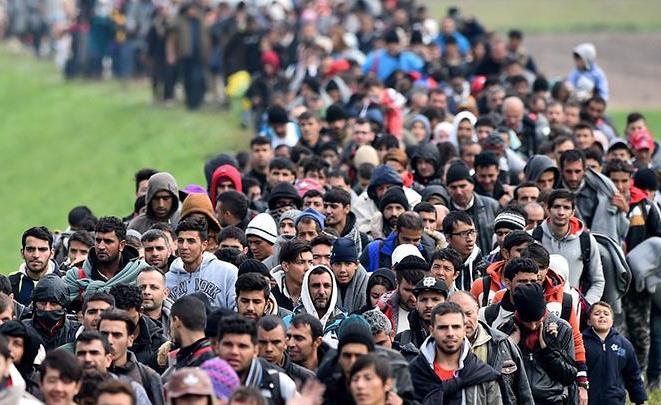
Thousands of Afghans are trying to flee the country after the Taliban seized control of Afghanistan.
Footage from the airport showed chaotic scenes of crowds running in an apparent attempt to catch a flight. Another video showed people climbing up the gangplank, trying to board a large jet.
Hundreds of people continued to flood the tarmac at Hamid Karzai International Airport on Monday morning, with little control over crowds who can be seen approaching planes.
Turkey will work with Pakistan to help stabilise Afghanistan and prevent a new flood of refugees, Turkish President Recep Tayyip Erdogan said on Sunday.
“Turkey is facing a growing migratory wave of Afghans transiting through Iran,” he said. “We will continue efforts to enable the return of stability in the region, beginning with Afghanistan,” Erdogan said.
“To do that, we have to pursue and strengthen our cooperation with Pakistan. We are determined to mobilise all the means at our disposal to succeed,” the Turkish leader said.
There has also been widespread speculation about the growing number of refugees coming to Germany and the European Union. "One has to expect people to be moving and also to come to Europe," Interior Minister Horst Seehofer (CSU) told the Augsburger Allgemeine newspaper.
U.N. Secretary-General Antonio Guterres is urging the Taliban and all other parties to exercise “utmost restraint” in order to protect the lives of Afghans and ensure the delivery of humanitarian aid.
U.N. spokesman Stephane Dujarric said Sunday that “the United Nations remains determined to contribute to a peaceful settlement, promote the human rights of all Afghans, notably women and girls, and provide life-saving humanitarian assistance and critical support to civilians in need.”
The U.N. humanitarian office said members of the humanitarian community — both from the U.N. and non-governmental organizations — remain committed to helping the millions of Afghans needing assistance and are staying in the country despite the “highly complex” security environment.


 Latest news
Latest news
Latest newsBulgaria Asks NATO to Strengthen Its Defences Amid Black Sea Threats: Sofia Fears Growing Risks to Maritime Shipping
16.Oct.2026
Black Sea Shipping Risks Threaten Bulgaria’s 5 Million Tonnes of Wheat Exports
15.Oct.2026
Georgia’s Foreign Funding and Political Ban Laws Draw Criticism from the Venice Commission
15.Oct.2026
Kazakhstan Promotes a Caspian Green Energy Corridor: Astana Seeks New Routes to the European Market
14.Oct.2026
Inflation in Romania Accelerates to 6.61%: Rising Prices Increase Pressure on Households and the Economy
13.Oct.2026
Can Europe Protect the International Criminal Court from Trump’s Sanctions?
13.Oct.2026
Georgia’s Constitutional Court Continues Case on Banning Opposition Parties: Political Pluralism at Stake
12.Oct.2026
Azerbaijan and Iran Step Up Security Contacts Amid Hijab Protests
12.Oct.2026
Personnel Shortages Complicate Ukrainian Forces’ Rotation: Ukraine Faces Long-Term Challenges on the Front Line
11.Oct.2026
Trump Eases Sanctions on Russian Fuel After Talks with Putin: Kyiv Fears Boost to Moscow’s War Revenues
10.Oct.2026
Putin Seeks to Strengthen Russia’s Influence in the Post-Soviet Space Through the CIS
10.Oct.2026
Russia and the South Caucasus: External Pressure, Political Competition and a Crisis of Trust
10.Oct.2026
Peaceful Settlement Between Armenia and Azerbaijan: Moving from Declarations to Implementation
10.Oct.2026
Moldova Ready to Accept as Many Ukrainians as Necessary if Situation Worsens This Winter
09.Oct.2026
Turkmenistan Turns Avaza into a Regional Diplomatic Hub as Caspian, Central Asian and CIS Agendas Converge
08.Oct.2026