
 17 Oct 2026









International community set issue before the Armenian side to make more concessions to bring Azerbaijan to constructive field – Pashinyan
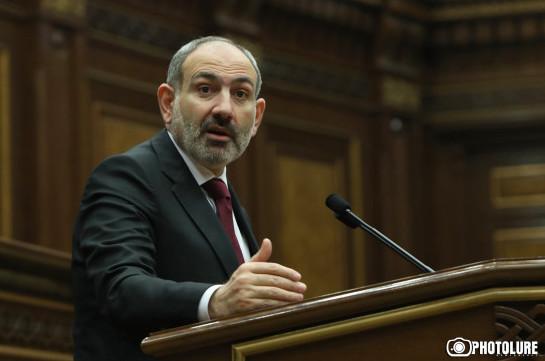
There is a perception that the international community exerts pressure on the side which demonstrates non-constructive approaches in the negotiations to bring it to the constructive field, Armenia’s Prime Minister Nikol Pashinyan said at the NA today.
“Starting from an X moment, at least from 2011 when Azerbaijan adopted unconstructive approach the international community did not convince Azerbaijan come to constructive field but set an issue before the Armenian side to make more concessions to bring Azerbaijan to constructive field. By the way, the claims about existing arrangements over referendum is an attempt of delusion,” the Prime Minister said.
He said the negotiation packages had referendum provision and that the referendum should reflect the free expression of will of the whole population of Nagorno Karabakh. The PM said everything is normal but it is not mentioned where this referendum will take place.
“The areal of the referendum is not described. It is an important issue. Azerbaijan has always had the position that in accordance with its Constitution the issue of status of any part of its internationally recognized territory can be determined with a referendum that must take place in the whole territory of Azerbaijan. This was Azerbaijan’s position in the negotiations. The next question – what does it mean the whole population of Nagorno Karabakh? With Azerbaijan’s interpretation it means the inner displaced, including those born in that families afterwards. And who will formulate the issue? There were no clear answers to this question either,” Pashinyan stressed.


 Latest news
Latest news
Latest newsBulgaria Asks NATO to Strengthen Its Defences Amid Black Sea Threats: Sofia Fears Growing Risks to Maritime Shipping
16.Oct.2026
Black Sea Shipping Risks Threaten Bulgaria’s 5 Million Tonnes of Wheat Exports
15.Oct.2026
Georgia’s Foreign Funding and Political Ban Laws Draw Criticism from the Venice Commission
15.Oct.2026
Kazakhstan Promotes a Caspian Green Energy Corridor: Astana Seeks New Routes to the European Market
14.Oct.2026
Inflation in Romania Accelerates to 6.61%: Rising Prices Increase Pressure on Households and the Economy
13.Oct.2026
Can Europe Protect the International Criminal Court from Trump’s Sanctions?
13.Oct.2026
Georgia’s Constitutional Court Continues Case on Banning Opposition Parties: Political Pluralism at Stake
12.Oct.2026
Azerbaijan and Iran Step Up Security Contacts Amid Hijab Protests
12.Oct.2026
Personnel Shortages Complicate Ukrainian Forces’ Rotation: Ukraine Faces Long-Term Challenges on the Front Line
11.Oct.2026
Trump Eases Sanctions on Russian Fuel After Talks with Putin: Kyiv Fears Boost to Moscow’s War Revenues
10.Oct.2026
Putin Seeks to Strengthen Russia’s Influence in the Post-Soviet Space Through the CIS
10.Oct.2026
Russia and the South Caucasus: External Pressure, Political Competition and a Crisis of Trust
10.Oct.2026
Peaceful Settlement Between Armenia and Azerbaijan: Moving from Declarations to Implementation
10.Oct.2026
Moldova Ready to Accept as Many Ukrainians as Necessary if Situation Worsens This Winter
09.Oct.2026
Turkmenistan Turns Avaza into a Regional Diplomatic Hub as Caspian, Central Asian and CIS Agendas Converge
08.Oct.2026