
 17 Oct 2026









Black Sea connectivity and the South Caucasus
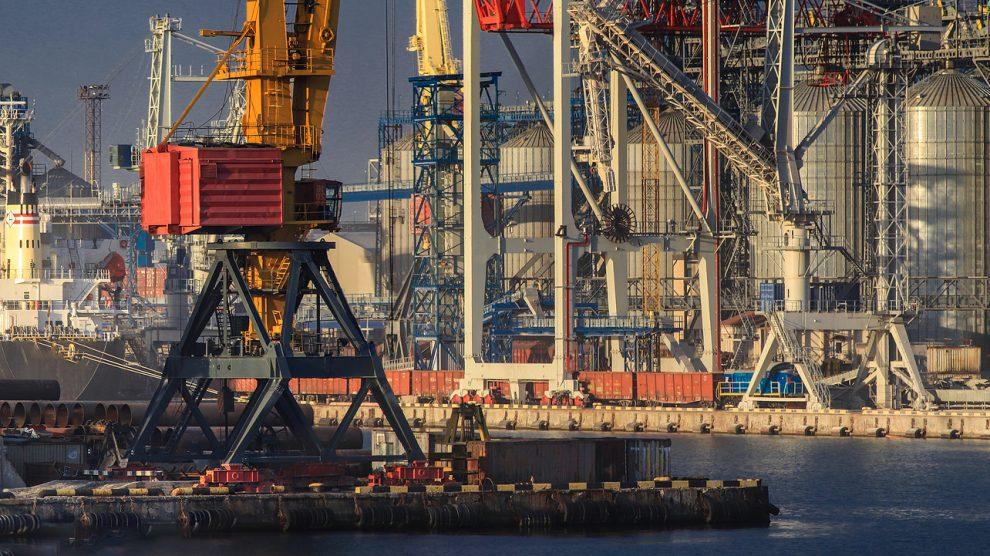
Regional actors need to work together to make the most of the potential for greater trade connectivity between Europe and wider Central Asia via the Black Sea and the South Caucasus. The United States and European Union must support them. As Emerging Europe writes, the Black Sea is an important trade outlet for the Russian Federation. Russia is connected to Turkey with two undersea natural gas pipelines, Blue Stream and TurkStream, which are capable of carrying up to 47 billion cubic metres of natural gas – a quarter of Russia’s total exports. Novorossiysk is a major trade port for oil and oil products, grains, metals and other export items, essential for the viability of the Russian economy. All of this means stability in the Black Sea remains a major priority for Russia’s economic interests.
It is clear the Black Sea can play a larger role in Asia-Europe trade via the South Caucasus, if the hard and soft infrastructure elements are in place to support increased transit volumes while lowering the costs of transportation.
China’s trade with Europe via land is growing but a great majority of EU-China trade still travels via maritime routes, with delivery terms exceeding 40 days. The need for relatively faster delivery options for goods with a shorter shelf life is growing. More than 12,000 trains shipped more than one million TEU between China and Europe in 2020, placing upward pressure on the cost of rail transportation via the Russian railway system.
The South Caucasus Corridor can attract part of this cargo from western China by offering competitive commercial terms. Test shipments from China to the Black Sea ports of Georgia have demonstrated that this corridor can be competitive in timing of delivery to European markets. There is also growing potential to link the region with the Indian sub-continent and Afghanistan for trade with Europe.
Three Seas
Trade through the Black Sea has received an additional boost with the EU’s Three Seas Initiative (3SI), which is designed to facilitate infrastructure development linking the Adriatic, Baltic, and Black Sea areas.
The 3SI aims to promote cooperation for the development of infrastructure in the energy, transport, and digital sectors for twelve EU member states around and between the Baltic, Black, and Adriatic Seas: Austria, Bulgaria, Croatia, Czechia, Estonia, Hungary, Latvia, Lithuania, Poland, Romania, Slovakia, and Slovenia.
The key idea of the 3SI is to promote sustainable, innovation-based, smart connectivity between countries and to break the decades-long legacy of the post-World War II era in Central and Eastern Europe, when almost all infrastructure development in the region was tied to Soviet infrastructure, ensuring energy and infrastructure dependency on Russia.
The initiative targets new investments, economic growth, and energy security, by supporting infrastructure, energy, and digital interconnectivity projects, with the ultimate goal of strengthening participating countries’ security and integration with the rest of Europe. While Ukraine, Turkey, Azerbaijan, and Georgia are not included in the 3SI, they will be beneficiaries of greater connectivity in Central and Eastern Europe.
There is a chain of infrastructure projects in Georgia, Azerbaijan, Turkmenistan, and Kazakhstan which can enable greater connectivity between Central Asia, including western China and Afghanistan, and Europe, via the South Caucasus multimodal transportation system.
Railways and highways in Kazakhstan, Turkmenistan, and Afghanistan, can be linked by the eastern Caspian ports of Turkmenbashi, Aktau and Kuryk to the Baku International Sea Port. From there, connectivity can be made via railway and highway to the Georgian ports of Poti and Batumi and then onto to Ukrainian, Romanian, and Bulgarian ports, or via Turkey to the Mediterranean.
Eliminating bottlenecks
But significant public funding allocated to Caspian ports and other infrastructure projects in Turkmenistan, Kazakhstan, and Azerbaijan – as well as private investments in Georgian ports – can only be justified if international traders and freight forwarders are attracted by lower costs and efficient management. Greater efforts are needed for infrastructure development in order to eliminate the bottleneck in Caspian Sea connectivity. Another big issue is the harmonisation of tariffs and border crossing procedures for an entire range of cargos, with the common aim of increasing the competitiveness of the transit and transportation system.
As an additional incentive, a strategic vision of integration of trade and transit between Central Asia and Eastern Europe will allow the Black Sea-Caspian region to be involved in a realignment of the global supply chain.
Countries with open trade policies and free trade agreements with major global markets may benefit from this process through the establishment of processing hubs. Georgia, for example, which has free trade agreements with all major Eurasian actors, including the EU and China, could attract businesses with interest in tariff-free access to these markets.
But in order for these processes to succeed, all key regional actors of the transportation corridor must work together. And it is in the interest of the United States and the EU to strongly support them.


 Latest news
Latest news
Latest newsBulgaria Asks NATO to Strengthen Its Defences Amid Black Sea Threats: Sofia Fears Growing Risks to Maritime Shipping
16.Oct.2026
Black Sea Shipping Risks Threaten Bulgaria’s 5 Million Tonnes of Wheat Exports
15.Oct.2026
Georgia’s Foreign Funding and Political Ban Laws Draw Criticism from the Venice Commission
15.Oct.2026
Kazakhstan Promotes a Caspian Green Energy Corridor: Astana Seeks New Routes to the European Market
14.Oct.2026
Inflation in Romania Accelerates to 6.61%: Rising Prices Increase Pressure on Households and the Economy
13.Oct.2026
Can Europe Protect the International Criminal Court from Trump’s Sanctions?
13.Oct.2026
Georgia’s Constitutional Court Continues Case on Banning Opposition Parties: Political Pluralism at Stake
12.Oct.2026
Azerbaijan and Iran Step Up Security Contacts Amid Hijab Protests
12.Oct.2026
Personnel Shortages Complicate Ukrainian Forces’ Rotation: Ukraine Faces Long-Term Challenges on the Front Line
11.Oct.2026
Trump Eases Sanctions on Russian Fuel After Talks with Putin: Kyiv Fears Boost to Moscow’s War Revenues
10.Oct.2026
Putin Seeks to Strengthen Russia’s Influence in the Post-Soviet Space Through the CIS
10.Oct.2026
Russia and the South Caucasus: External Pressure, Political Competition and a Crisis of Trust
10.Oct.2026
Peaceful Settlement Between Armenia and Azerbaijan: Moving from Declarations to Implementation
10.Oct.2026
Moldova Ready to Accept as Many Ukrainians as Necessary if Situation Worsens This Winter
09.Oct.2026
Turkmenistan Turns Avaza into a Regional Diplomatic Hub as Caspian, Central Asian and CIS Agendas Converge
08.Oct.2026