
 17 Oct 2026









FM Aivazian: The trilateral statement on Nagorno-Karabakh does not address the key elements of the conflict settlement
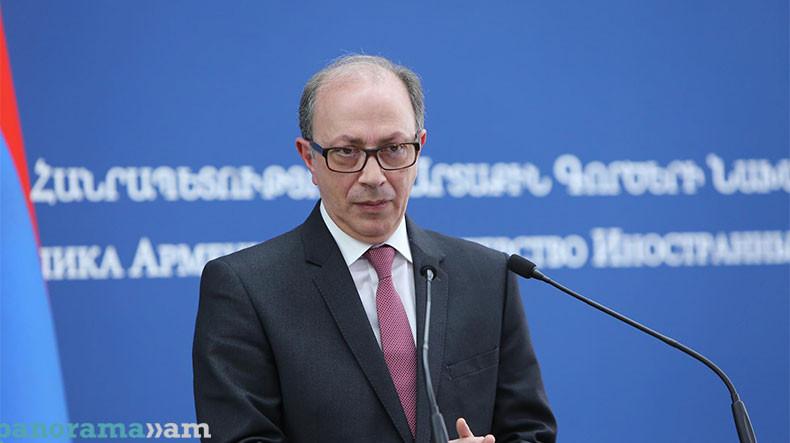
"The use of force by Azerbaijan is a gross violation of the OSCE commitments, including the Helsinki Final Act," Armenian Foreign Minister Ara Aivazian stated on Tuesday at a press conference with OSCE Chairperson-in-Office, Sweden’s Minister for Foreign Affairs Ann Linde.
"During the course of the war, the Azerbaijani forces with active support from Turkey carried out mass crimes, including ethnic cleanings and war crimes against the Artsakh Armenians in explicit violation of international humanitarian law," the minister said, adding four months after the end of military actions Azerbaijan continues violating the international humanitarian law, keeping war prisoners and civilians in captivity. Aivazian reminded of Turkey's direct involvement in transferring thousands of mercenaries and militants to the Nagorno-Karabakh conflict zone which was not only a violation of international law but also the OSCE commitments.
"This established two dangerous precedents - an attempt to solve a conflict through mass crimes and use of force and mass transfer of armed mercenaries and terrorists to OSCE region." Minister Aivazian said, noting with the trilateral statement signed on November 9 to end the Azerbaijani-Turkish aggression and deployment of Russian peacekeepers the Nagorno-Karabakh conflict entered a new stage.
"We consider the trilateral statement as a document aimed at restoring the ceasefire and establishing security. Although it contains some provisions aimed at peaceful settlement of the conflict, the document does not address the key elements of the settlement. The Artsakh status remains the main one based on the self-determination of Artsakh Armenians. The final political solution to the conflict is possible exclusively within the frameworks of the OSCE Minsk Group. The recent developments in the region showed that we need a strong Co-Chairmanship of the OSCE Minsk group that can lead the peace process based on principles worked out throughout the years," stressed Aivazian.


 Latest news
Latest news
Latest newsBulgaria Asks NATO to Strengthen Its Defences Amid Black Sea Threats: Sofia Fears Growing Risks to Maritime Shipping
16.Oct.2026
Black Sea Shipping Risks Threaten Bulgaria’s 5 Million Tonnes of Wheat Exports
15.Oct.2026
Georgia’s Foreign Funding and Political Ban Laws Draw Criticism from the Venice Commission
15.Oct.2026
Kazakhstan Promotes a Caspian Green Energy Corridor: Astana Seeks New Routes to the European Market
14.Oct.2026
Inflation in Romania Accelerates to 6.61%: Rising Prices Increase Pressure on Households and the Economy
13.Oct.2026
Can Europe Protect the International Criminal Court from Trump’s Sanctions?
13.Oct.2026
Georgia’s Constitutional Court Continues Case on Banning Opposition Parties: Political Pluralism at Stake
12.Oct.2026
Azerbaijan and Iran Step Up Security Contacts Amid Hijab Protests
12.Oct.2026
Personnel Shortages Complicate Ukrainian Forces’ Rotation: Ukraine Faces Long-Term Challenges on the Front Line
11.Oct.2026
Trump Eases Sanctions on Russian Fuel After Talks with Putin: Kyiv Fears Boost to Moscow’s War Revenues
10.Oct.2026
Putin Seeks to Strengthen Russia’s Influence in the Post-Soviet Space Through the CIS
10.Oct.2026
Russia and the South Caucasus: External Pressure, Political Competition and a Crisis of Trust
10.Oct.2026
Peaceful Settlement Between Armenia and Azerbaijan: Moving from Declarations to Implementation
10.Oct.2026
Moldova Ready to Accept as Many Ukrainians as Necessary if Situation Worsens This Winter
09.Oct.2026
Turkmenistan Turns Avaza into a Regional Diplomatic Hub as Caspian, Central Asian and CIS Agendas Converge
08.Oct.2026